
Interior Design Styles, Explained
What each style is, its colors, materials and furniture, and the mistakes that break the look. Not sure which one fits? Upload a photo and see your own room in any style.
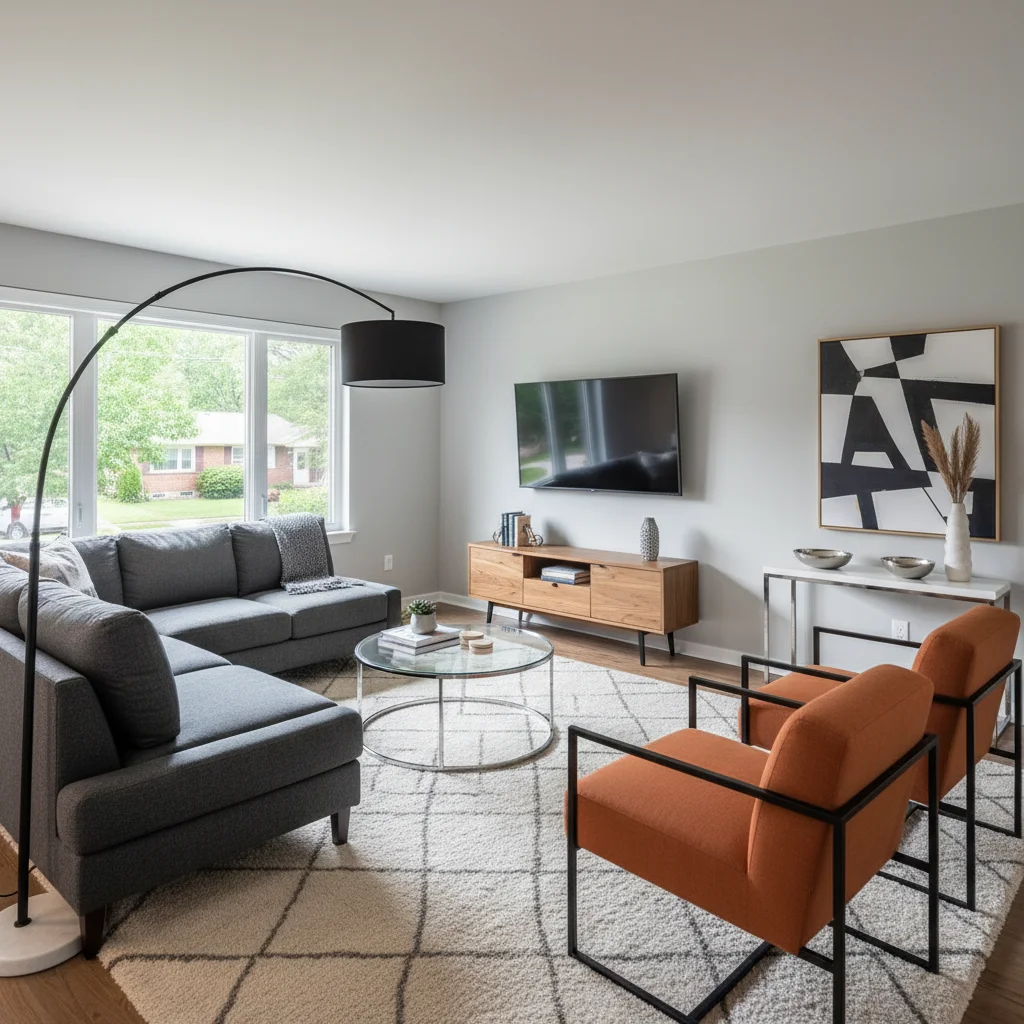 ModernModern interior design is a style rooted in early and mid-20th-century modernism that uses clean lines, simple geometric forms, open layouts, and a neutral palette with little or no ornament. It pairs industrial materials such as steel, glass, and concrete with natural wood, and follows the principle that form follows function.
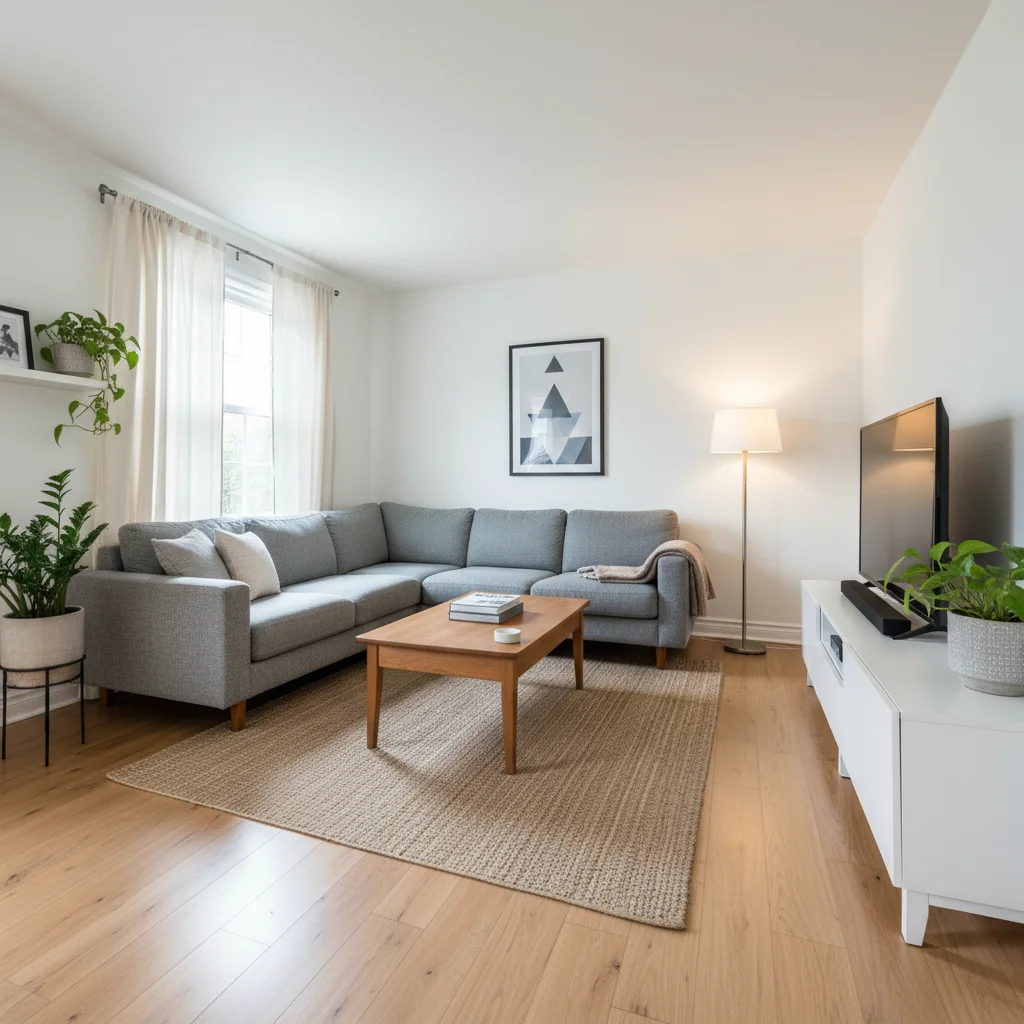 MinimalistMinimalist interior design is a style that reduces a room to its essential furniture and objects, leaving clear surfaces and open floor space. It uses a tight neutral palette, simple forms, hidden storage, and natural light, so that each remaining piece is functional or meaningful and the space feels calm and uncluttered.
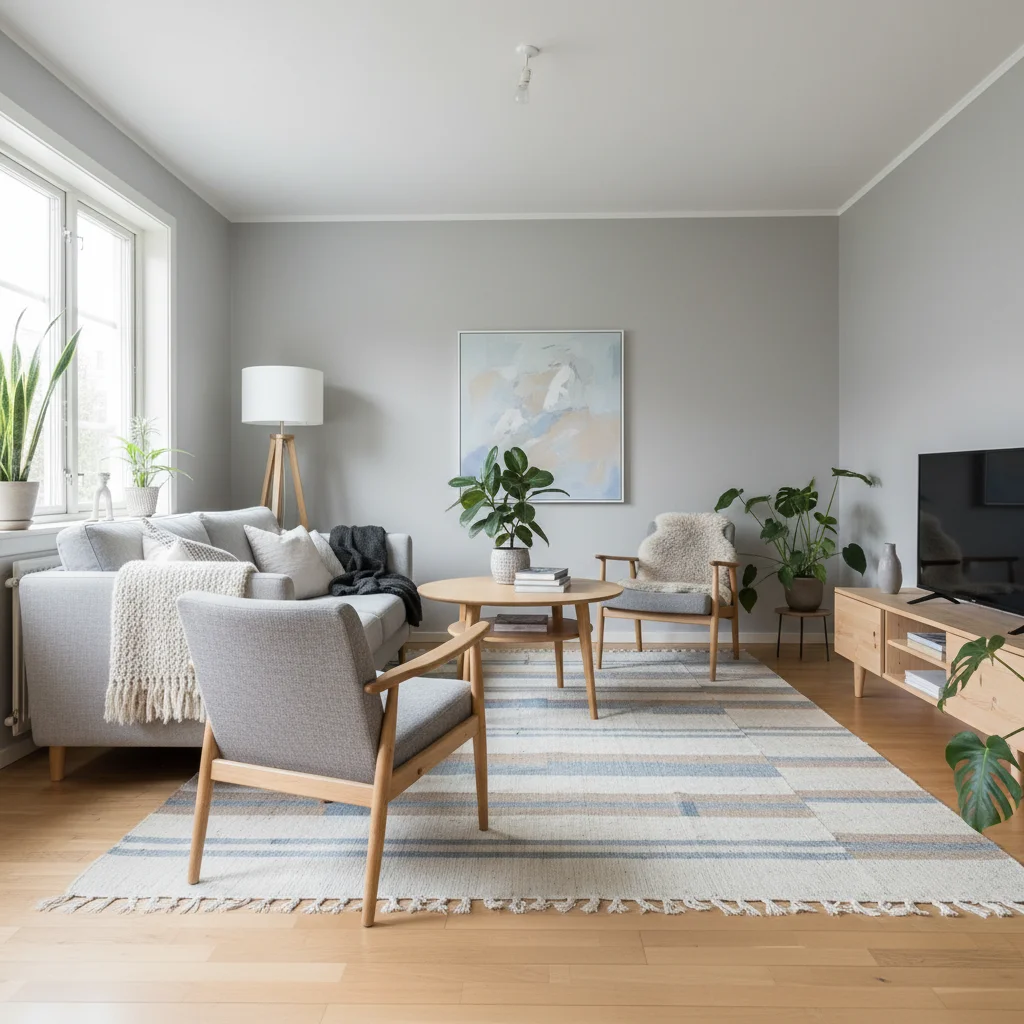 ScandinavianScandinavian interior design is a style from Denmark, Sweden, Norway, and Finland that combines light-colored walls, pale woods such as birch, ash, and white oak, and simple functional furniture with cozy textiles. It prioritizes daylight, comfort, and practicality, creating bright rooms that feel calm, warm, and lived-in.
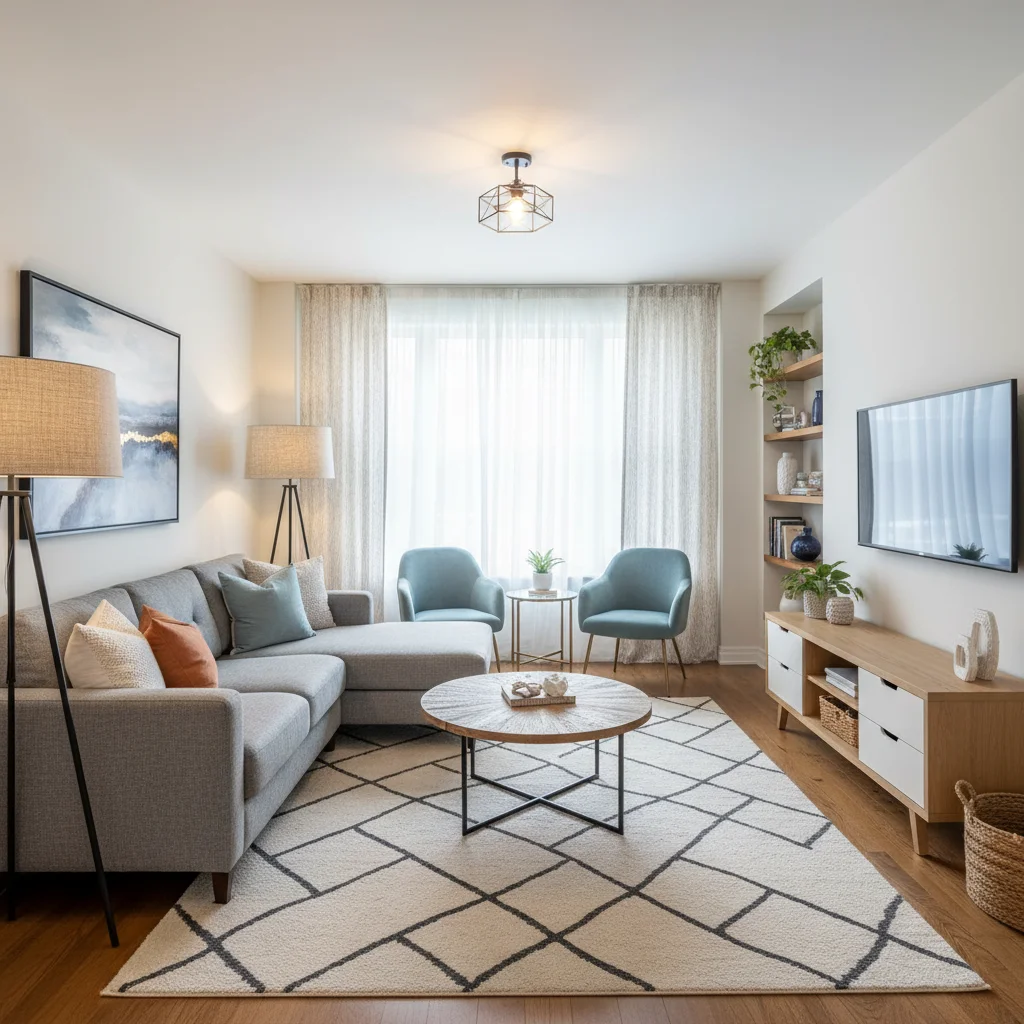 ContemporaryContemporary interior design is the style of the present moment, so its details change over time. Today it means curved, comfortable furniture, warm layered neutrals, mixed materials such as wood, stone, metal, and fluted glass, and one bold focal piece. It keeps clean lines and open space but feels softer than classic modern design.
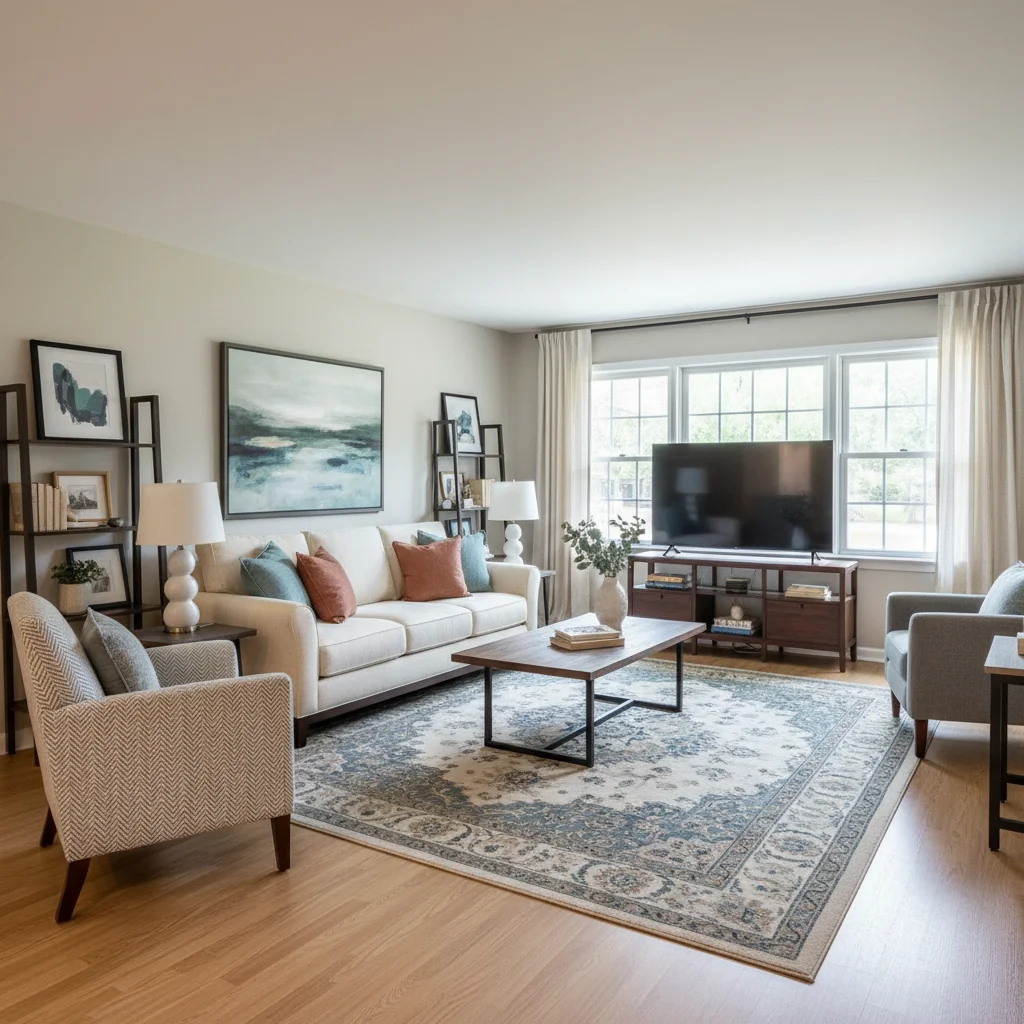 TransitionalTransitional interior design is a style that blends traditional furniture shapes, such as rolled arms and wingback chairs, with the clean lines and restraint of modern design. It uses a calm neutral palette, tone-on-tone textures instead of busy patterns, and balanced, often symmetrical layouts, producing rooms that feel classic but uncluttered.
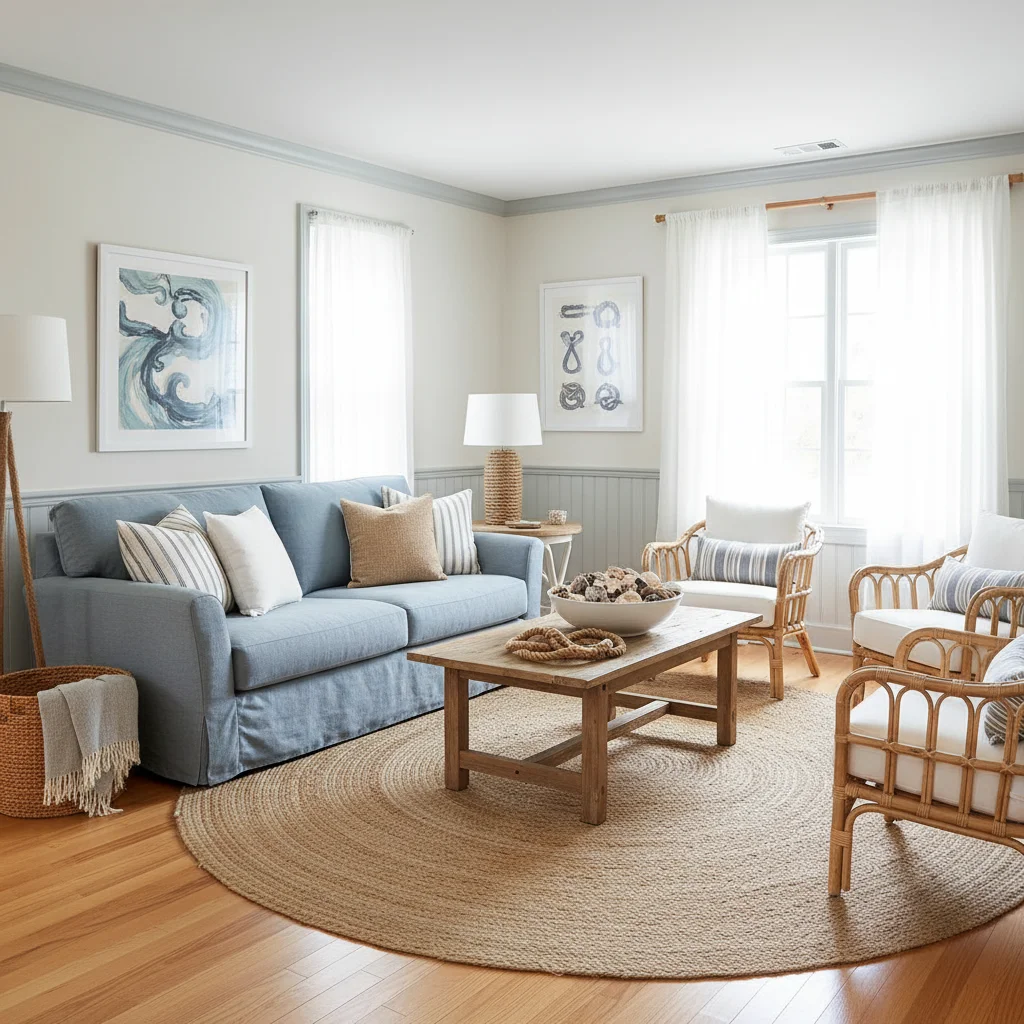 CoastalCoastal interior design is a relaxed, light-filled style inspired by homes near the sea. It uses white, sand, and soft ocean blues, slipcovered linen furniture, whitewashed or weathered wood, and natural woven textures such as jute, rattan, and sisal. The aim is an airy, casual room that feels like a beach house without themed decor.
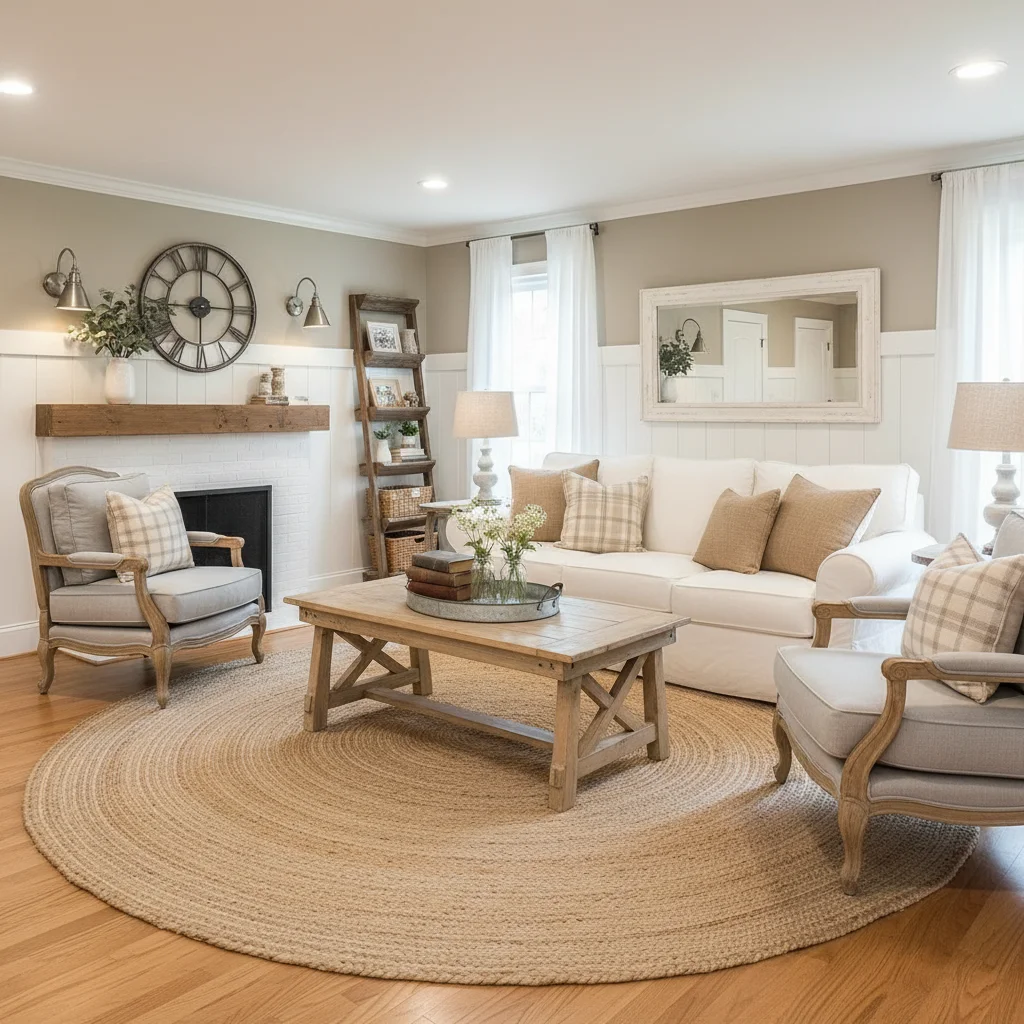 FarmhouseFarmhouse interior design is a warm, rustic style based on rural homes, combining reclaimed or distressed wood, shiplap or board-and-batten walls, warm white and cream palettes, and black iron or galvanized metal hardware. It favors practical, comfortable furniture, vintage pieces, and natural fabrics such as linen and cotton for a welcoming, lived-in feel.
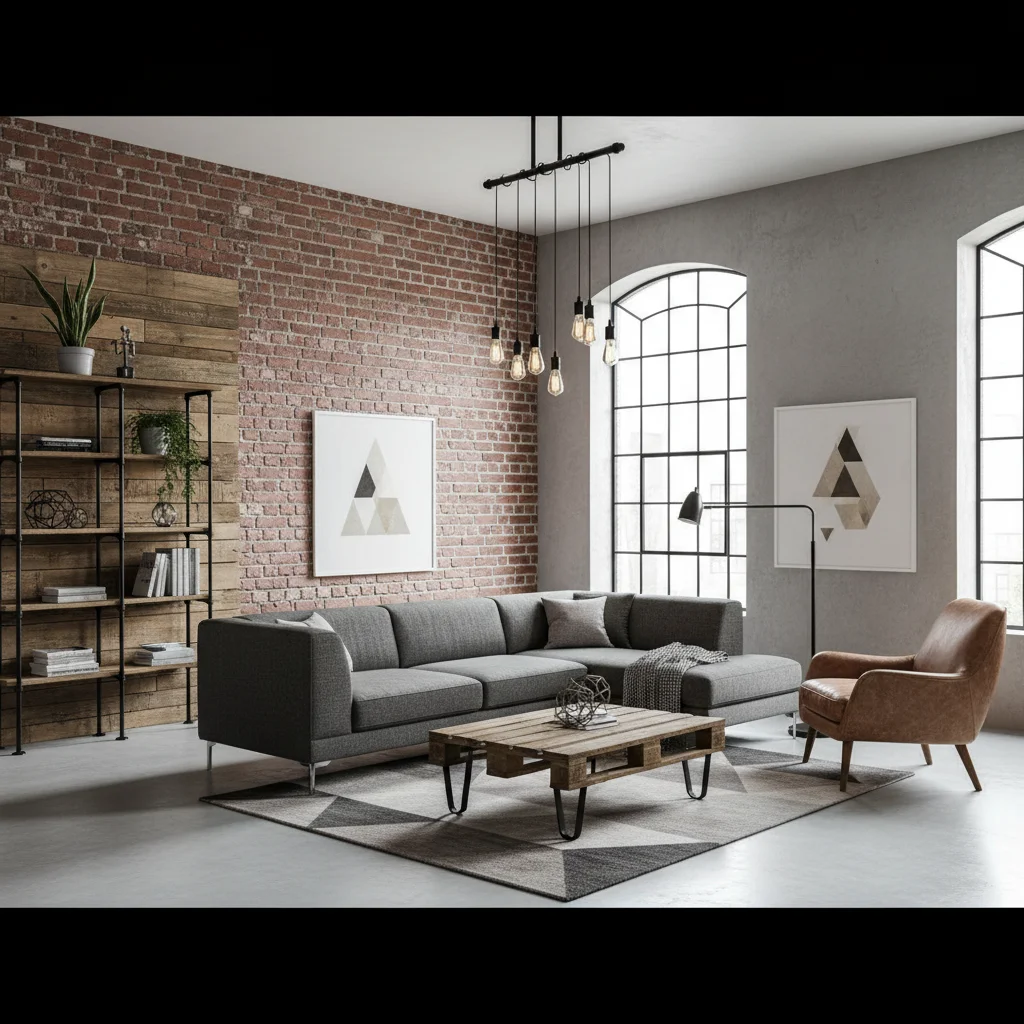 IndustrialIndustrial interior design is a style inspired by converted factories and warehouses that leaves structural materials such as brick, concrete, steel beams, and ductwork exposed. It pairs them with reclaimed wood, patinated leather, and metal furniture in a palette of greys, blacks, browns, and rust, creating raw but carefully composed loft-like rooms.
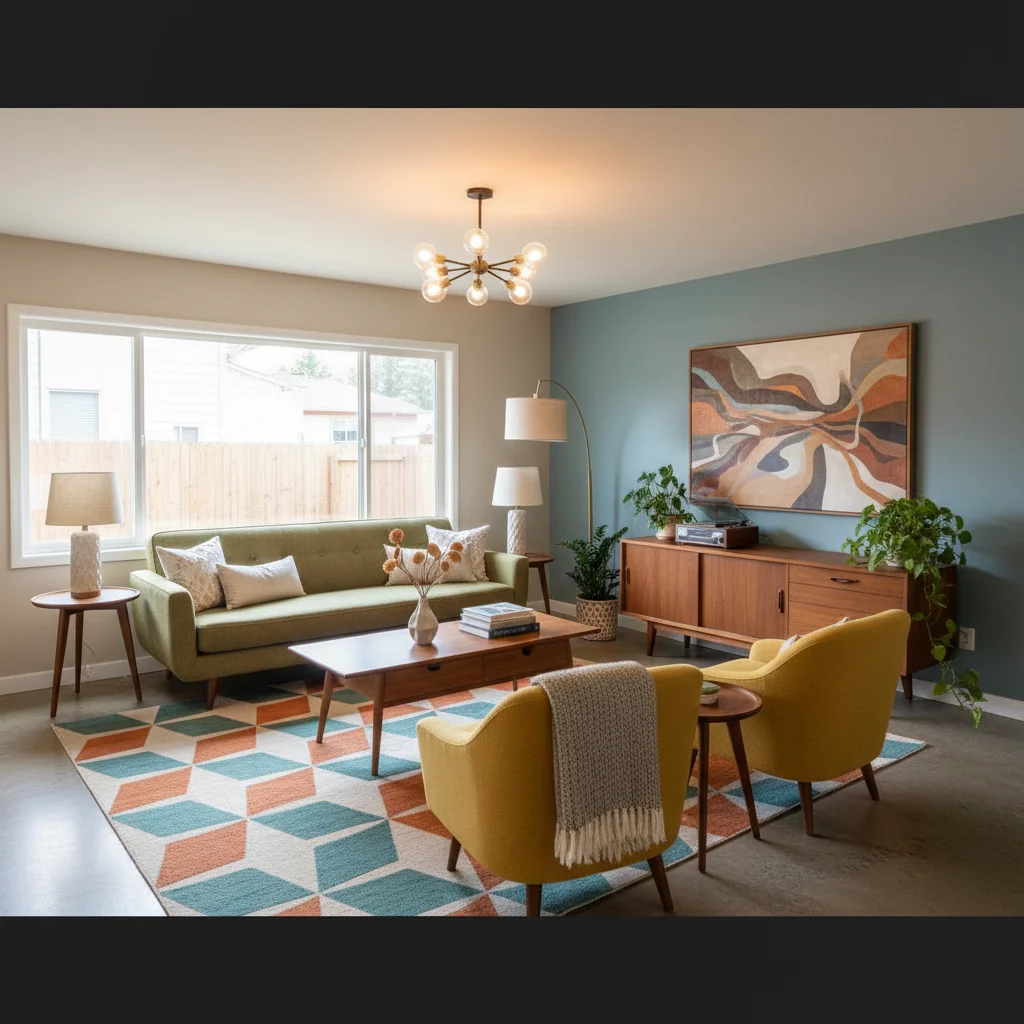 Mid-Century ModernMid-century modern interior design is a style from roughly 1945 to 1969 defined by low, organic, and geometric furniture on tapered legs, warm woods such as teak and walnut, and earth tones accented with mustard, orange, and teal. It combines new materials of the period, like molded plywood and fiberglass, with clean lines and an open connection to the outdoors.
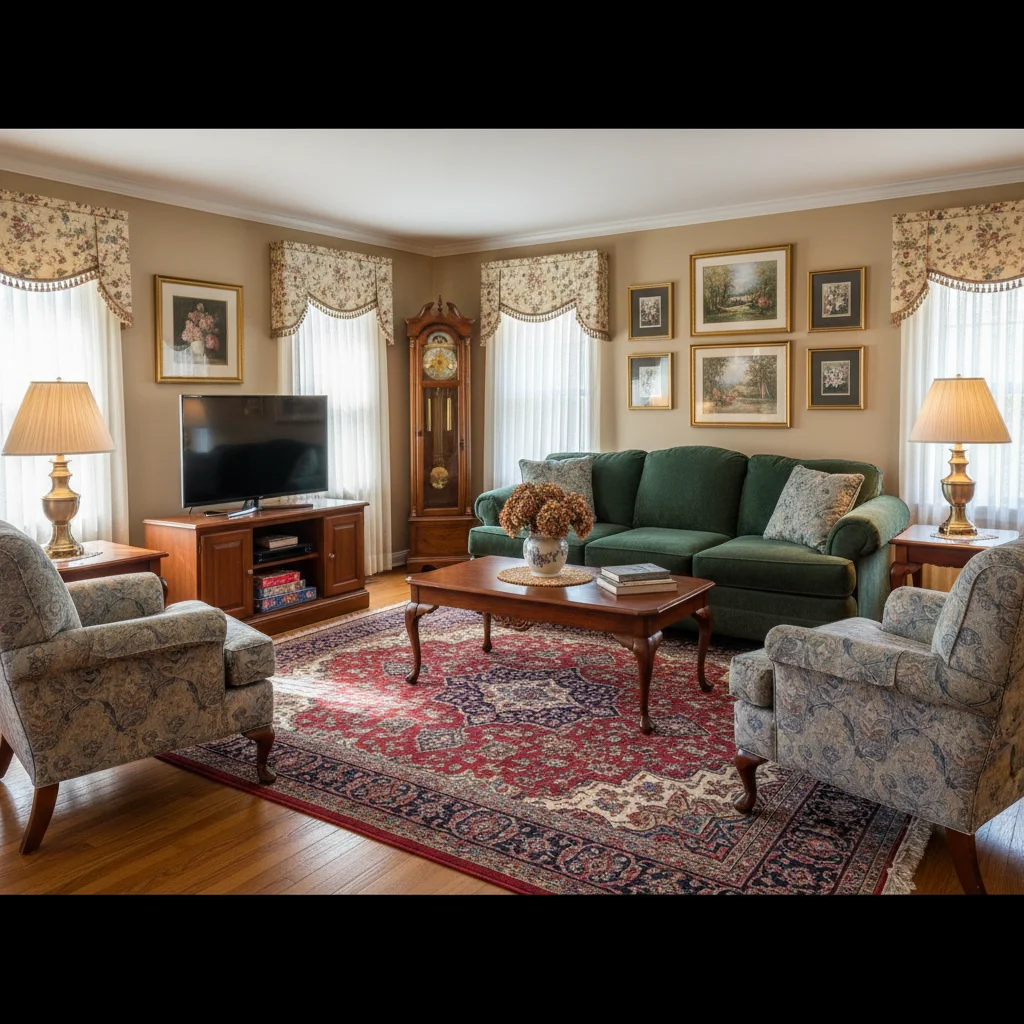 TraditionalTraditional interior design is a classic style based on 18th and 19th-century European decor, especially English Georgian and French styles. It features carved wood furniture in mahogany, cherry, and walnut, rich colors, patterned fabrics such as damask and florals, symmetrical layouts, layered window treatments, and Oriental rugs, producing formal yet comfortable rooms.
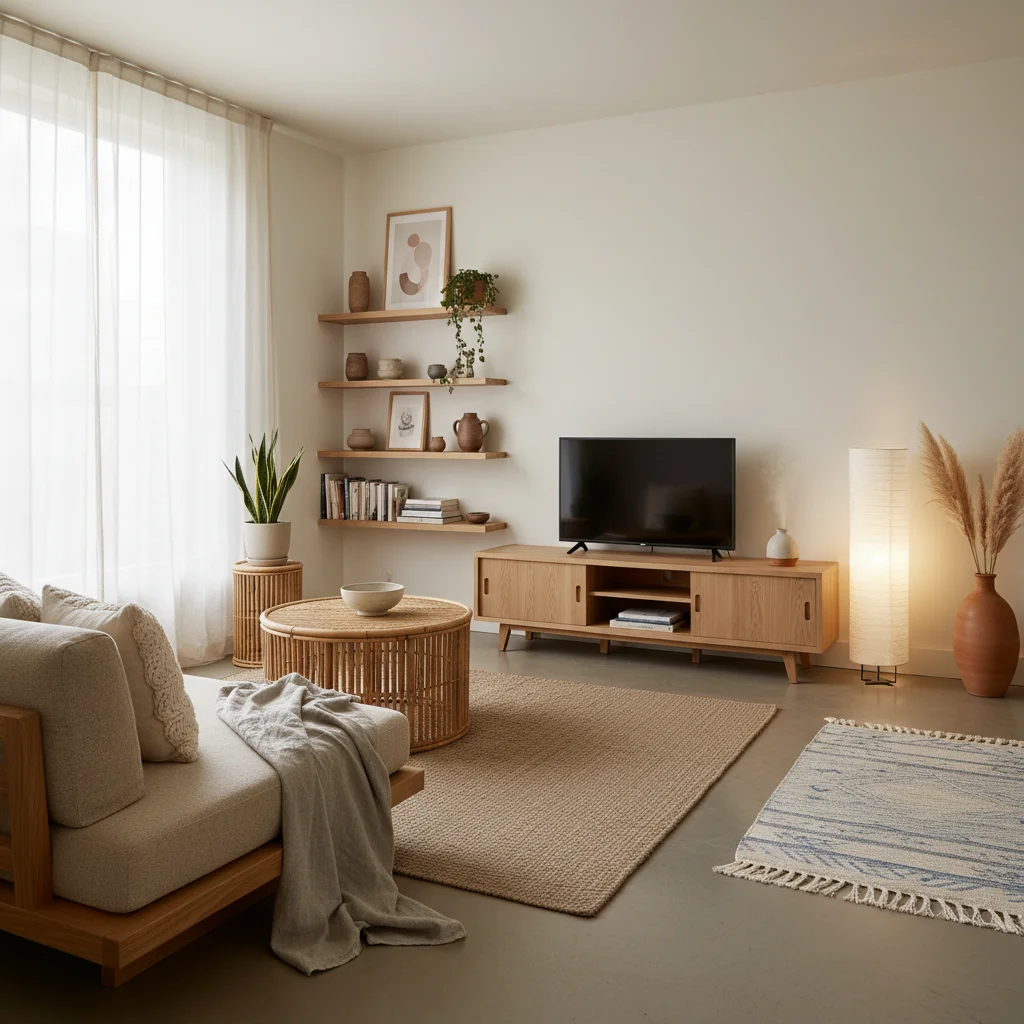 JapandiJapandi interior design is a hybrid style that combines Japanese minimalism with Scandinavian comfort. It uses low, simply built furniture in light and dark woods, an earthy neutral palette of warm white, sand, clay, and charcoal, natural materials such as linen, paper, and stone, and a few handmade objects, creating calm, uncluttered rooms.
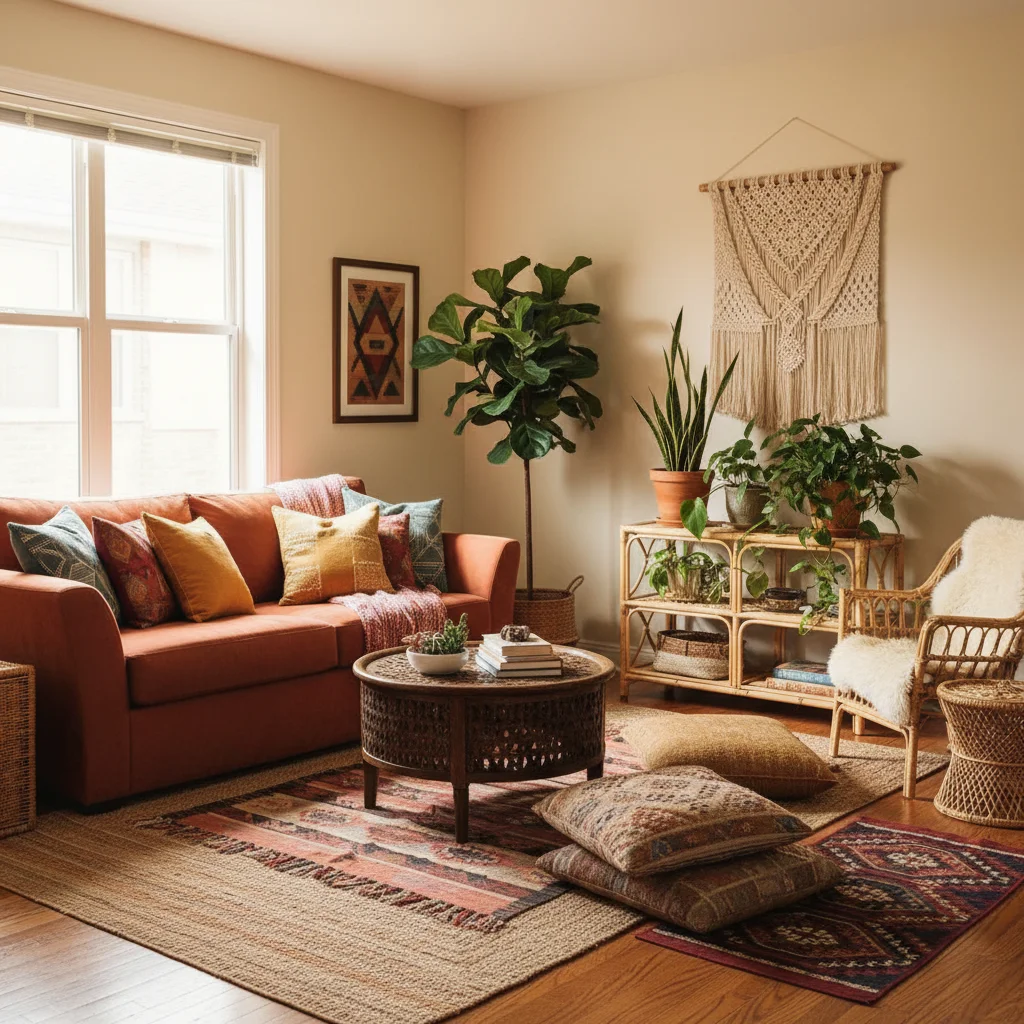 BohemianBohemian interior design, often called boho, is a relaxed, eclectic style built on layered patterns, global textiles, vintage and handmade furniture, and many plants. It uses warm, saturated colors such as terracotta, mustard, burgundy, and teal, natural materials like rattan, jute, and macramé, and low seating to create a personal, collected look.
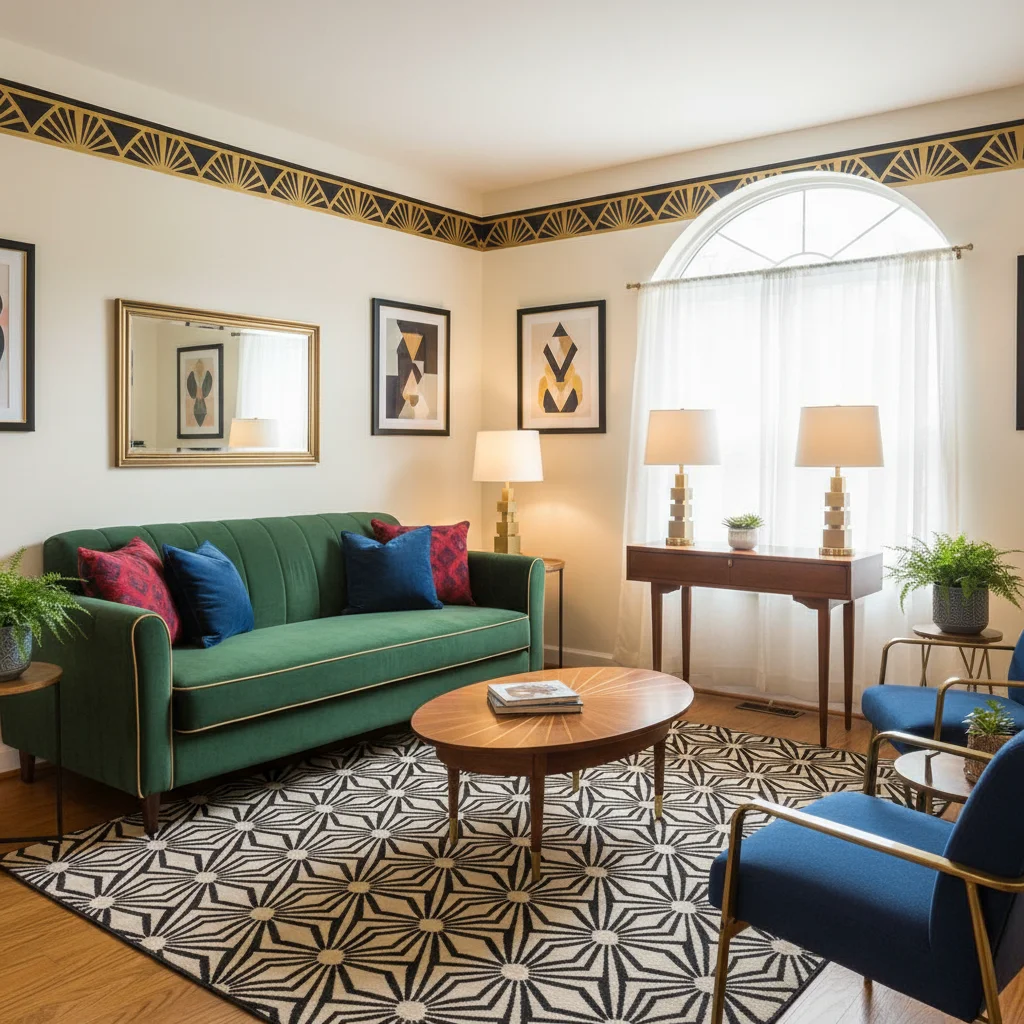 Art DecoArt Deco interior design is a 1920s–1930s style built on bold geometry, symmetry and luxurious materials. It pairs black and gold with jewel tones like emerald and sapphire, and uses lacquer, marble, brass, mirrored glass and exotic wood veneers. Sunbursts, chevrons, fan shapes and stepped silhouettes repeat across furniture, lighting and walls.
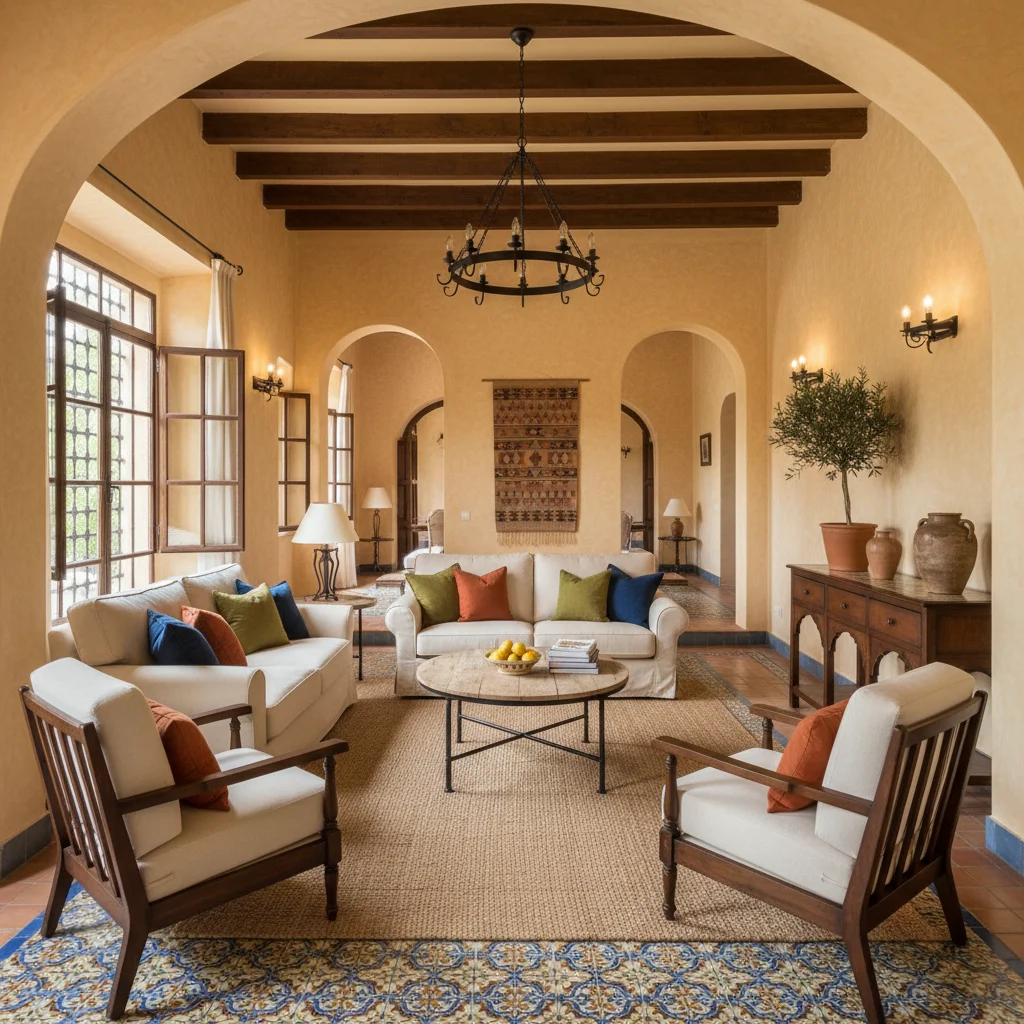 MediterraneanMediterranean interior design is a warm, earthy style drawn from the coastal homes of Greece, Italy, Spain and southern France. It uses textured lime plaster walls, terracotta or stone floors, exposed wood beams, arches, wrought iron and hand-painted tile, with a palette of whitewash, ochre, olive green and sea blue.
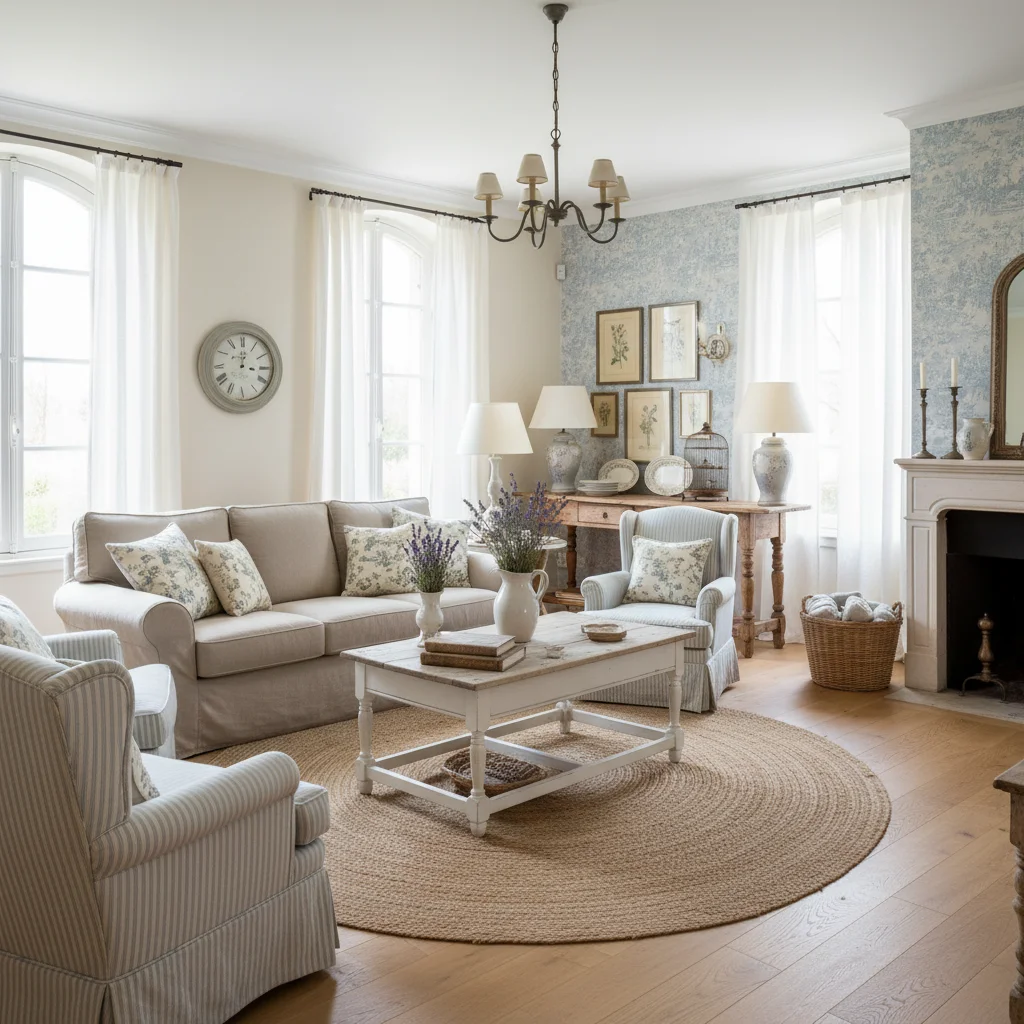 French CountryFrench Country interior design is a relaxed provincial style based on farmhouses and manor homes in Provence and rural France. It combines painted or limed wood furniture with curved cabriole legs, toile and small floral fabrics, natural linen, stone floors and iron or crystal chandeliers, in soft creams, French blue, sage and lavender.
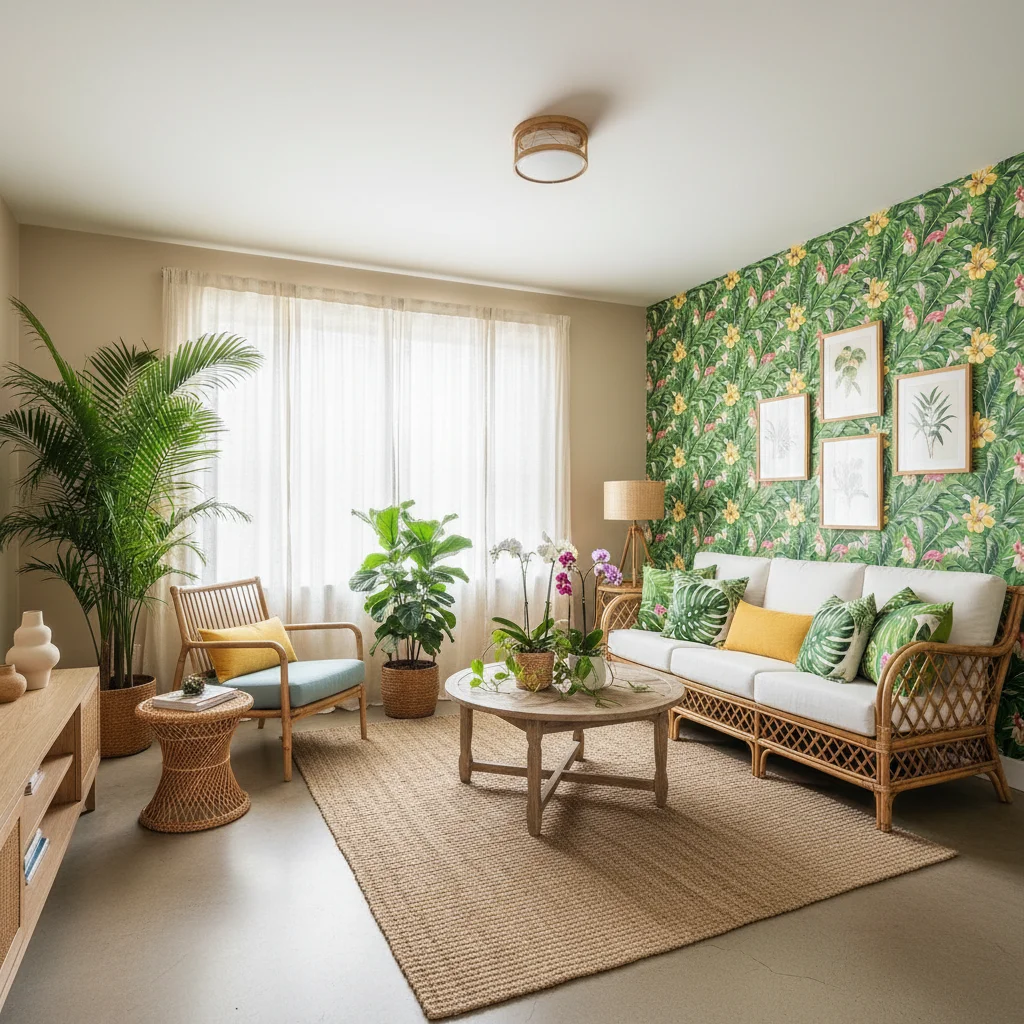 TropicalTropical interior design is a light, airy style inspired by homes and resorts in hot, humid climates such as the Caribbean, Hawaii and Southeast Asia. It combines rattan, bamboo, cane and teak furniture with large leafy plants, botanical prints, white walls and accents of green, coral, turquoise and yellow.
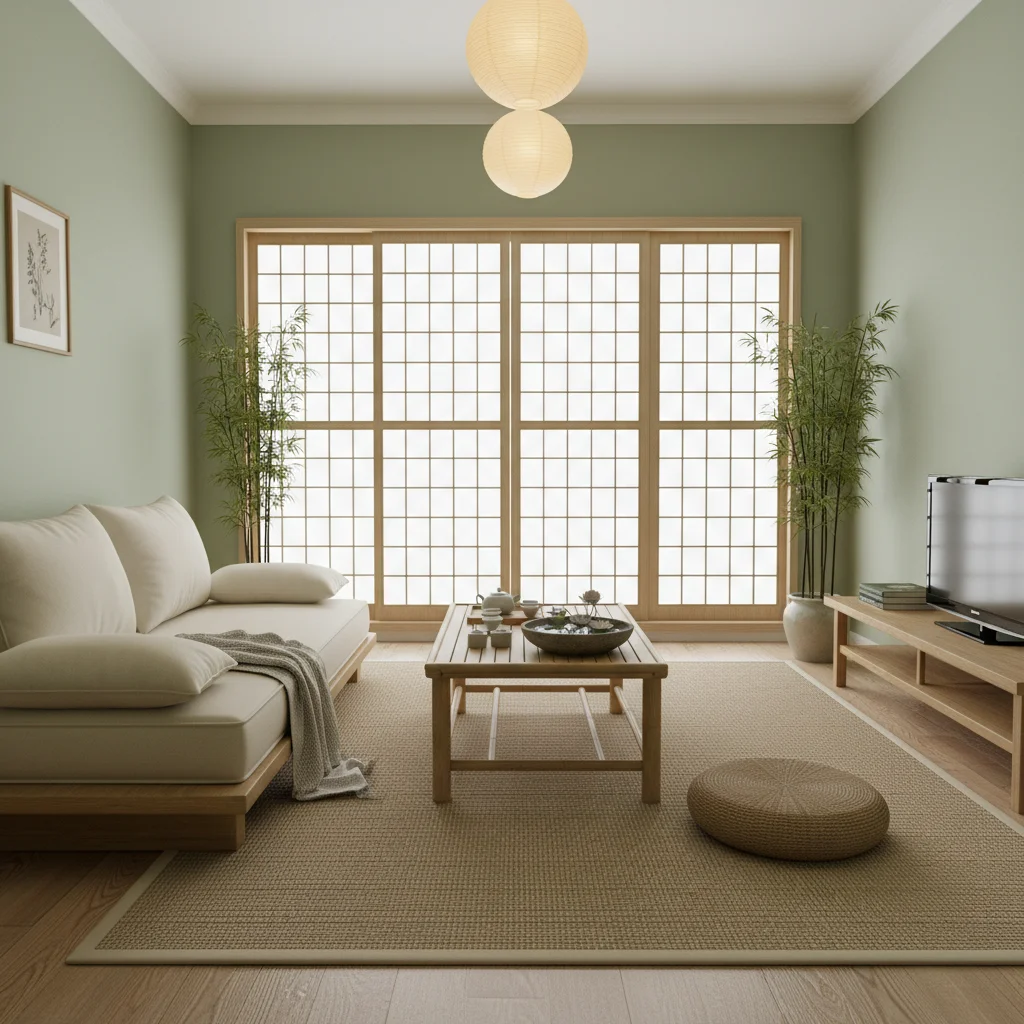 Asian ZenAsian Zen interior design is a calm, uncluttered style based on traditional Japanese and Chinese homes. It uses low natural-wood furniture, diffused light through paper or linen screens, bamboo, stone and woven grass textures, and a muted palette of beige, moss and charcoal, with open space treated as part of the design.
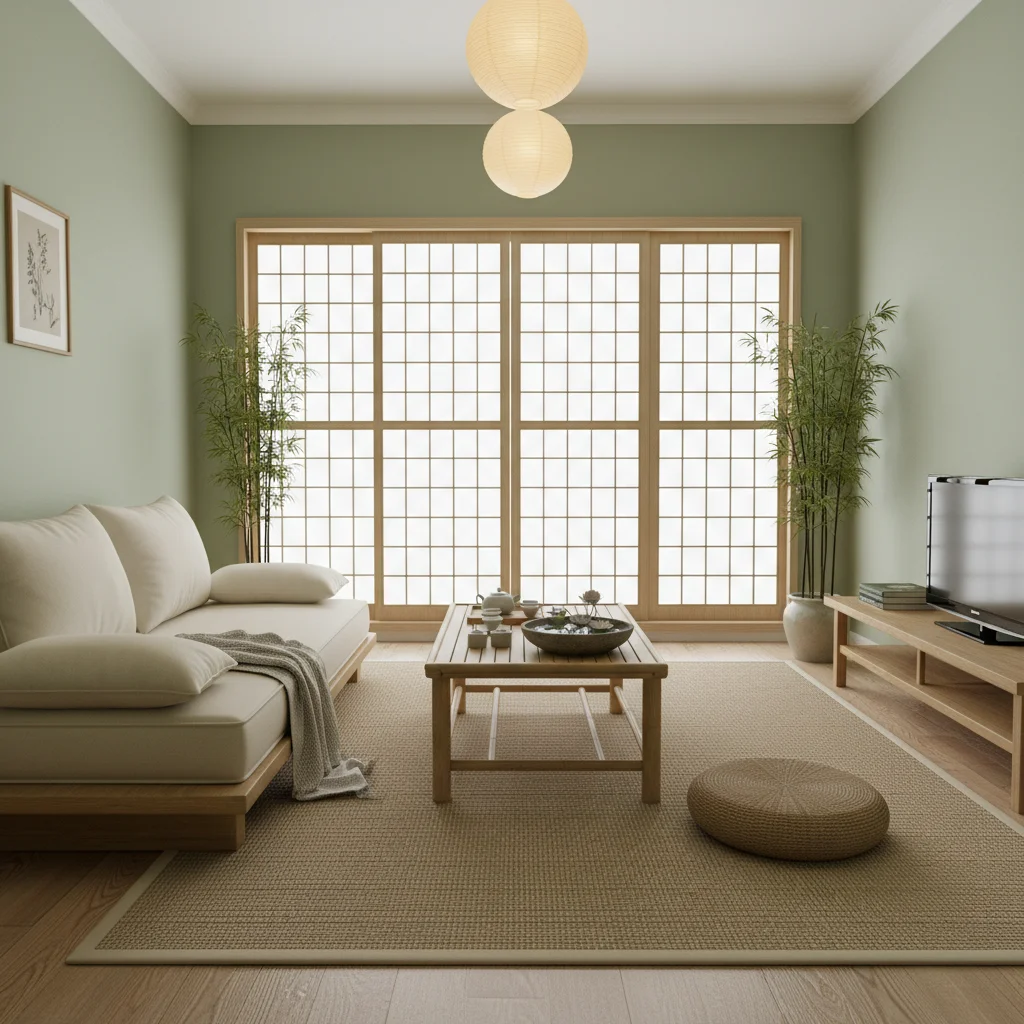 Feng ShuiFeng shui interior design is a Chinese method of arranging rooms so that furniture, light, color and materials feel balanced and support daily life. It places key furniture in the commanding position facing the door, keeps pathways clear, removes clutter and balances the five elements of wood, fire, earth, metal and water.
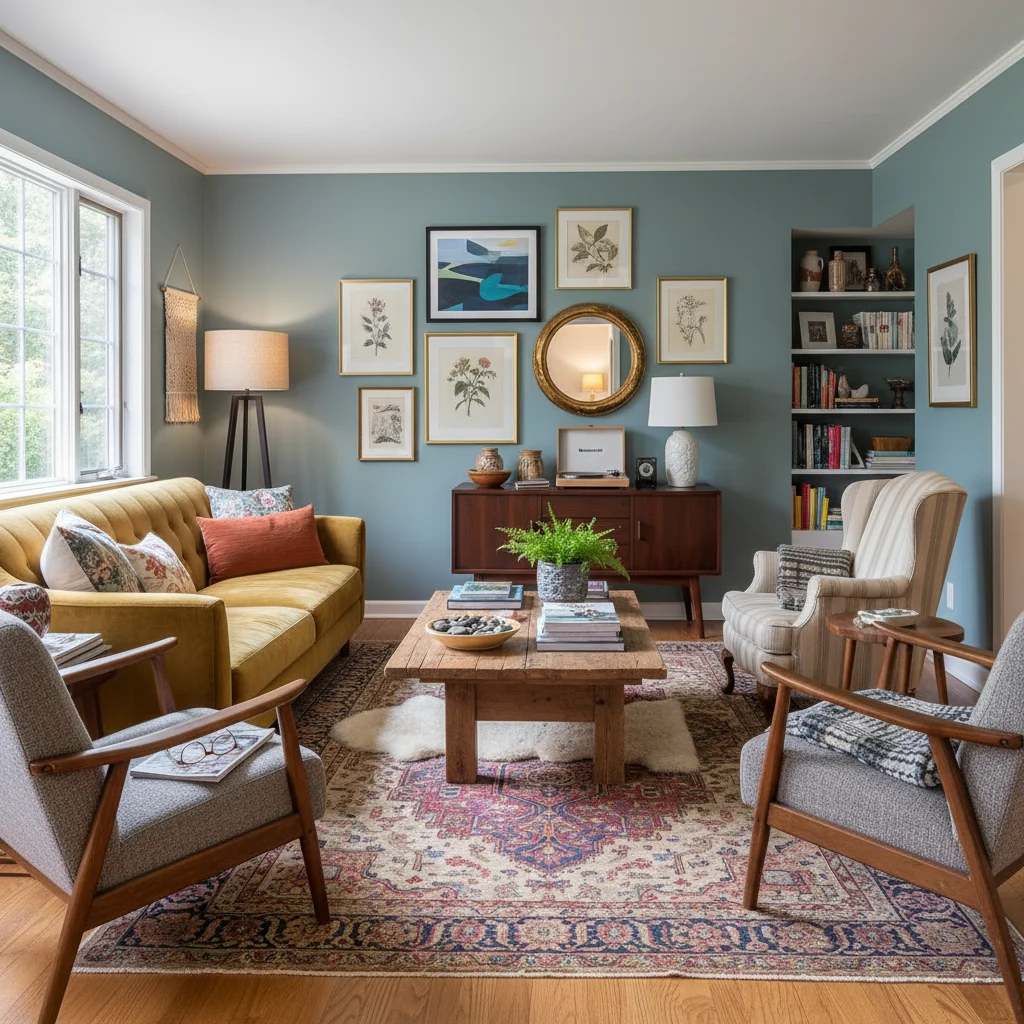 EclecticEclectic interior design is a style that deliberately mixes furniture, patterns and objects from different periods, cultures and styles in one room. It holds together through a shared color thread, repeated shapes or materials and balanced scale, so a vintage chair, modern sofa and antique rug look chosen together rather than accidental.
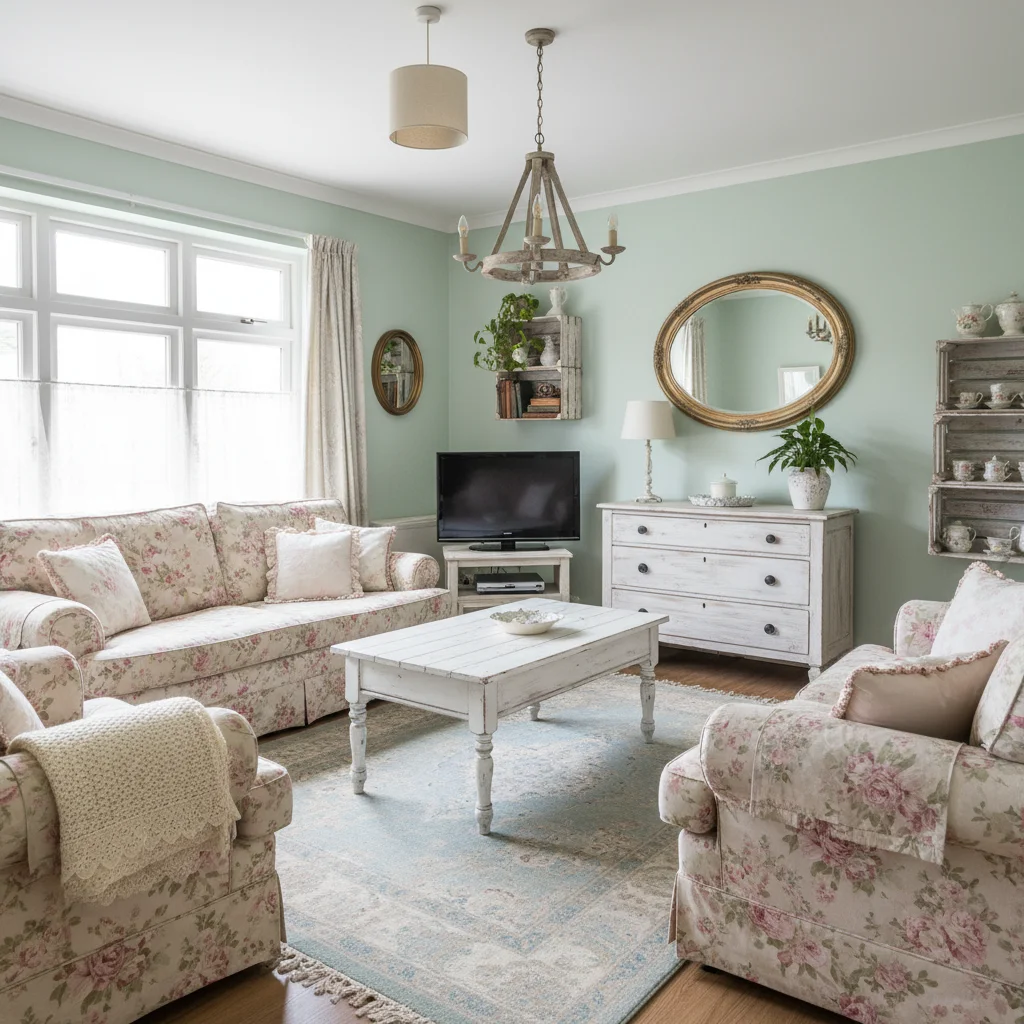 Shabby ChicShabby chic interior design is a soft, romantic style built on white-painted vintage furniture with worn, distressed edges, faded floral fabrics and pastel colors such as blush, mint and powder blue. Slipcovered sofas, lace, crystal chandeliers and gilt mirrors give it a comfortable, lived-in look that feels light and gentle.
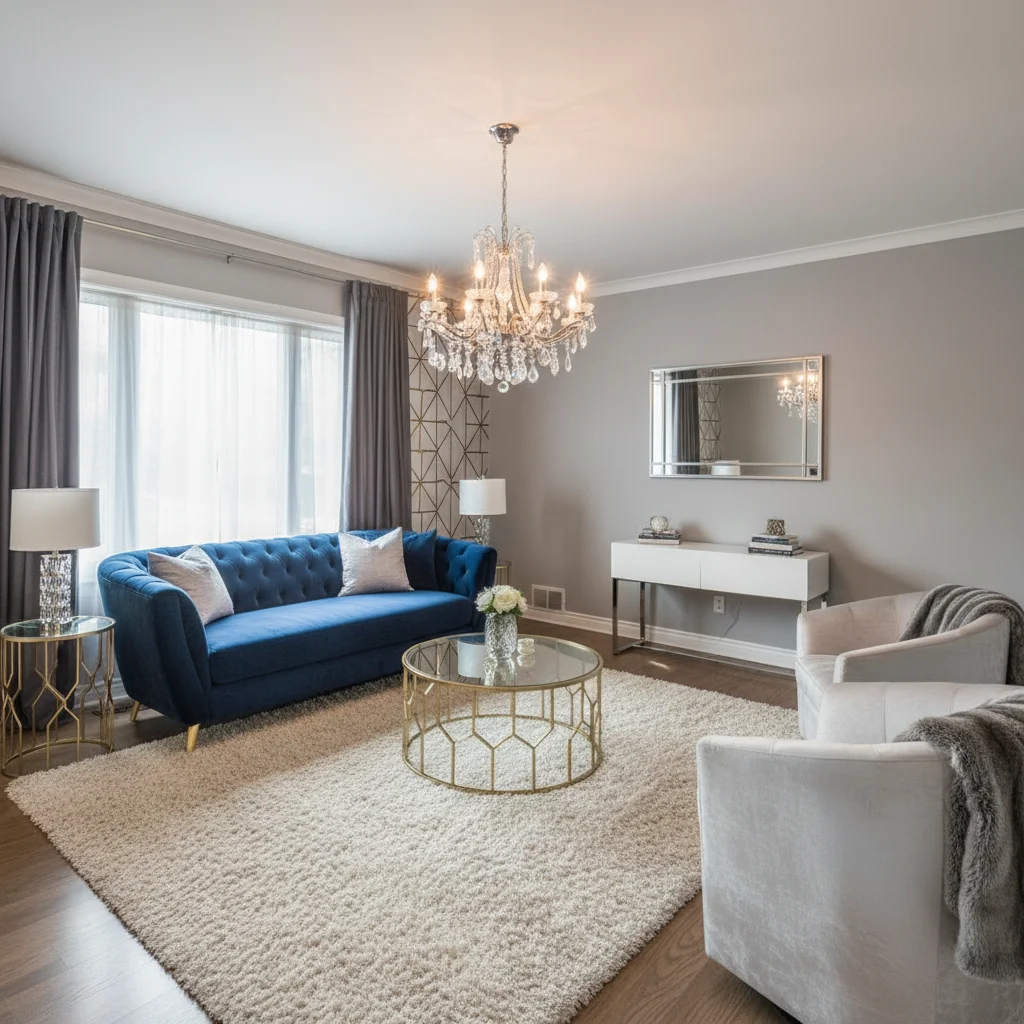 Hollywood GlamHollywood Glam interior design, also called Hollywood Regency, is a dramatic, luxurious style inspired by 1930s–1950s film-star homes. It uses tufted velvet in jewel tones or black and white, mirrored and lacquered furniture, polished gold and brass, crystal chandeliers and bold contrast, with glossy surfaces arranged to catch and reflect light.
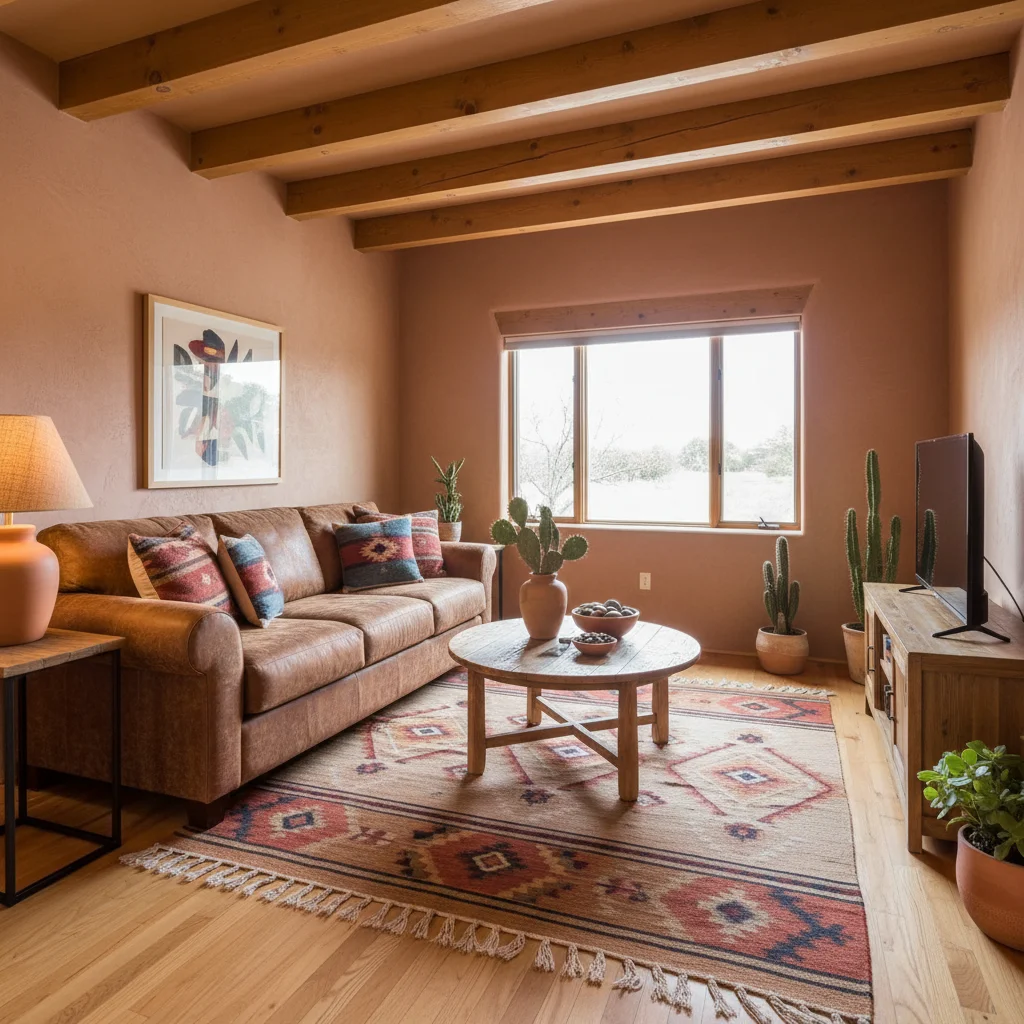 SouthwesternSouthwestern interior design is a warm, earthy style from the deserts of Arizona, New Mexico and northern Mexico. It uses rounded adobe-style plaster walls, exposed wood beams, terracotta tile, leather and heavy wood furniture, and geometric woven textiles, in a palette of sand, rust, terracotta and turquoise with cacti and clay pottery.
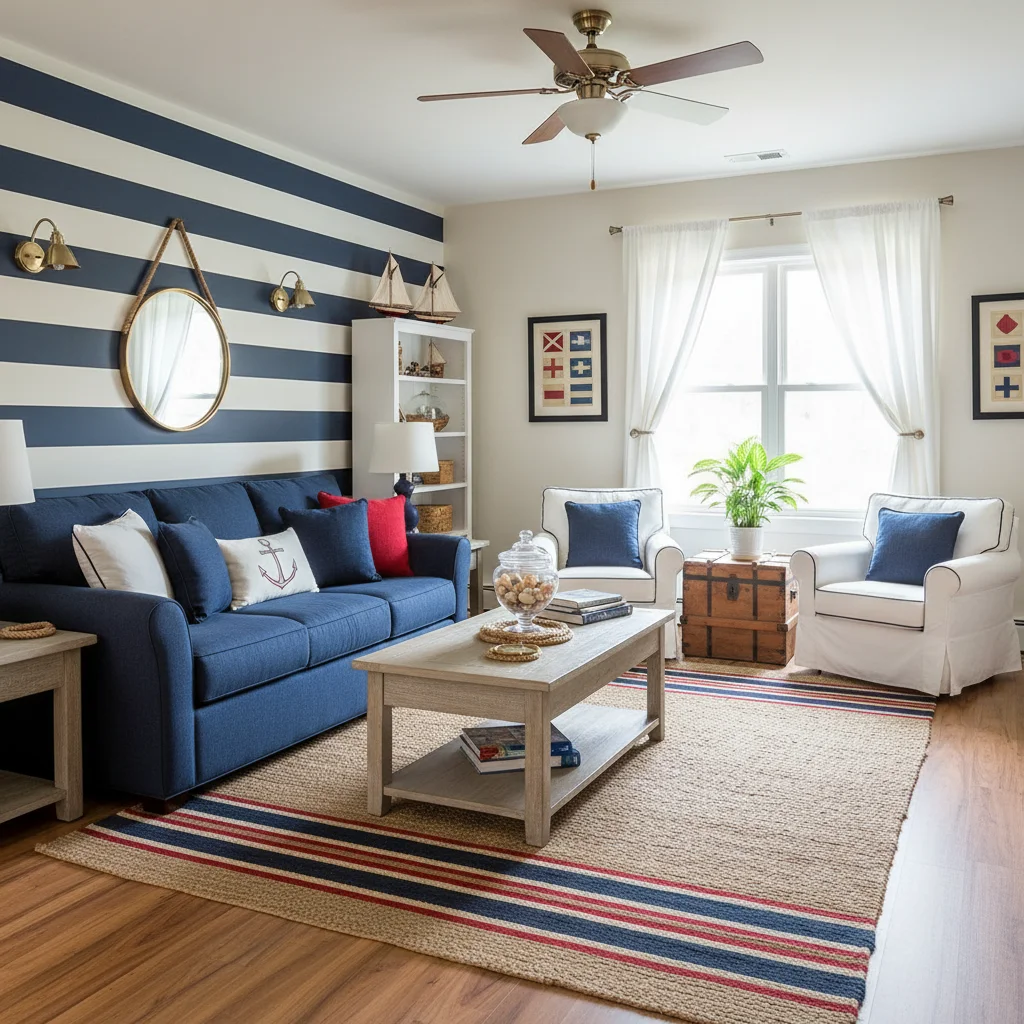 NauticalNautical interior design is a crisp, maritime style inspired by sailing ships, yacht cabins and harbor homes. It is built on navy and white with brass fixtures and small red accents, and uses teak or whitewashed wood, rope details, striped cotton, ship-style lighting and framed sea charts in a tidy, tailored arrangement.
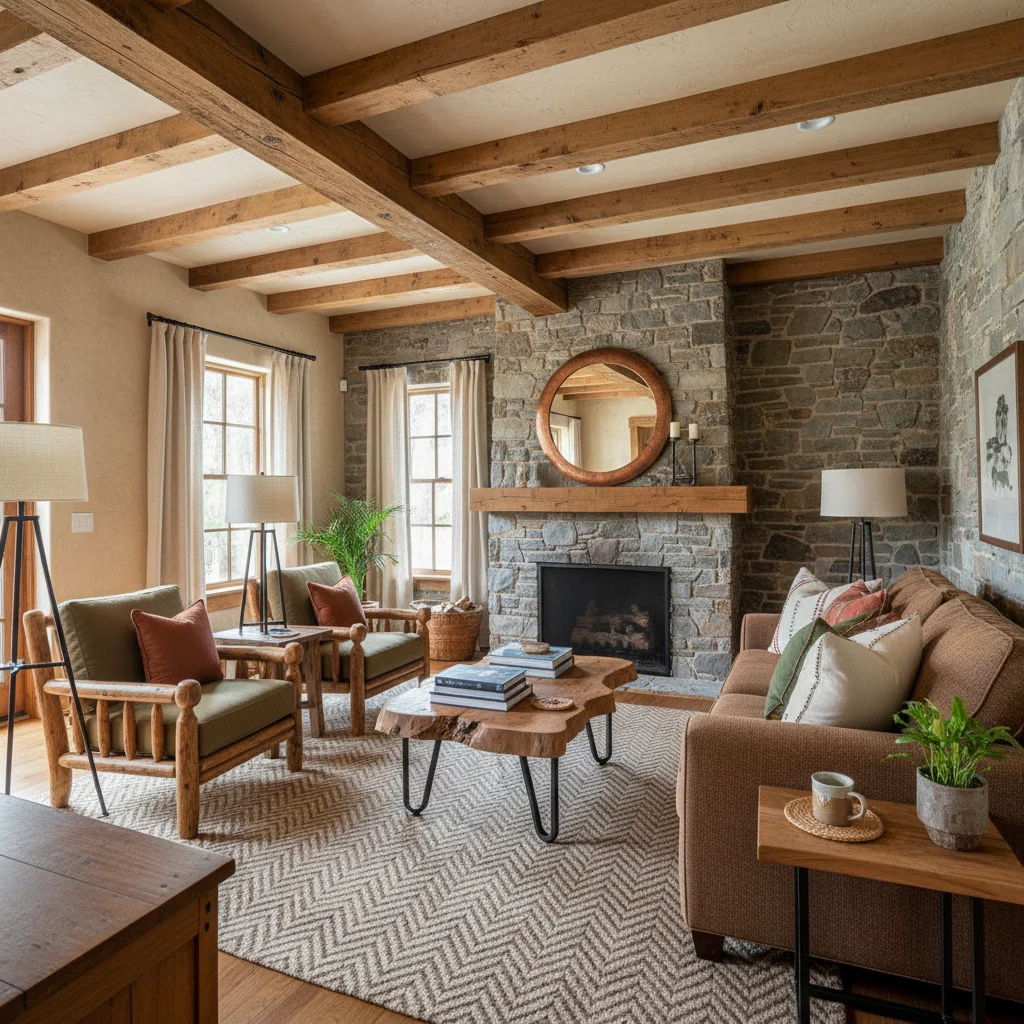 RusticRustic interior design is a warm, natural style based on cabins, mountain lodges and old farm buildings. It uses heavy natural wood with visible grain and knots, exposed beams, stone walls and fireplaces, leather and wool, and an earthy palette of browns, warm creams, forest green and rust, with handmade, rough-hewn finishes.
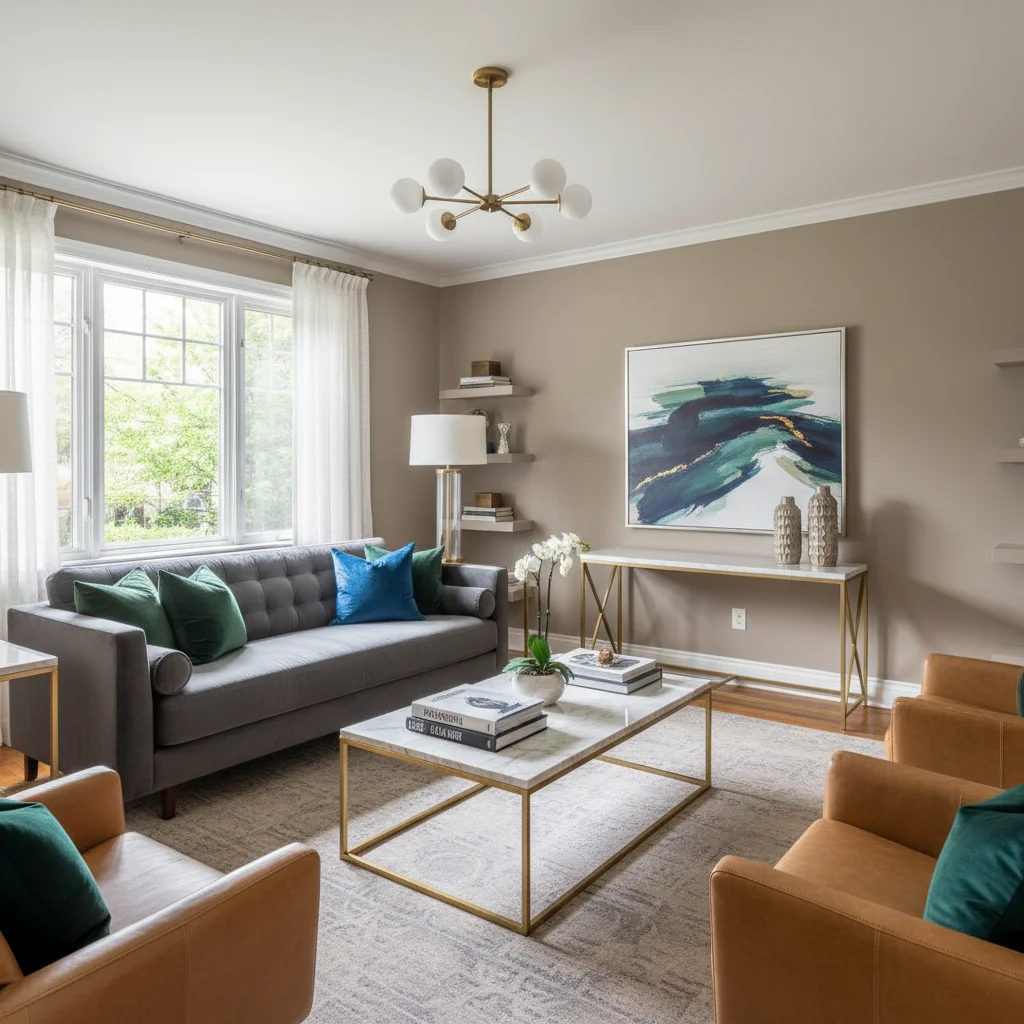 LuxuryLuxury interior design is a style built on high-quality natural materials, tailored furniture and restrained color. It uses marble, velvet, silk, full-grain leather and brushed brass in a calm palette of creams, taupes and charcoal or deep jewel tones, with careful lighting and few, well-chosen objects instead of visible logos or excess.
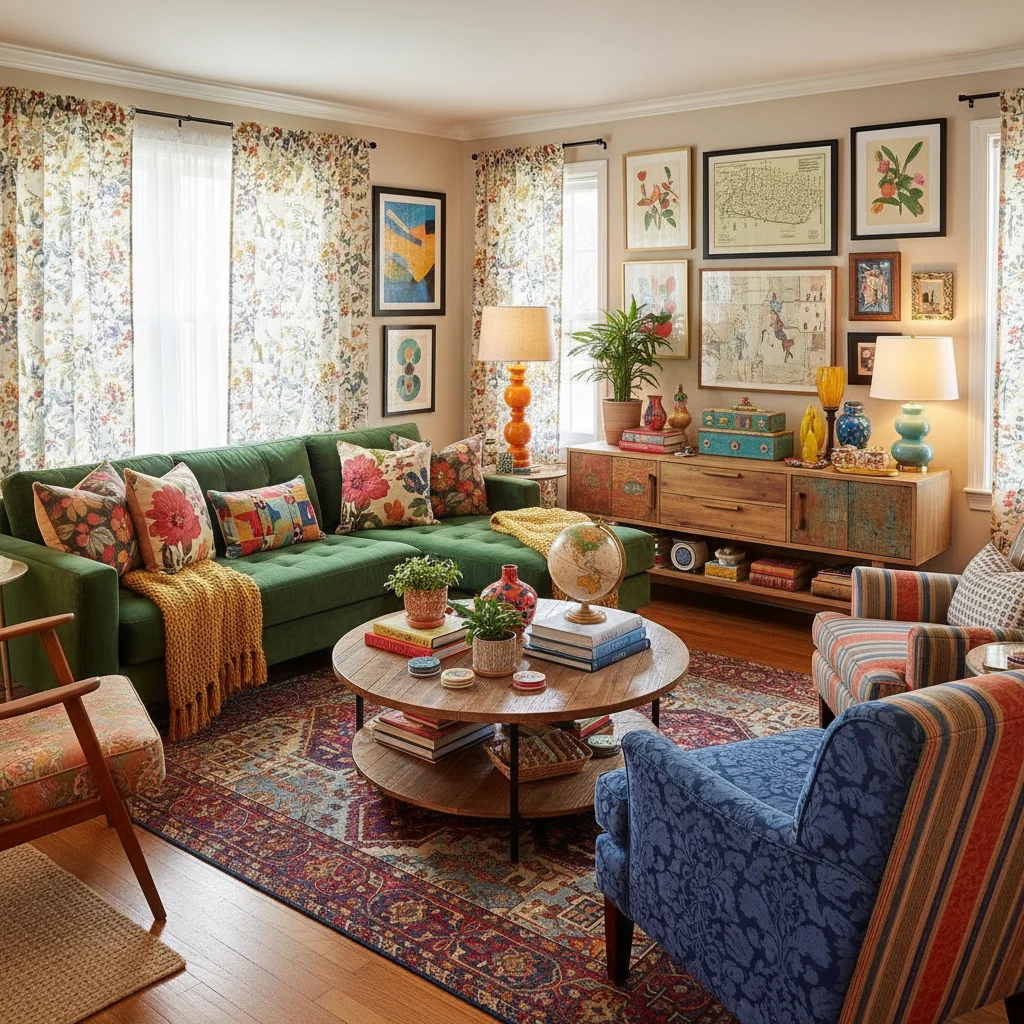 MaximalistMaximalist interior design is a more-is-more style that layers saturated color, bold patterns, art, books and collected objects in one space. It is held together by a repeating palette and deliberate placement, so a maximalist room feels rich and personal rather than cluttered. Typical features include gallery walls, velvet, lacquer and pattern-on-pattern.
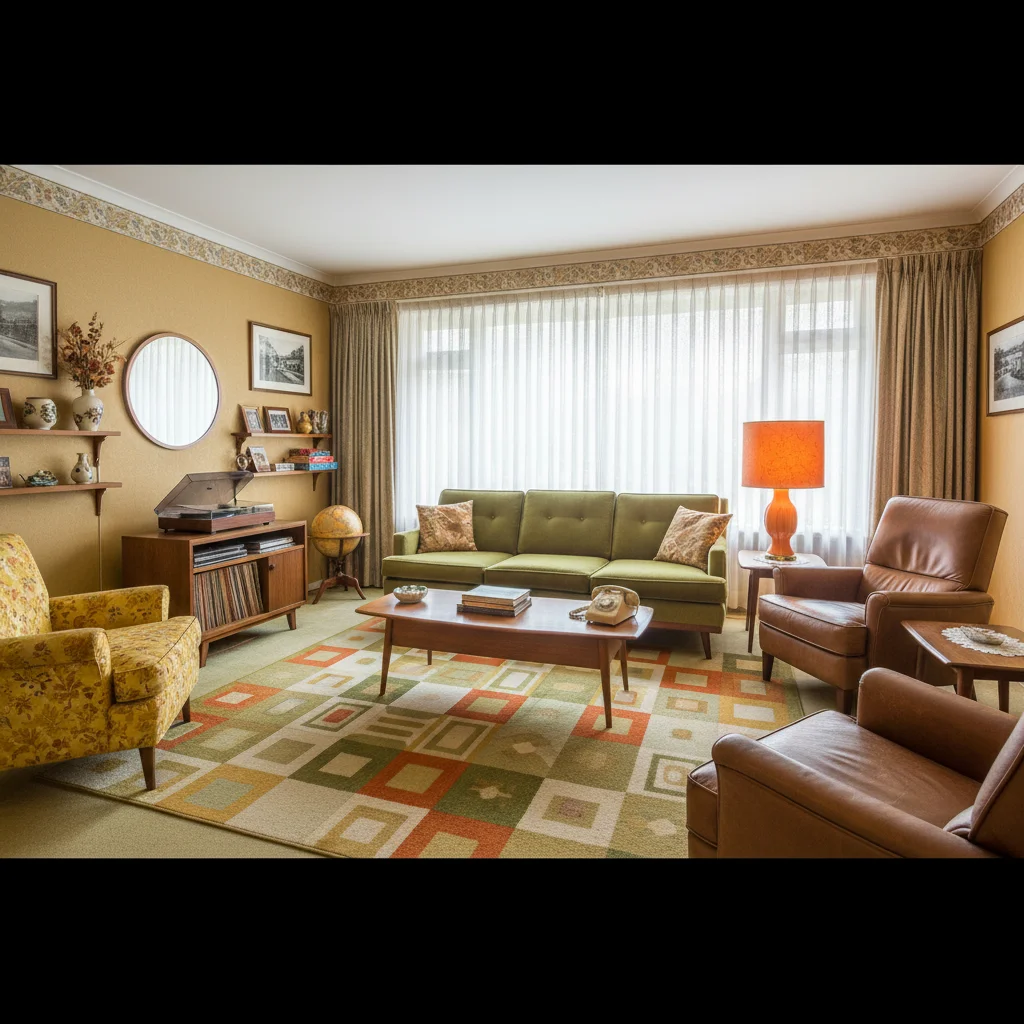 VintageVintage interior design is a style that furnishes a home with authentic pieces from roughly the 1940s to the 1980s, or close reproductions. It uses warm wood, aged brass, retro patterns and nostalgic colors such as mustard, avocado, dusty rose and walnut brown, so the room looks collected over decades rather than bought at once.
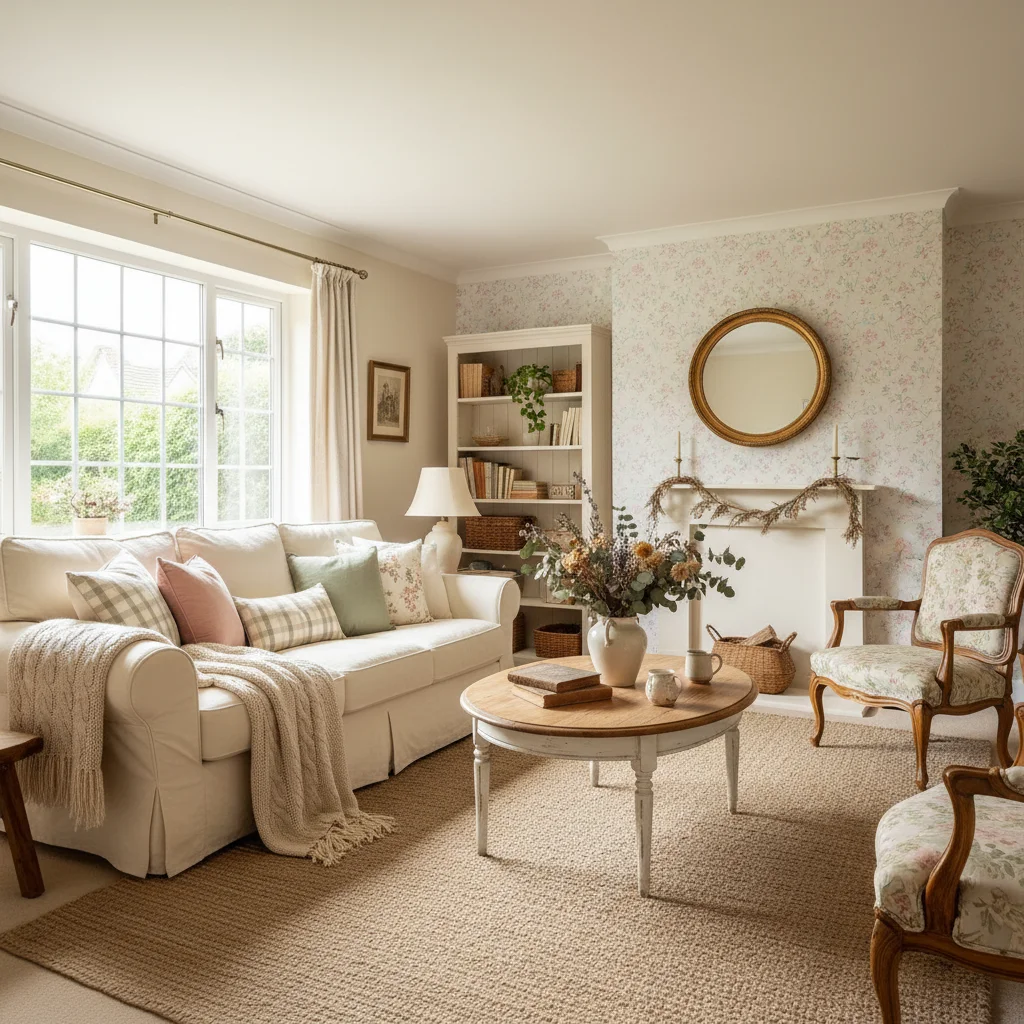 CottagecoreCottagecore is an interior style that recreates an idealized countryside cottage with soft pastel colors, floral and gingham fabrics, painted vintage furniture, handmade textiles and dried or fresh flowers. It favors natural materials such as linen, cotton, pine and wicker, and focuses on comfort, craft and a slower, home-centered way of living.
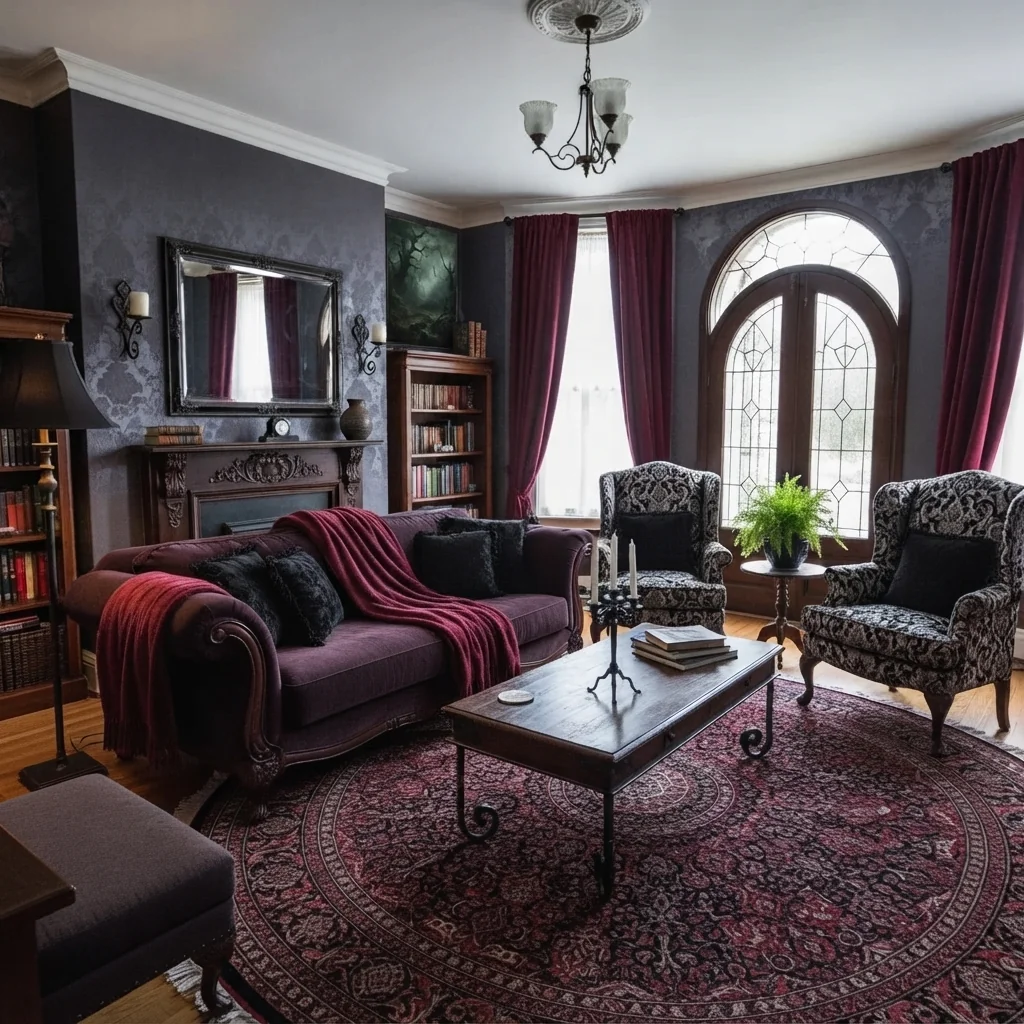 GothicGothic interior design is a dark, romantic style that uses deep colors such as black, charcoal, oxblood and plum with ornate carved furniture, velvet and brocade fabrics, pointed or arched shapes and low candle-like lighting. It draws on Victorian Gothic Revival decor and aims for rooms that feel dramatic, enclosed and richly crafted.
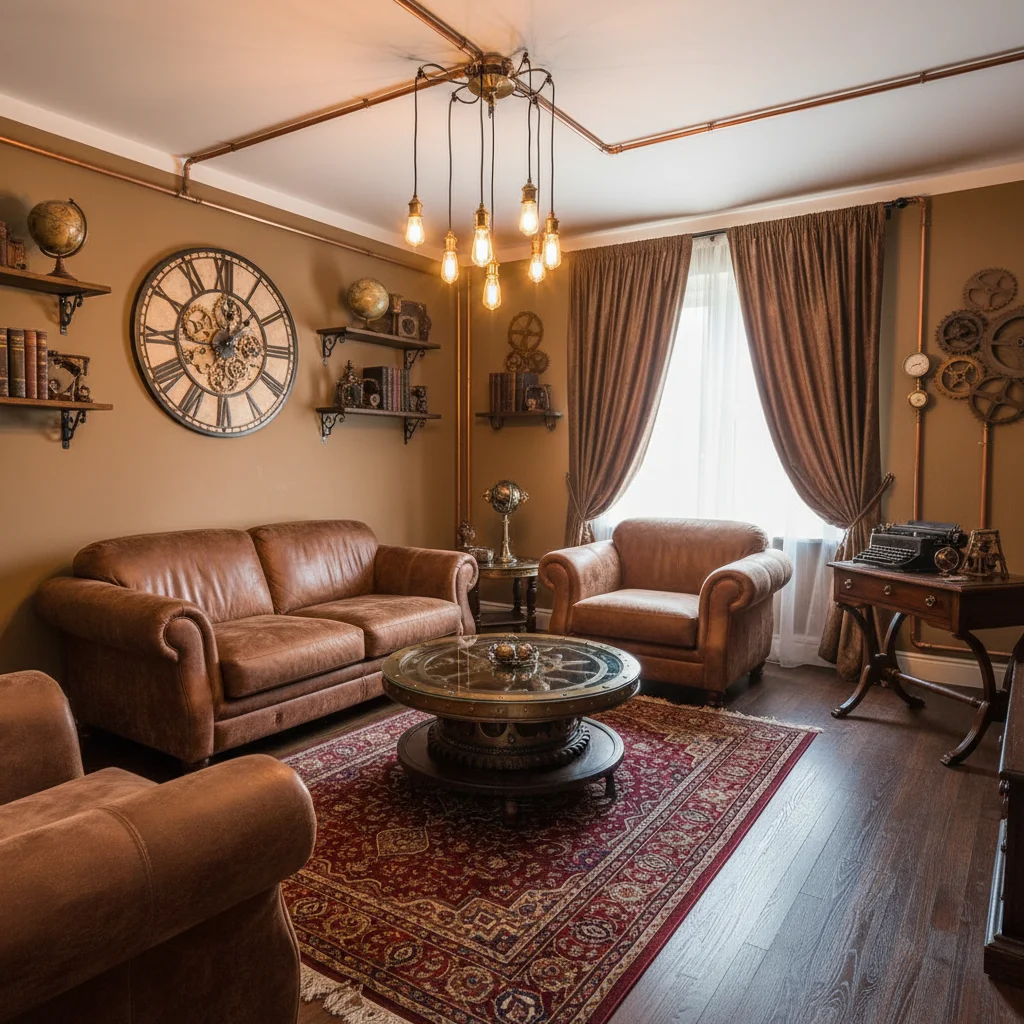 SteampunkSteampunk interior design is a style that combines Victorian furniture with industrial-age machinery details. It uses dark wood, cognac leather, exposed brass and copper pipes, gears, riveted metal, Edison-bulb lighting, maps, globes and scientific instruments in a palette of browns, bronze and gold to make a room feel like an inventor's study.
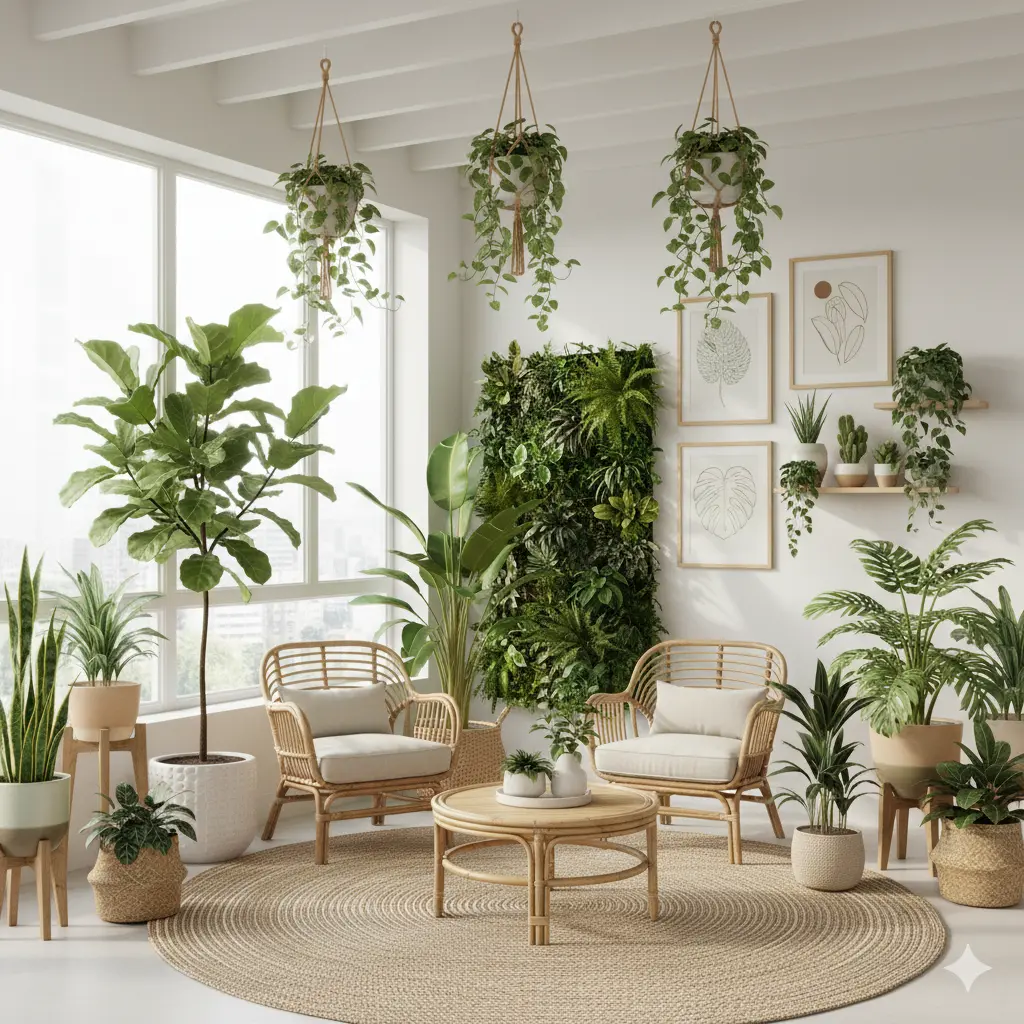 BotanicalBotanical interior design is a style that makes living plants the main decoration of a room. It combines large floor plants, trailing and hanging plants, terracotta and ceramic pots, rattan, bamboo and natural wood, botanical prints and an earthy green palette, so the space feels like an indoor garden filled with daylight.
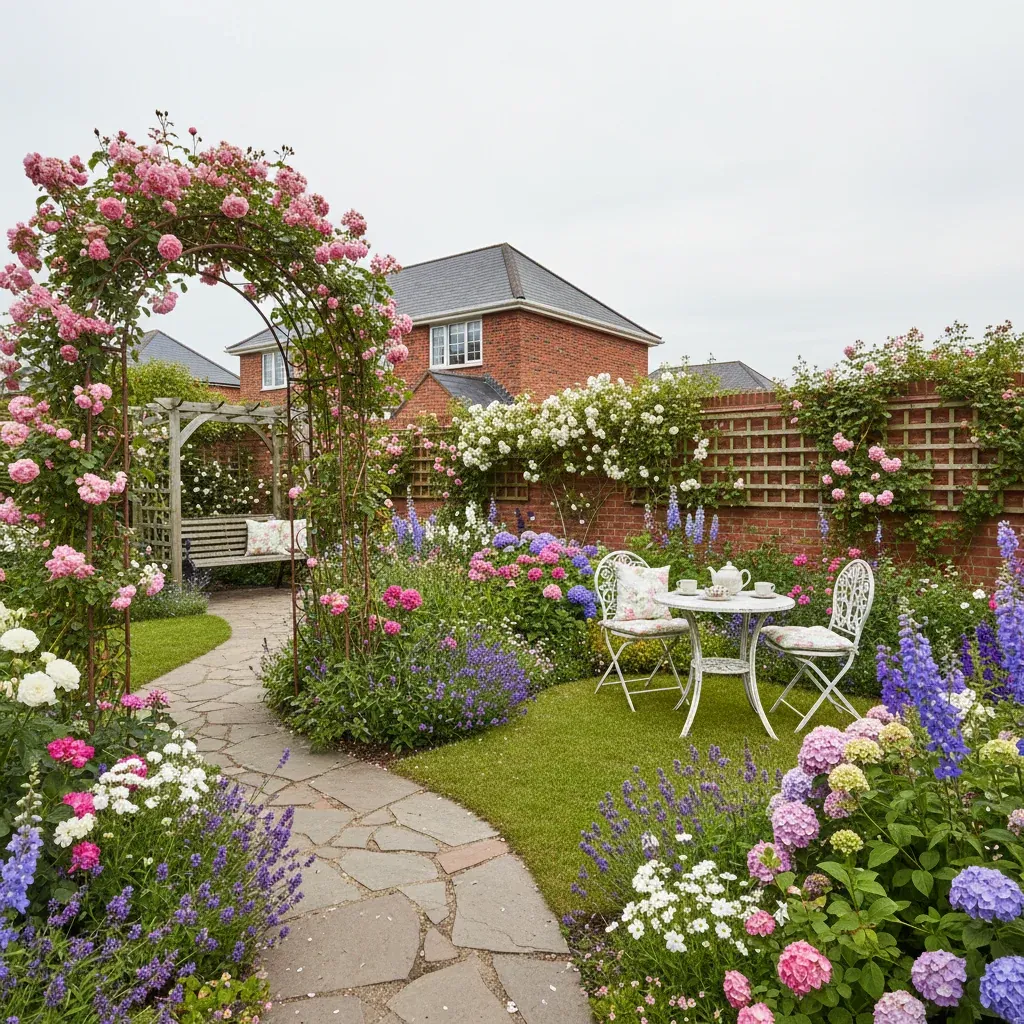 English GardenEnglish garden design is a planting-led landscape style that combines deep mixed borders of perennials, roses and shrubs with clipped hedges, lawns, weathered stone paths and structures such as pergolas and arches. It balances loose, abundant flowering plants in soft pinks, purples, blues and whites against a firm framework of evergreen hedging.
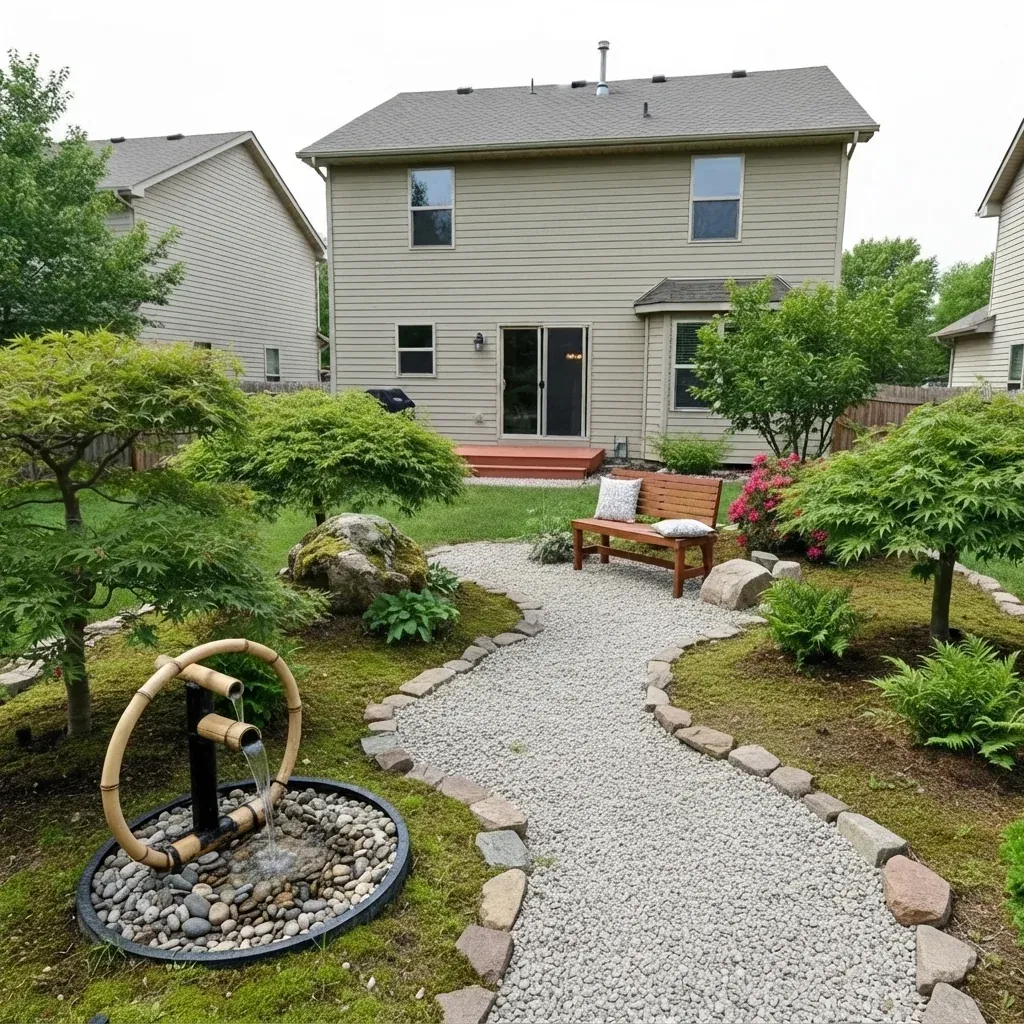 Japanese GardenJapanese garden design is a landscape style that creates a calm, natural scene using carefully placed rocks, raked gravel, moss, clipped evergreens, Japanese maples, water and simple bamboo or stone features. It favors asymmetry, a restrained green palette and deliberate empty space, so every element looks intentional and the garden invites slow, quiet viewing.
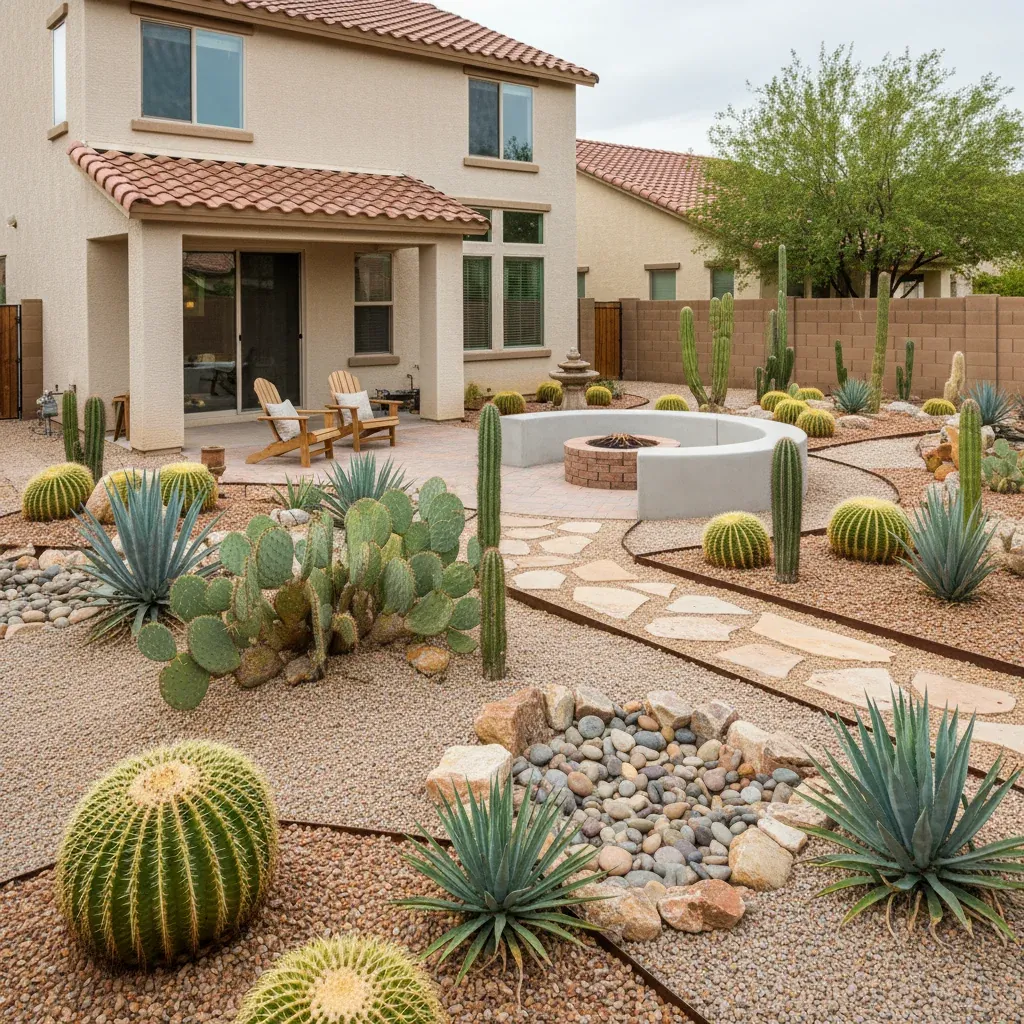 Desert GardenDesert garden design is a drought-tolerant landscape style, often called xeriscape, that uses cacti, agaves, succulents, ornamental grasses and desert trees set in gravel or decomposed granite with natural boulders. Plants are spaced as sculptural specimens, colors follow sand, rust and terracotta earth tones, and irrigation is minimal or limited to targeted drip lines.
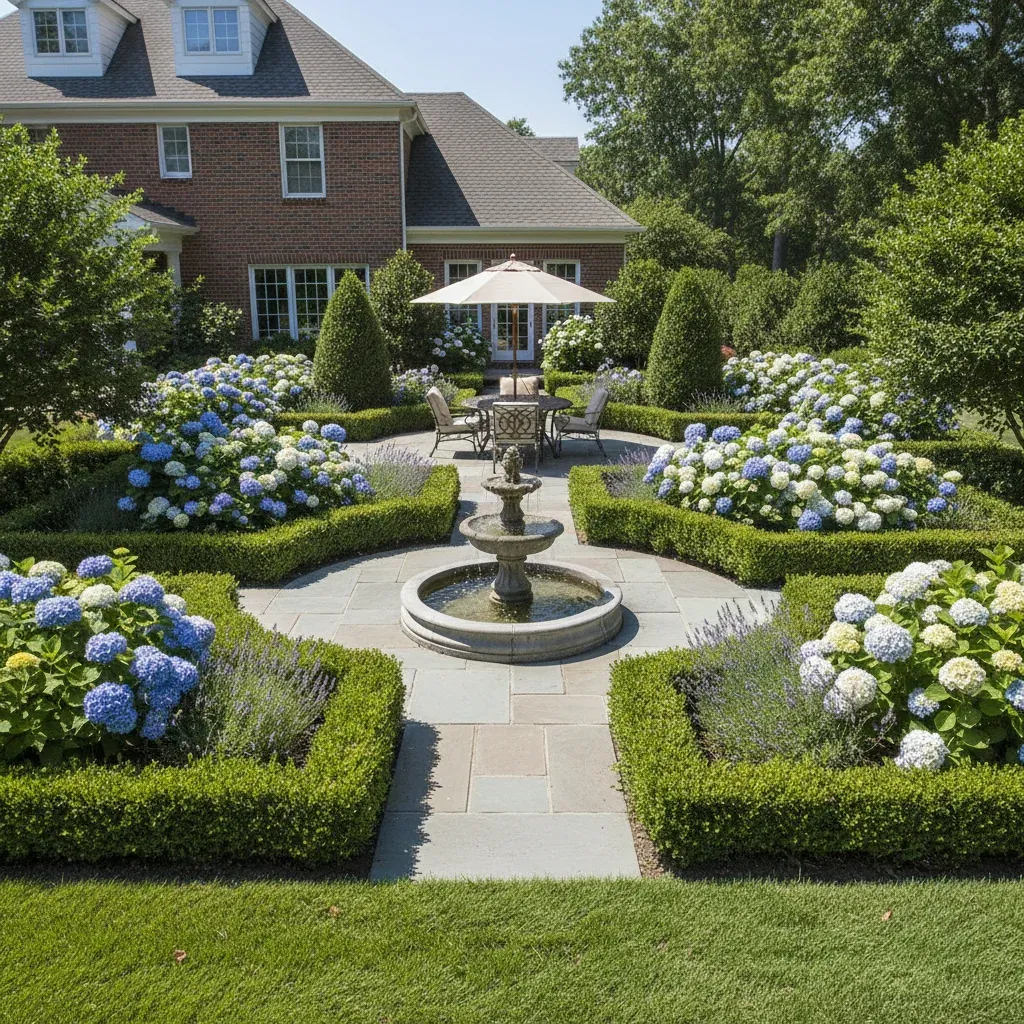 Formal GardenFormal garden design is a landscape style based on symmetry, straight axes and geometric shapes. It uses clipped hedges such as boxwood and yew, topiary, parterres, gravel or stone paths, lawns and a central focal point such as a fountain or urn, so the whole garden reads as an ordered composition seen best from the house.
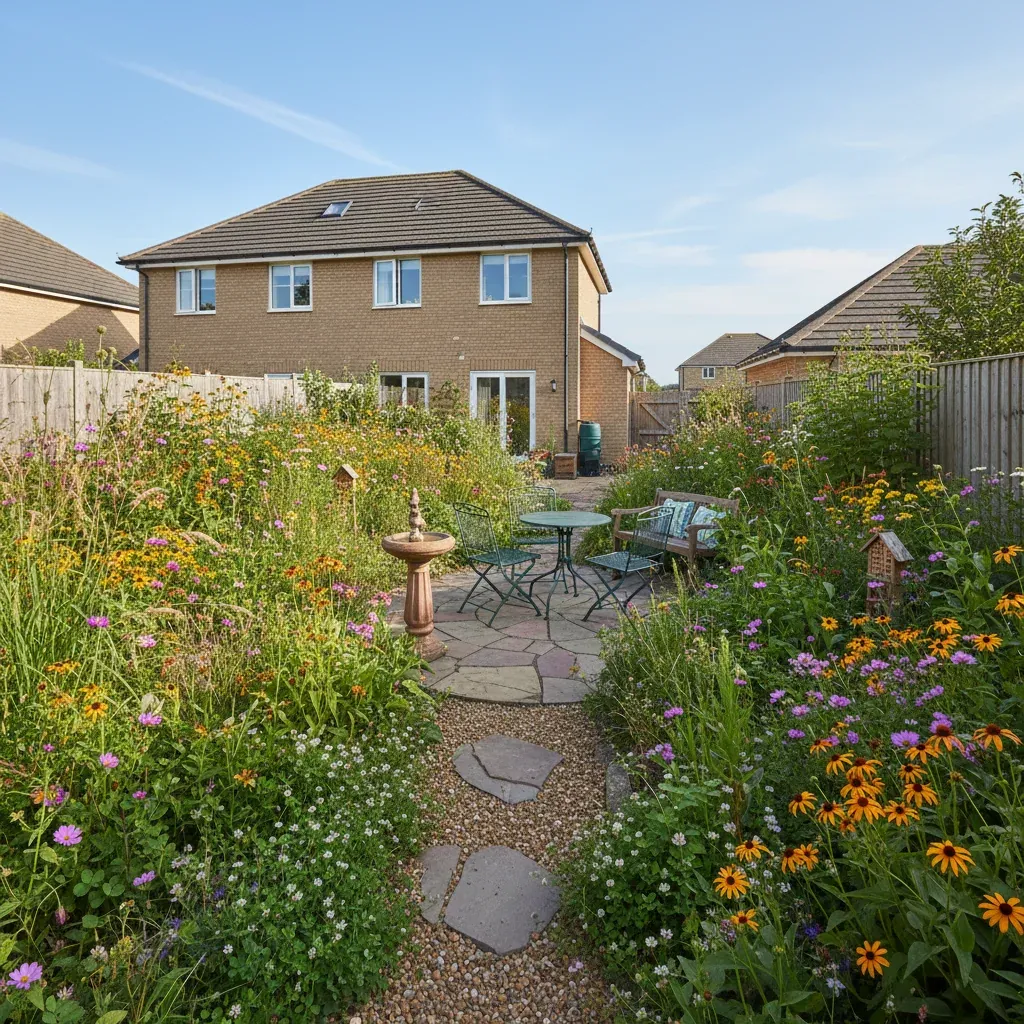 Wild GardenWild garden design is a naturalistic landscape style that uses native wildflowers, ornamental grasses and self-seeding perennials planted in loose drifts, with mown paths winding through longer growth. It aims to look like a natural meadow or woodland edge while supporting pollinators, birds and wildlife, and it needs less watering, feeding and mowing than lawns.


Unlock the Full Power of Decor Copilot
Upload a photo and see your room redesigned in seconds. Start for free today.
No credit card required