
Scandinavian Interior Design: Colors, Furniture & Ideas
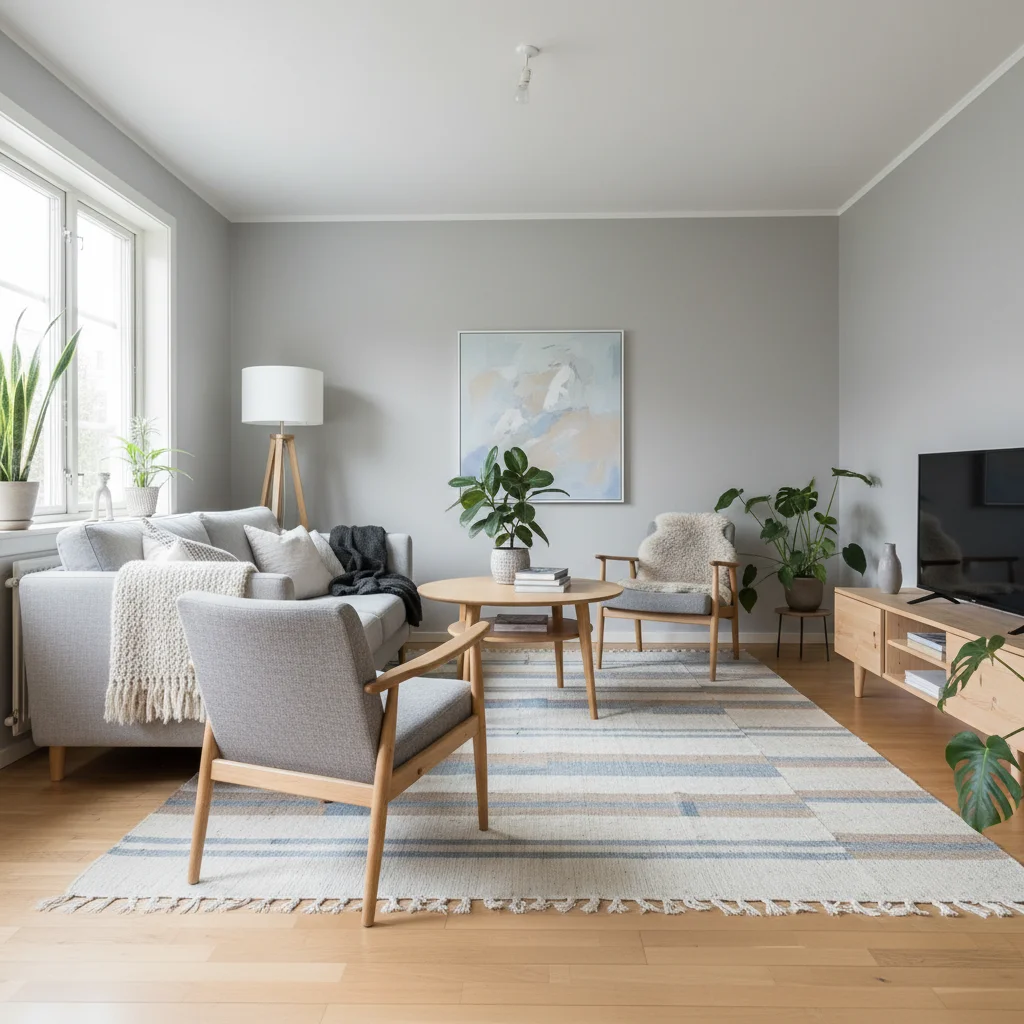
Scandinavian interior design is a style from Denmark, Sweden, Norway, and Finland that combines light-colored walls, pale woods such as birch, ash, and white oak, and simple functional furniture with cozy textiles. It prioritizes daylight, comfort, and practicality, creating bright rooms that feel calm, warm, and lived-in.
What is Scandinavian style?
Scandinavian design took shape in the 1930s to 1950s, when designers such as Alvar Aalto, Arne Jacobsen, Hans Wegner, and Børge Mogensen made well-made, affordable furniture for ordinary homes. The 1954 "Design in Scandinavia" exhibition toured North America and made the look famous. Long, dark Nordic winters explain its love of white walls, pale floors, and candlelight. Its current popularity comes from the Danish idea of hygge and from IKEA bringing the look to homes worldwide.
Scandinavian color palette
- Nordic white#F4F4F0
- Light grey#D9D9D6
- Birch#E3CFAE
- Oatmeal#D8CBB5
- Dusty blue#8DA2B0
- Charcoal#3D3F41
Key features of Scandinavian design
- 1
White or very light walls that bounce scarce daylight around the room.
- 2
Pale wood floors, often wide oak planks with a white-oiled finish.
- 3
Furniture with tapered legs and soft curves that lift it off the floor.
- 4
Layered textiles: a knit throw, wool cushions, and a sheepskin on a chair.
- 5
Candles and several lamps at low height to create hygge in the evening.
- 6
Green plants and natural objects as the main decoration.
Materials
- White oak, ash, and birch
- Wool and chunky knits
- Sheepskin
- Linen and cotton
- Matte ceramics
- Paper or linen lampshades
- Painted or white-oiled wood floors
Furniture
- Wishbone-style dining chairs in oak with a woven paper-cord seat
- Sofa in light grey wool on short tapered wooden legs
- Round dining table on a pedestal or four splayed legs
- Wall-mounted string-style shelving system
- Lounge chair with a curved plywood or bentwood frame
- Simple pale wood bed with linen bedding
Scandinavian style room by room
Scandinavian living room
Place a light grey sofa on a wool rug that extends at least 15 cm under its front legs, and light the room with a floor lamp, a table lamp, and candles.
Try it on your living roomScandinavian bedroom
Use a pale wood bed with layered white and oatmeal linen bedding, and add a sheepskin rug on the side where you step out of bed.
Try it on your bedroomScandinavian kitchen
Pair white or pale oak cabinets with open oak shelves for everyday ceramics and a paper or opal glass pendant above the table.
Try it on your kitchen
Mistakes to avoid
- Making everything stark white; mix in oatmeal, light grey, and wood tones so the room feels warm.
- Heavy curtains that block light; use sheer linen or leave windows bare.
- Using only one texture; combine wool, linen, wood, and ceramic in every room.
- Dark, oversized furniture; choose pieces on legs in pale finishes to keep the room airy.
Get the Scandinavian look on a budget
- Paint walls a soft white with a warm undertone and repaint dark wood furniture in white or light grey.
- Buy a large faux sheepskin and two chunky knit throws to add Nordic texture for little cost.
- Swap one ceiling fixture for a paper lantern pendant and add pothos or snake plants in white ceramic pots.
Scandinavian vs similar styles
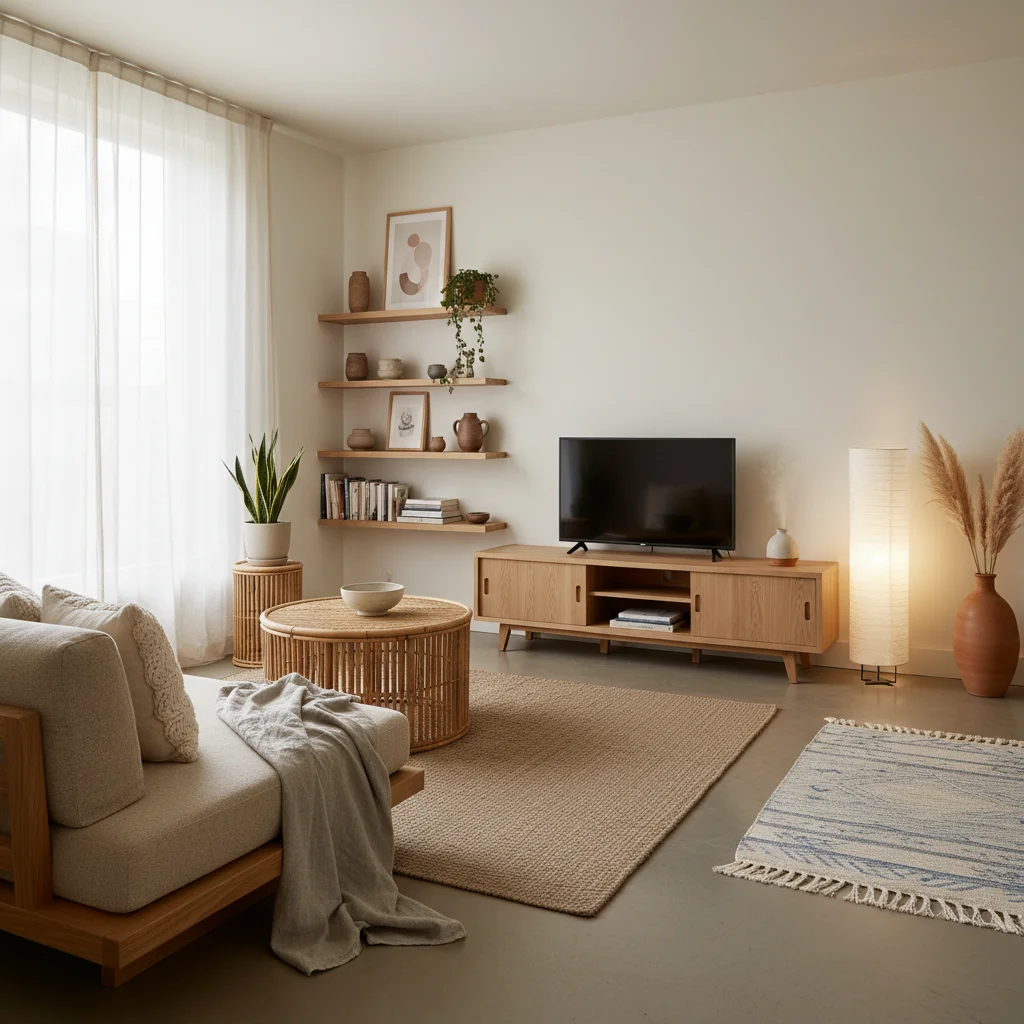 Scandinavian vs JapandiJapandi blends Scandinavian comfort with Japanese restraint, using lower furniture, darker accent woods, and fewer textiles.
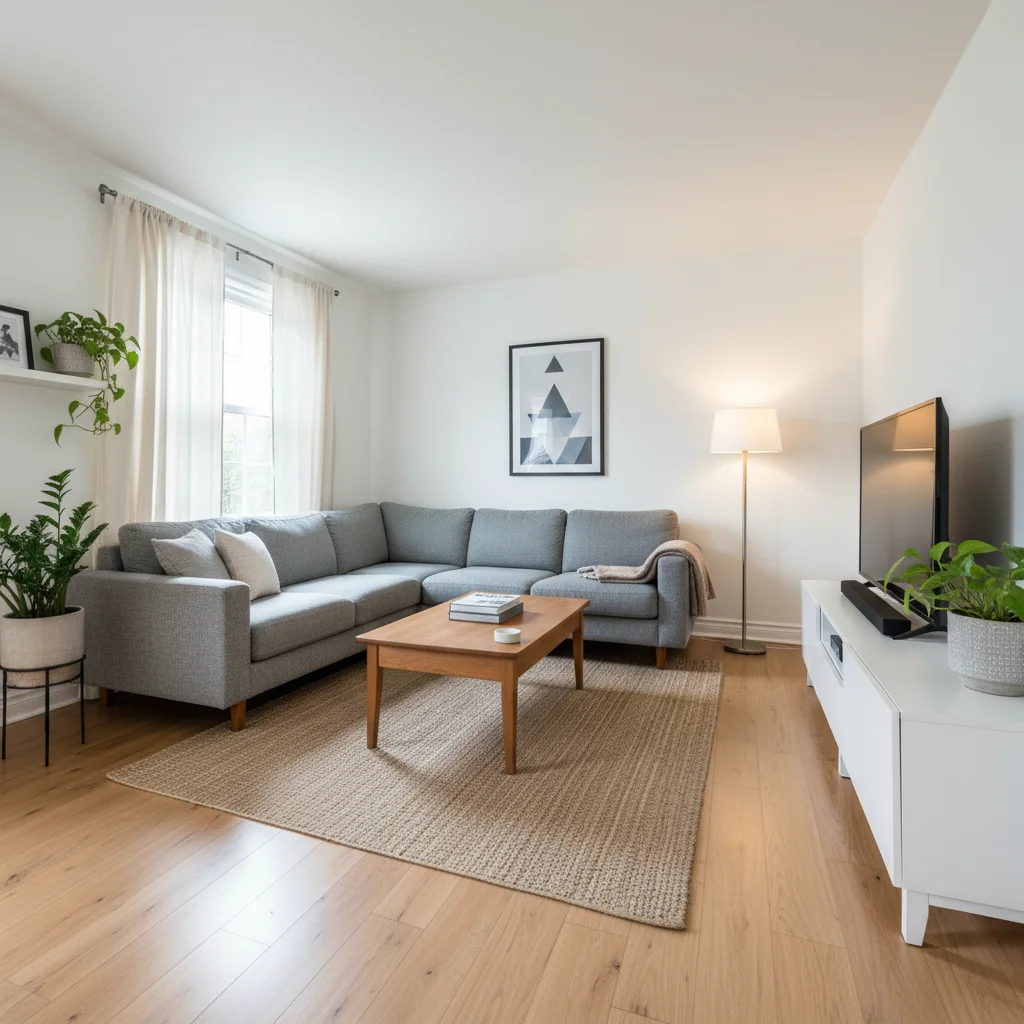 Scandinavian vs MinimalistMinimalist removes more objects and textiles, while Scandinavian keeps cozy layers and personal items on display.
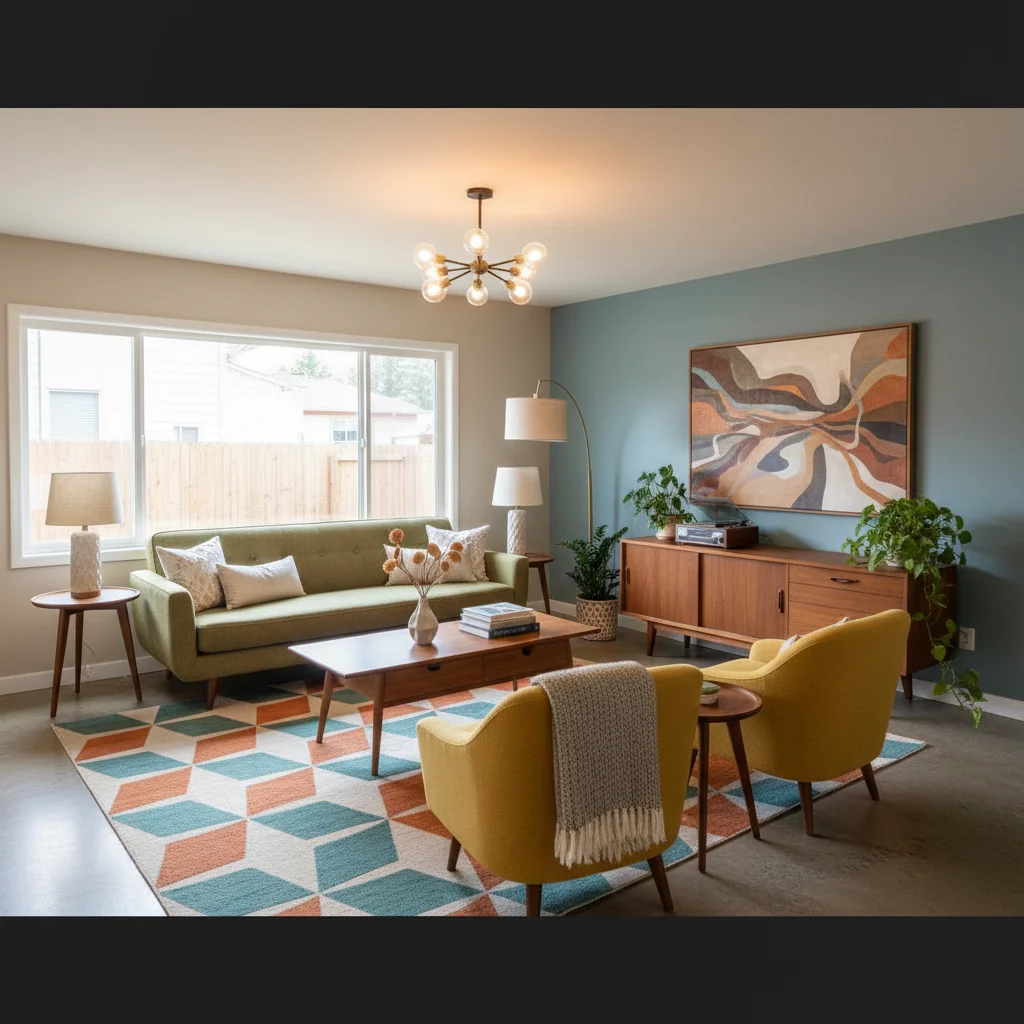 Scandinavian vs Mid-Century ModernMid-century modern shares many Danish designers but uses darker teak and walnut and bolder accent colors.
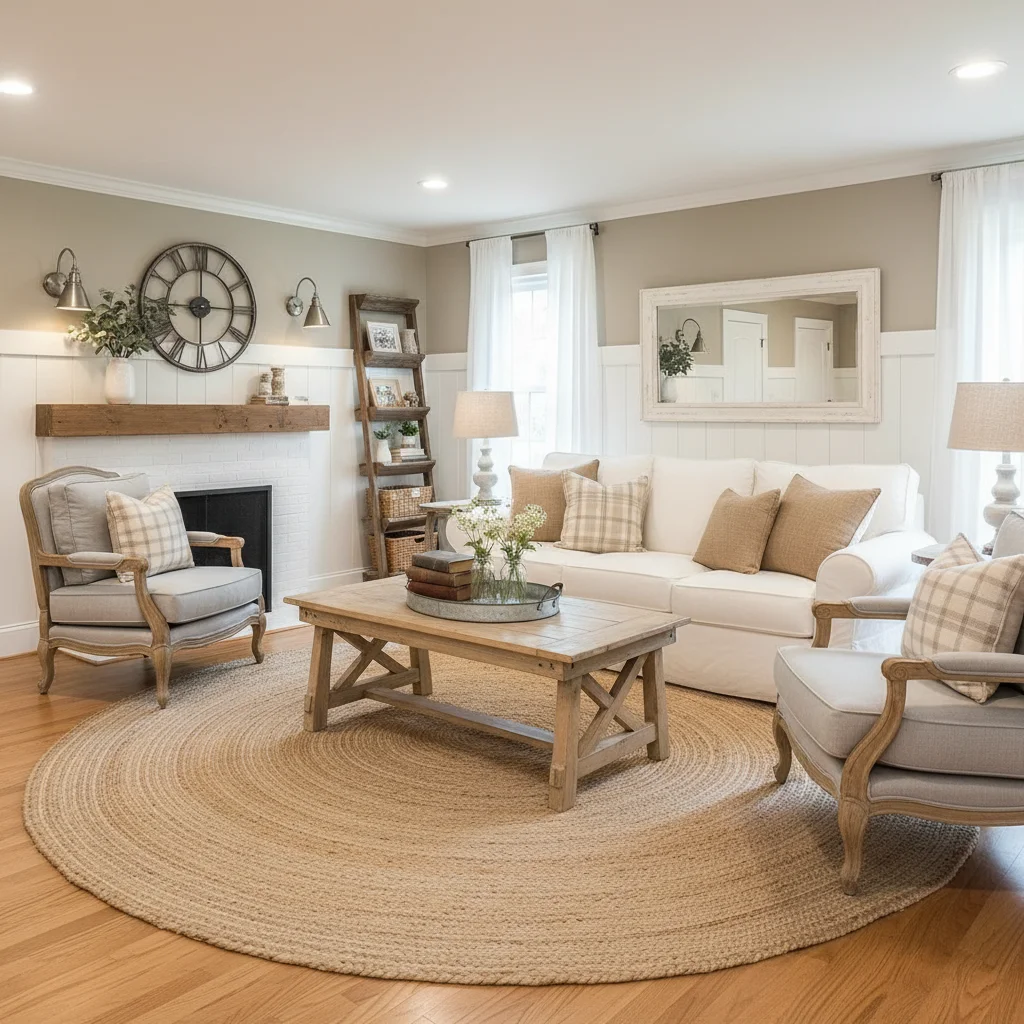 Scandinavian vs FarmhouseFarmhouse adds rustic reclaimed wood, shiplap, and vintage pieces, while Scandinavian keeps wood smooth and pale.
Frequently Asked Questions
What colors are used in Scandinavian interior design?
Scandinavian interiors use white, light grey, oatmeal, and beige as the base, with pale wood tones from birch, ash, and oak. Accent colors are muted: dusty blue, sage green, soft pink, or charcoal. Bright, saturated colors are rare and usually limited to a single textile or print.
What is hygge in Scandinavian design?
Hygge is a Danish word for a feeling of cozy comfort and contentment. In interiors it means warm, low lighting from candles and lamps, soft textiles such as wool throws and sheepskins, a comfortable seat for reading, and natural materials. It explains why Scandinavian rooms feel warm despite their light, simple palette.
What is the difference between Scandinavian and Japandi design?
Scandinavian design uses very pale woods, white walls, and many soft textiles to create a cozy, bright room. Japandi combines that comfort with Japanese minimalism, so furniture sits lower, the palette adds earthy tones such as clay and charcoal, darker woods appear, and decoration is reduced to a few handmade objects.
What furniture is typical of Scandinavian design?
Typical pieces include oak dining chairs with woven paper-cord seats, sofas on short tapered legs, round pedestal tables, wall-mounted shelving, and bentwood or molded plywood lounge chairs. Most are made from pale solid wood with simple shapes and visible joinery. Upholstery is usually wool or linen in grey, white, or oatmeal.
How do I make my home look Scandinavian on a budget?
Start by painting walls in a warm white and clearing surfaces. Then add pale wood pieces, a wool or cotton rug, a faux sheepskin, chunky knit throws, and several green plants. Replace harsh overhead light with lamps and a paper pendant. Second-hand pine or oak furniture can be sanded and white-oiled for a Nordic finish.


Unlock the Full Power of Decor Copilot
Upload a photo and see your room redesigned in seconds. Start for free today.
No credit card required