
Mediterranean Interior Design: Colors, Materials & Ideas
Mediterranean interior design is a warm, earthy style drawn from the coastal homes of Greece, Italy, Spain and southern France. It uses textured lime plaster walls, terracotta or stone floors, exposed wood beams, arches, wrought iron and hand-painted tile, with a palette of whitewash, ochre, olive green and sea blue.
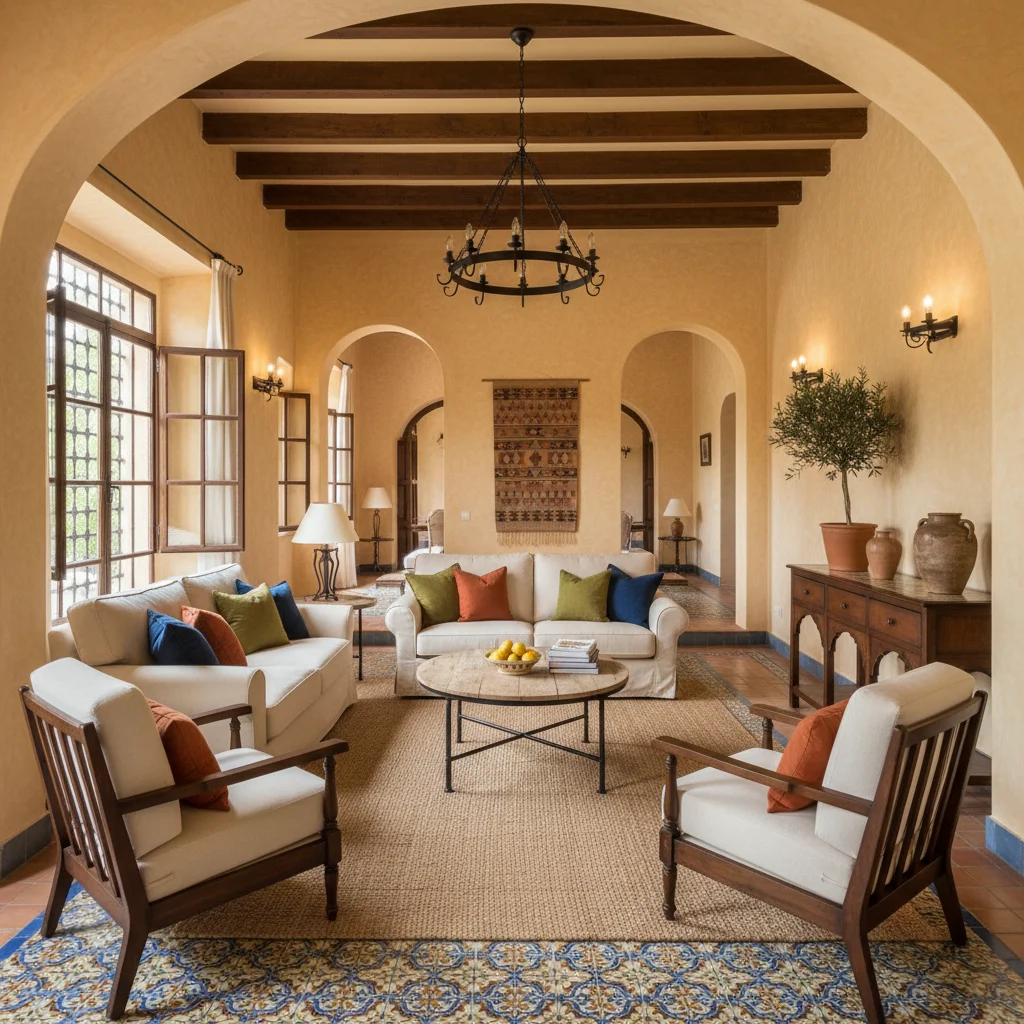
What is Mediterranean style?
The style comes from houses built around the Mediterranean Sea, where thick masonry walls, small deep windows and tiled floors kept interiors cool through hot summers. Local materials shaped the look: lime plaster, clay tile, chestnut and oak beams, and wrought iron from village forges. Greek island homes lean white and blue, Tuscan farmhouses lean ochre and terracotta, and Spanish homes add arches and colorful tile. People choose it today because it feels relaxed and handmade, and its natural materials age well.
Mediterranean color palette
- Whitewash#F5F1E8
- Terracotta#C66B3D
- Olive green#708238
- Aegean blue#1F5F8B
- Ochre#CC8E35
- Sand#D8C3A5
Key features of Mediterranean design
- 1
Hand-troweled plaster walls with visible texture and soft variation in color.
- 2
Arched doorways, windows or wall niches with rounded tops.
- 3
Terracotta, stone or encaustic-pattern tile floors.
- 4
Exposed ceiling beams in dark or natural wood.
- 5
Wrought iron in lighting, curtain rods, railings and hardware.
- 6
Ceramic pottery, olive trees and herbs in clay pots as the main decoration.
Materials
- Lime plaster or limewash paint
- Terracotta (cotto) floor tile
- Travertine and limestone
- Rough-sawn oak or chestnut beams
- Wrought iron
- Hand-painted ceramic tile
- Linen and cotton
Furniture
- Solid wood farmhouse dining table with turned or trestle legs
- Wrought iron chandelier or lantern pendant
- Linen slipcovered sofa in white or sand
- Built-in plaster bench (banco) with loose cushions
- Carved wood sideboard or chest
- Rush-seat or woven-seat ladderback chairs
Mediterranean style room by room
Mediterranean kitchen
Use a backsplash of hand-painted or zellige-style tile, open wood shelves for pottery, and a deep ceramic or stone sink.
Try it on your kitchenMediterranean living room
Limewash the walls, add a low built-in bench under the window, and frame a doorway with a plaster arch if the structure allows.
Try it on your living roomMediterranean balcony
Lay terracotta tiles, add a small wrought iron bistro set, and plant olive, lemon or rosemary in large clay pots.
Try it on your balcony
Mistakes to avoid
- Glossy or flat drywall paint; use limewash or a mineral paint so walls have depth.
- Heavy, dark Tuscan-revival schemes with too much brown; balance dark wood with plenty of whitewash.
- Mixing every variation at once; choose Greek, Tuscan or Spanish as the lead and borrow lightly from the others.
- Synthetic, shiny fabrics; stick to linen, cotton and wool.
Get the Mediterranean look on a budget
- Limewash existing walls yourself; a few liters covers a room and gives the plaster look without replastering.
- Use peel-and-stick patterned tile on a backsplash or stair risers.
- Buy terracotta pots and unglazed ceramic vessels from garden centers instead of decor shops.
Mediterranean vs similar styles
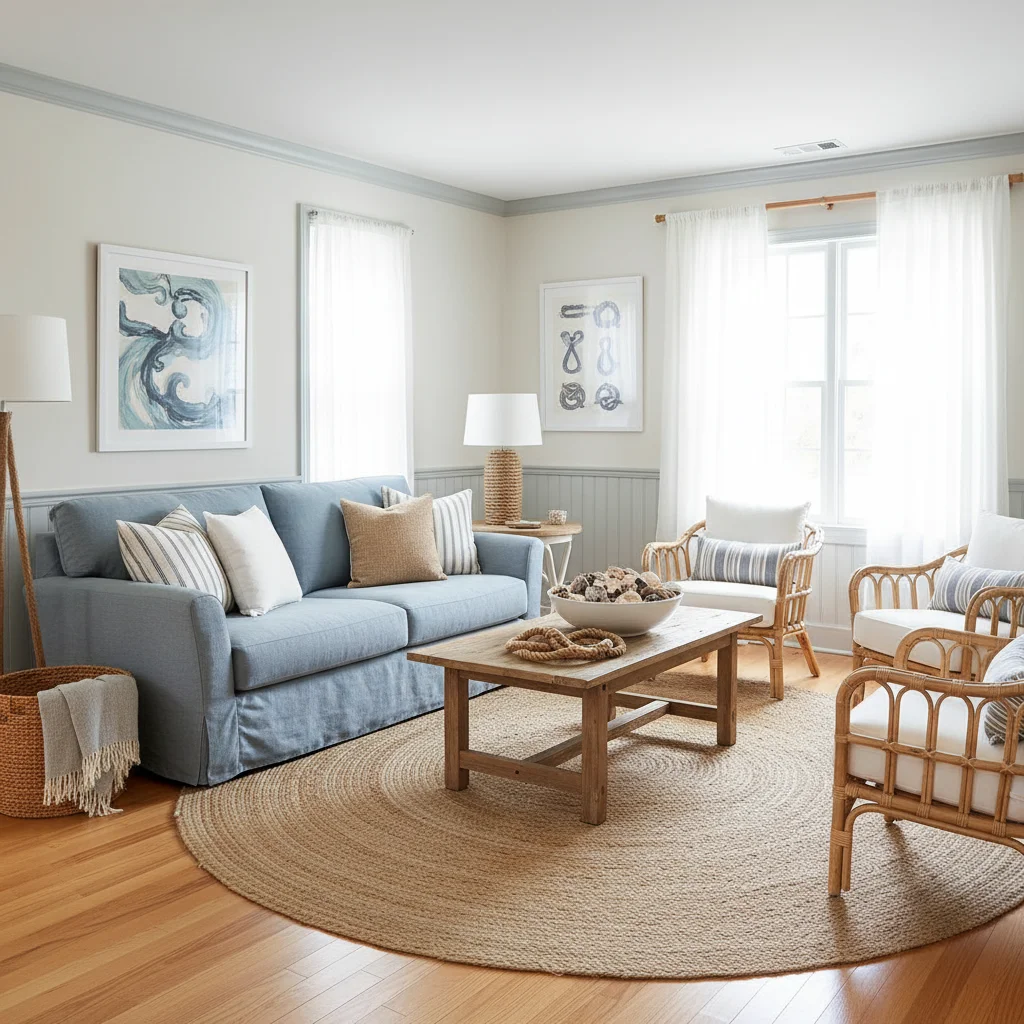 Mediterranean vs CoastalCoastal style is lighter and breezier with painted wood and blue-white schemes, while Mediterranean relies on heavier plaster, stone and terracotta.
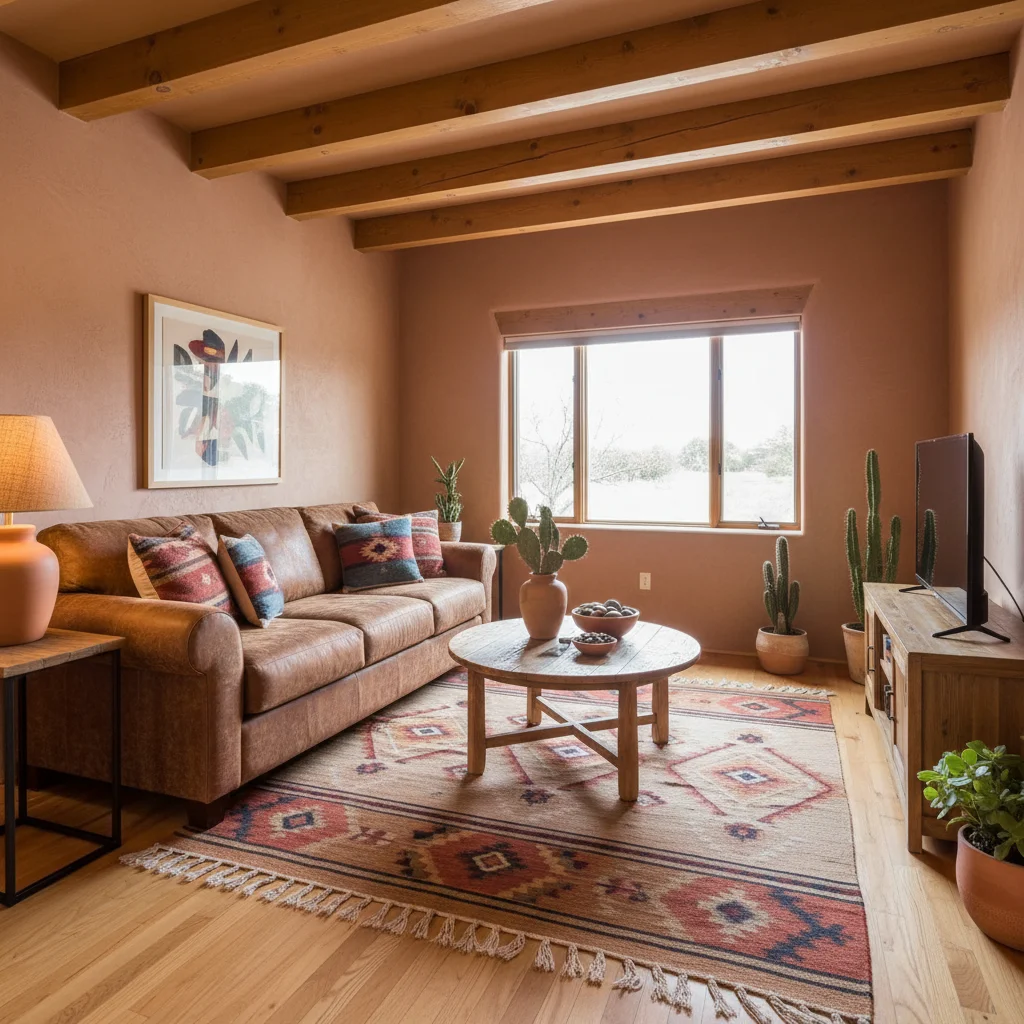 Mediterranean vs SouthwesternSouthwestern shares adobe-like walls and terracotta but uses desert colors, geometric woven textiles and cacti instead of olive and sea blue.
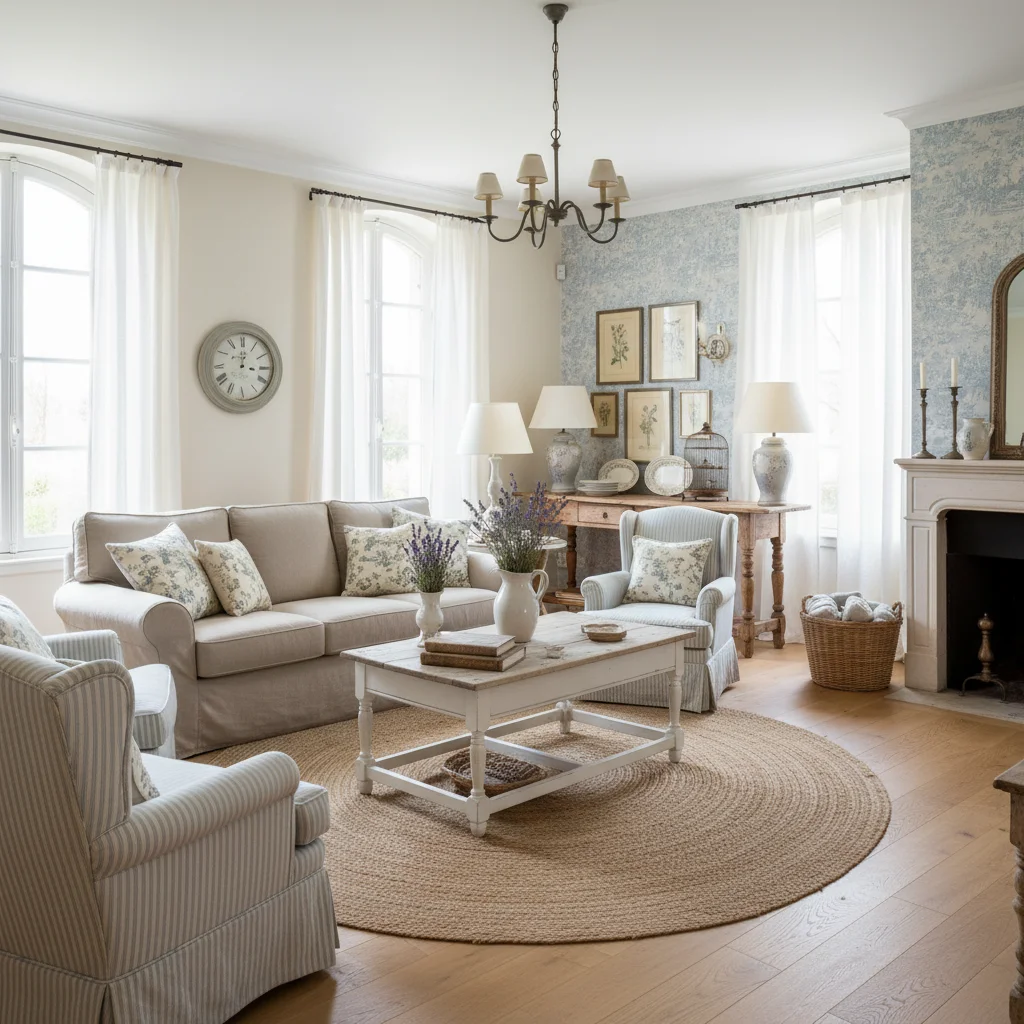 Mediterranean vs French CountryFrench Country is softer and more refined, with painted cabriole-leg furniture, toile fabrics and muted pastels.
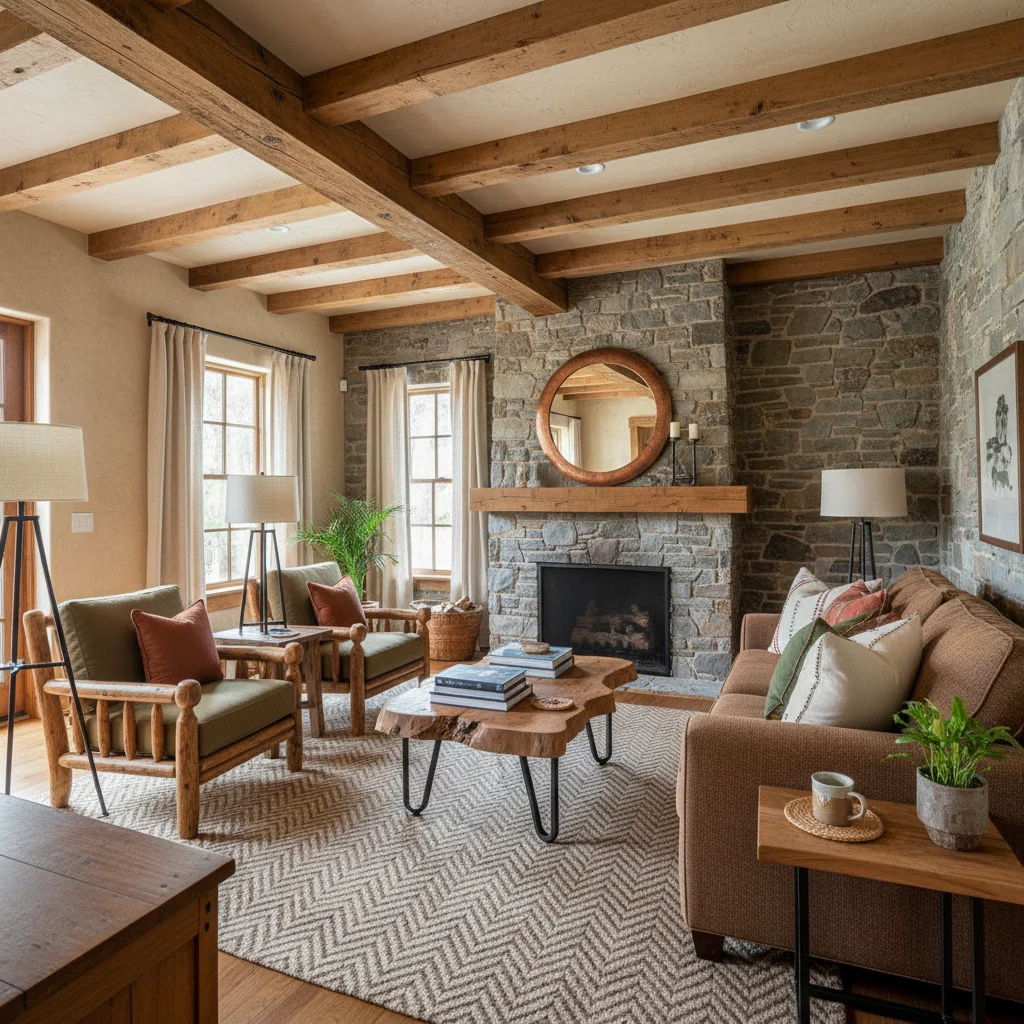 Mediterranean vs RusticRustic style focuses on heavy timber, stone and cabin warmth for colder climates, while Mediterranean is built for heat and light.
Frequently Asked Questions
What colors are used in Mediterranean interior design?
Mediterranean interiors use warm whites, sand, terracotta and ochre as the base, with olive green and sea blue as accents. Greek-inspired rooms lean white and cobalt blue, Tuscan rooms lean ochre and terracotta, and Spanish rooms add saturated tile colors. Most schemes keep walls light and put stronger color in tile, pottery and textiles.
What is the difference between Mediterranean and Tuscan style?
Tuscan style is one regional branch of Mediterranean design, specific to central Italy. It uses deeper ochre, sienna and olive tones, heavier dark wood and stone. Mediterranean is the broader category that also includes Greek and Spanish homes, which are lighter, whiter and often bluer than Tuscan interiors.
How do I make my house look Mediterranean?
Start with the walls and floors: limewash or plaster finish on the walls and terracotta or stone-look tile underfoot. Add wrought iron lighting, linen upholstery, wood beams or beam-look trim, and clay pots with olive trees or herbs. Arched mirrors or niches help if you cannot add real arches.
What flooring suits a Mediterranean home?
Terracotta tile is the classic choice, followed by travertine, limestone and patterned encaustic cement tile. Square terracotta tiles around 30×30 cm or hexagons laid with wide grout lines look most authentic. For lower cost or easier care, porcelain tile printed to look like terracotta or stone gives a similar result.
Is Mediterranean style good for small spaces?
Yes, the Greek island version suits small spaces well because white plaster walls reflect light and built-in benches save floor area. Keep furniture low and simple, use one wall of patterned tile instead of several, and choose light linen fabrics. Avoid dark beams in low rooms; whitewash them instead.


Unlock the Full Power of Decor Copilot
Upload a photo and see your room redesigned in seconds. Start for free today.
No credit card required