
English Garden Design: Plants, Paths & Ideas
English garden design is a planting-led landscape style that combines deep mixed borders of perennials, roses and shrubs with clipped hedges, lawns, weathered stone paths and structures such as pergolas and arches. It balances loose, abundant flowering plants in soft pinks, purples, blues and whites against a firm framework of evergreen hedging.
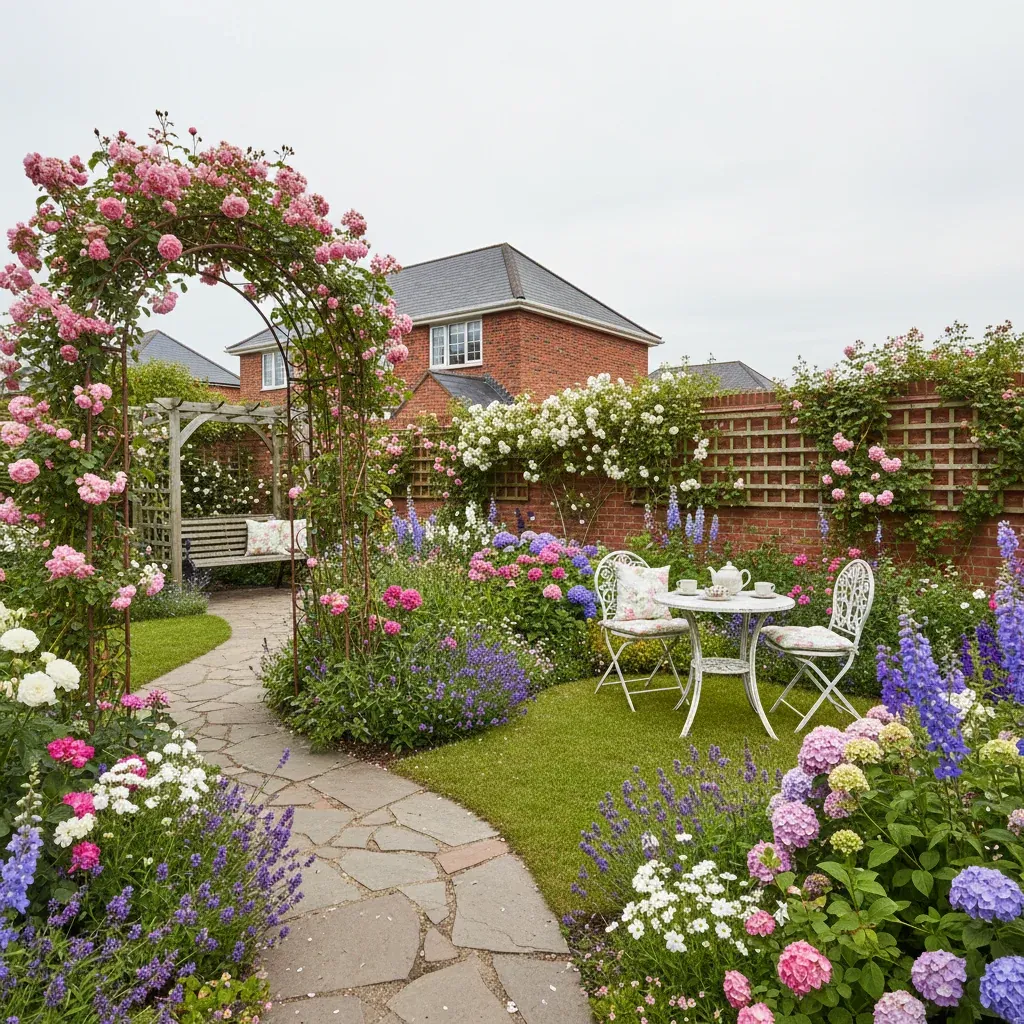
What is English Garden style?
The English garden as most people picture it developed in the late nineteenth and early twentieth centuries, when Gertrude Jekyll and William Robinson promoted naturalistic mixed borders over rigid Victorian bedding. It drew on traditional cottage gardens, where flowers, herbs and vegetables grew together. Gardens such as Sissinghurst and Hidcote made the hedge-framed "garden rooms" approach famous. It remains popular because it supports pollinators, offers color from spring to autumn and suits many temperate climates.
English Garden color palette
- Rose pink#E3A3B5
- Delphinium blue#5C7CC4
- Lavender purple#9A86C2
- Cream white#F4EFDF
- Boxwood green#4C6B3C
- Weathered stone#B5AC9C
Key features of English Garden design
- 1
Deep mixed borders at least 1.5–2 m wide with tall plants at the back and low ones at the front.
- 2
Climbing and rambling roses on walls, arches and pergolas.
- 3
Clipped yew or box hedges that divide the space into smaller garden rooms.
- 4
Weathered stone or brick paths edged with spilling plants like catmint and lady's mantle.
- 5
Repeated plants along the border for rhythm, such as lavender or alliums every few meters.
- 6
A long flowering season from tulips and alliums in spring to asters and sedums in autumn.
Materials
- York stone or sandstone paving
- Reclaimed red brick for edging and paths
- Pea gravel
- Weathered oak for gates, benches and pergolas
- Wrought or cast iron
- Terracotta pots and urns
- Dry-stone or brick walls
Furniture
- Timber pergola or rose arch over a path
- Wrought iron bistro set
- Teak or oak garden bench against a hedge
- Wooden obelisks for climbing plants in borders
- Painted timber gate in a hedge opening
- Small greenhouse or potting shed
English Garden style room by room
English Garden garden
Lay a gravel or brick path through the center and line both sides with 1.5 m deep borders of roses, foxgloves, delphiniums and catmint.
Try it on your gardenEnglish Garden exterior
Train a climbing rose such as 'Gertrude Jekyll' or 'The Generous Gardener' up the front facade on horizontal wires and plant lavender below the windows.
Try it on your exteriorEnglish Garden balcony
Use large terracotta pots with a dwarf climbing rose on a small trellis, underplanted with trailing lobelia and geraniums.
Try it on your balcony
Mistakes to avoid
- Narrow borders with single rows of plants; plant in groups of three to seven over a deeper bed.
- Planting only summer flowers; include spring bulbs and autumn perennials for color through the year.
- Skipping structure; add evergreen hedges or topiary so the garden looks good in winter.
- Copying the style in hot, dry climates without adapting; swap thirsty plants for Mediterranean ones like lavender, rosemary and salvia.
Get the English Garden look on a budget
- Grow perennials like foxgloves, hollyhocks and lupins from seed, and divide clumps of hardy geraniums and asters every few years.
- Use pea gravel paths with reclaimed brick edging instead of laid stone paving.
- Plant bare-root roses and hedging between late autumn and early spring, when they cost far less than potted plants.
English Garden vs similar styles
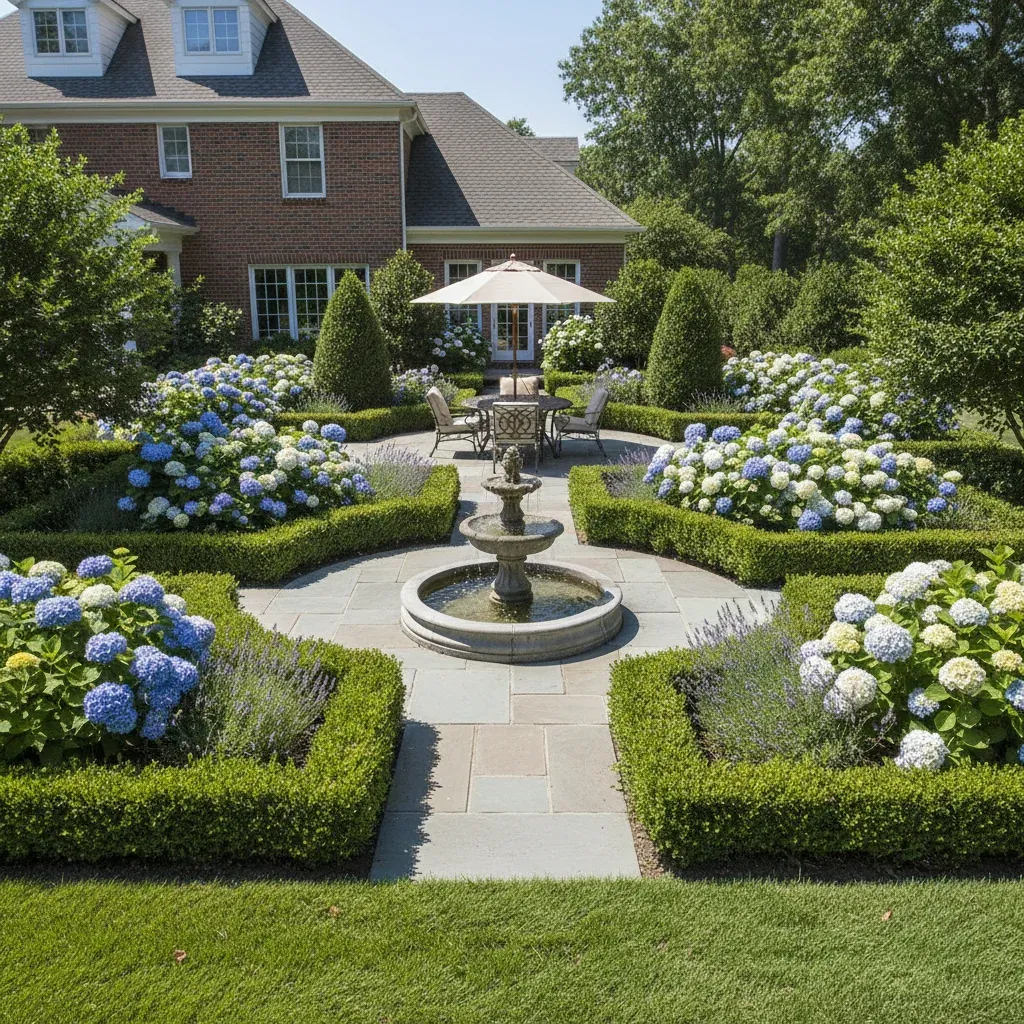 English Garden vs Formal GardenFormal Garden relies on strict symmetry and clipped shapes, while English Garden lets abundant flowering plants spill over its hedge framework.
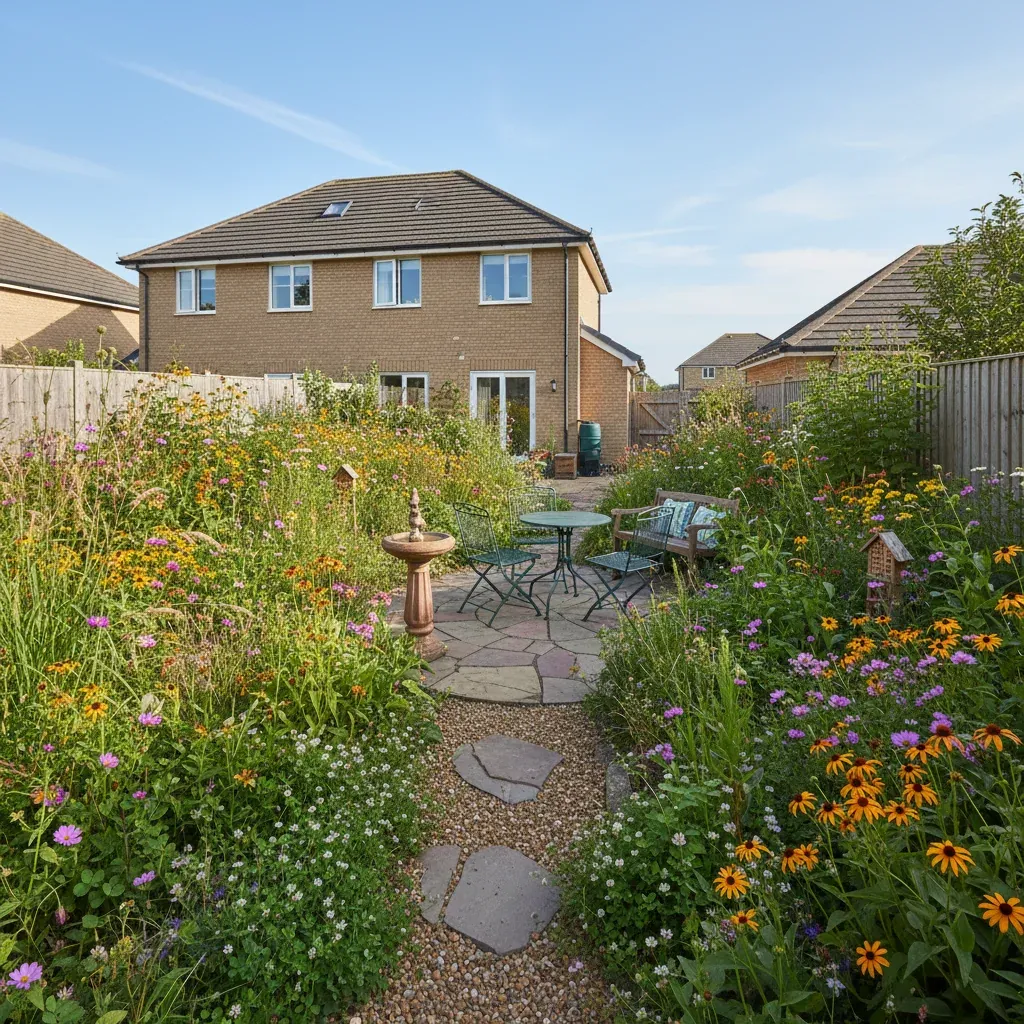 English Garden vs Wild GardenWild Garden uses native meadow plants with little structure, while English Garden mixes cultivated perennials and roses with hedges and paths.
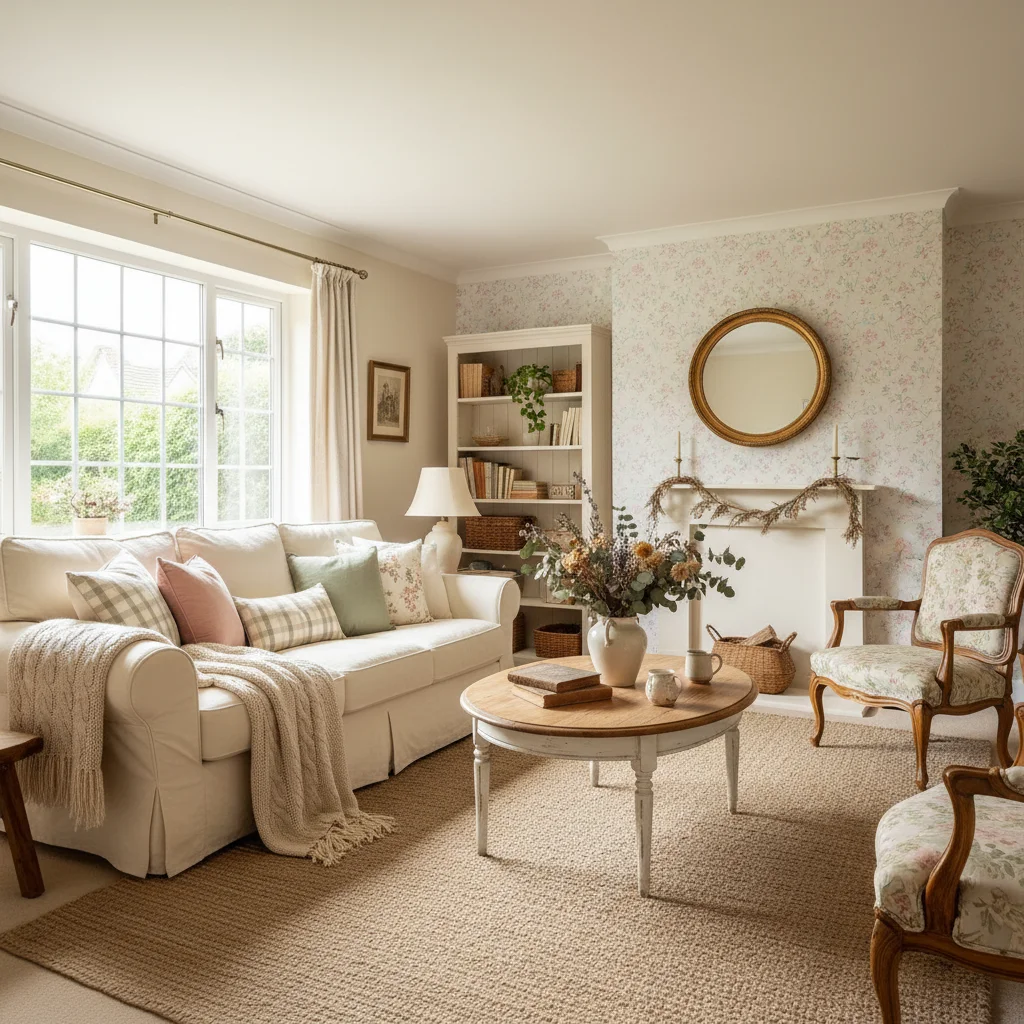 English Garden vs CottagecoreCottagecore is the indoor decor style that shares English Garden's floral, country mood.
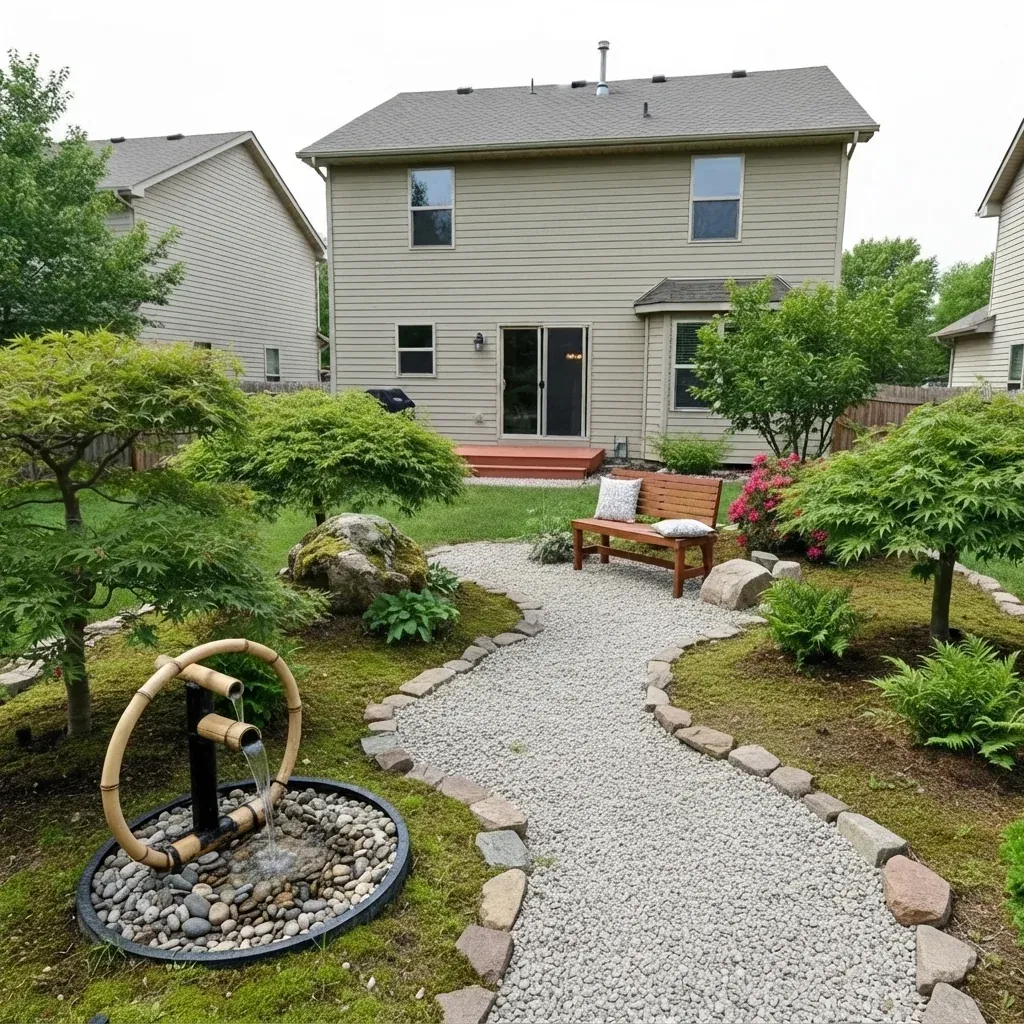 English Garden vs Japanese GardenJapanese Garden is restrained and mostly green with stone and moss, while English Garden is colorful and flower-filled.
Frequently Asked Questions
What is an English garden?
An English garden is a landscape style with deep, flower-filled mixed borders, climbing roses, lawns, stone or brick paths and clipped hedges that frame the planting. It combines loose, abundant perennials with firm evergreen structure, and often divides larger plots into smaller garden rooms with hedges or walls.
What plants are in an English cottage garden?
Typical English cottage garden plants include roses, foxgloves, delphiniums, hollyhocks, lupins, lavender, catmint (Nepeta), hardy geraniums, peonies, alliums, sweet peas and lady's mantle (Alchemilla mollis). Evergreen box or yew hedges and fruit trees often add structure. Most prefer full sun and moist, well-drained soil.
How do I create an English garden in a small space?
To create an English garden in a small space, plant one deep border instead of several thin ones, add a rose on a wall or obelisk and use a narrow gravel path with plants spilling over it. Choose compact varieties, repeat two or three plants for rhythm and frame the area with a low clipped hedge.
Can you have an English garden in a hot climate?
Yes, you can create an English garden look in a hot climate by replacing thirsty plants with drought-tolerant ones in similar colors. Use lavender, salvia, rosemary, gaura, Russian sage and heat-tolerant roses, mulch borders deeply and water with drip irrigation. Afternoon shade from a pergola helps roses and perennials.
What is the best path material for an English garden?
The best path materials for an English garden are weathered natural stone such as York stone or sandstone, reclaimed brick and pea gravel. Stone and brick suit main paths near the house, while gravel is cheaper and suits informal side paths. Let low plants like thyme or catmint soften the edges.


Unlock the Full Power of Decor Copilot
Upload a photo and see your room redesigned in seconds. Start for free today.
No credit card required