
Formal Garden Design: Hedges, Layout & Ideas
Formal garden design is a landscape style based on symmetry, straight axes and geometric shapes. It uses clipped hedges such as boxwood and yew, topiary, parterres, gravel or stone paths, lawns and a central focal point such as a fountain or urn, so the whole garden reads as an ordered composition seen best from the house.
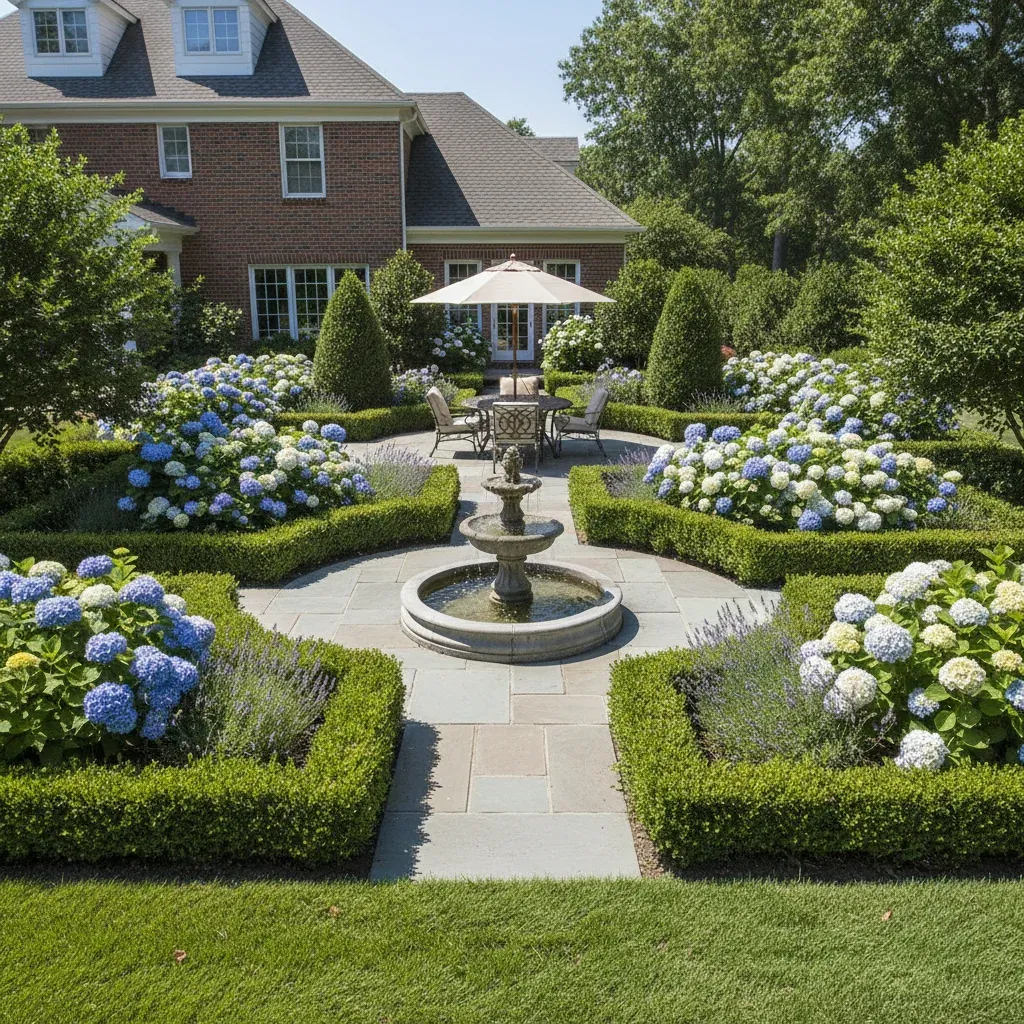
What is Formal Garden style?
Formal gardens trace back to Persian chahar bagh gardens divided by four water channels, Italian Renaissance villa gardens and the seventeenth-century French gardens of André Le Nôtre at Versailles and Vaux-le-Vicomte. Dutch and English gardens adapted the style at smaller scale with knot gardens and box parterres. It remains popular because it gives a garden clear structure all year, suits both large estates and small front yards, and pairs naturally with classical architecture.
Formal Garden color palette
- Boxwood green#3F5E34
- Yew green#2C3F2A
- Pale gravel#DCD5C6
- Limestone#CFC6B2
- Lawn green#6E9A45
- White bloom#F6F4EE
Key features of Formal Garden design
- 1
Mirror-image symmetry along a main axis that starts at the house door or a key window.
- 2
Low clipped box hedges forming parterres or knot patterns.
- 3
Topiary cones, spheres and pyramids placed in matching pairs or rows.
- 4
Straight gravel paths that meet at right angles or around a central feature.
- 5
A single strong focal point such as a fountain, urn or bench at the end of each view.
- 6
Limited plant palette, often green and white, with color kept inside hedged beds.
Materials
- Fine pale gravel or hoggin for paths
- Limestone or sandstone paving and steps
- Cut stone or brick edging
- Cast stone and lead urns
- Clipped boxwood, yew and hornbeam
- Steel or timber edging for crisp lines
- Cast iron and painted timber
Furniture
- Central stone fountain or reflecting pool
- Pairs of stone urns on plinths
- Classical stone or painted timber benches at path ends
- Treillage or timber trellis panels
- Square Versailles planters with clipped bay or citrus
- Stone obelisks or finials as focal points
Formal Garden style room by room
Formal Garden garden
Divide a rectangular lawn into four equal box-edged beds with crossing gravel paths and place a round fountain or large urn at the center.
Try it on your gardenFormal Garden exterior
Flank the front door with matching square planters holding clipped bay or boxwood balls, and edge the front path with a low box hedge.
Try it on your exteriorFormal Garden balcony
Line the railing with identical rectangular planters of clipped boxwood and place two topiary cones in pots at either end.
Try it on your balcony
Mistakes to avoid
- Using too many plant varieties; repeat a few species so the geometry stays clear.
- Letting hedges grow shaggy; formal gardens need clipping at least once or twice a year.
- Making paths too narrow; main axes should be at least 1.2–1.5 m wide.
- Replacing box without checking local box blight and box moth risk; Ilex crenata, yew or Euonymus japonicus are common alternatives.
Get the Formal Garden look on a budget
- Buy young hedging plants bare-root or as small plugs and plant them 20–25 cm apart; they fill in within two to three seasons.
- Use gravel paths with steel or timber edging instead of stone paving.
- Take boxwood cuttings in late summer and root them in pots to make your own hedging.
Formal Garden vs similar styles
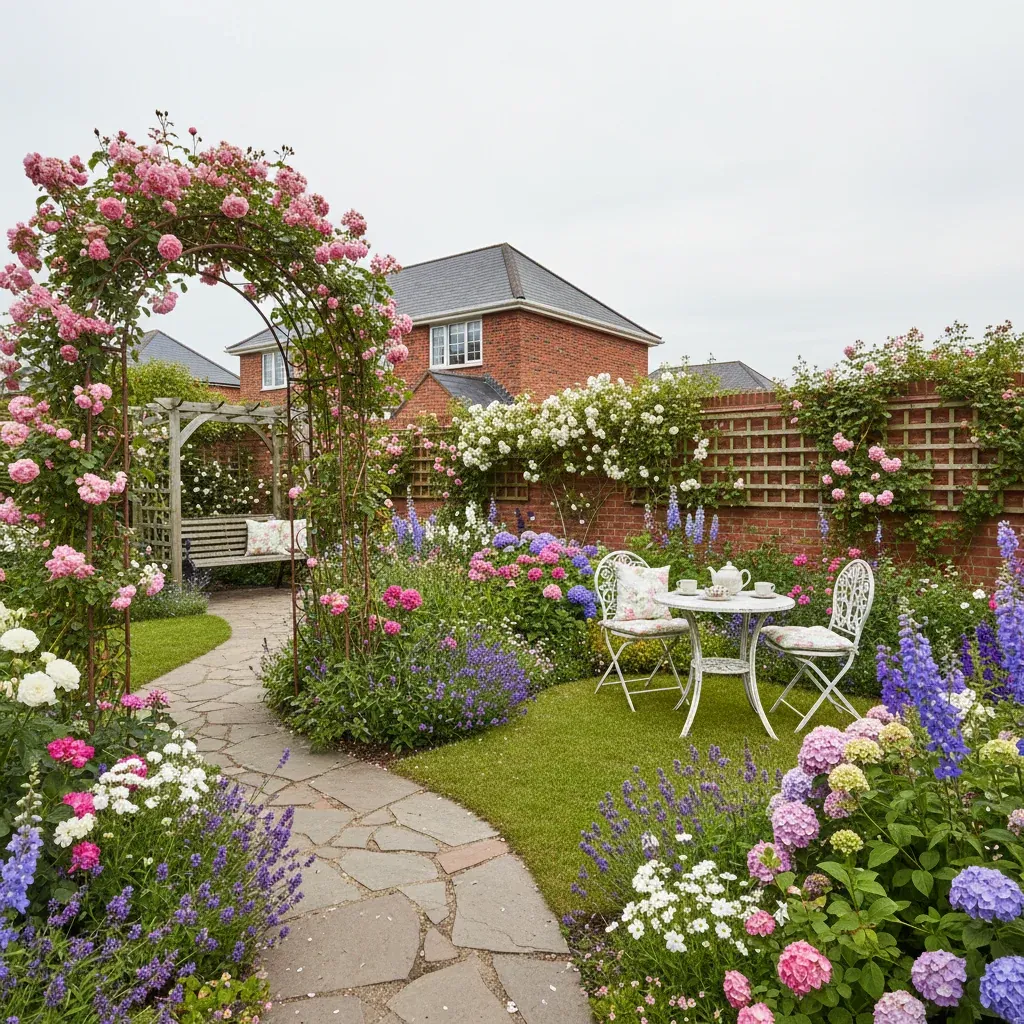 Formal Garden vs English GardenEnglish Garden softens a hedge framework with loose, abundant flowers, while Formal Garden keeps planting clipped and geometric.
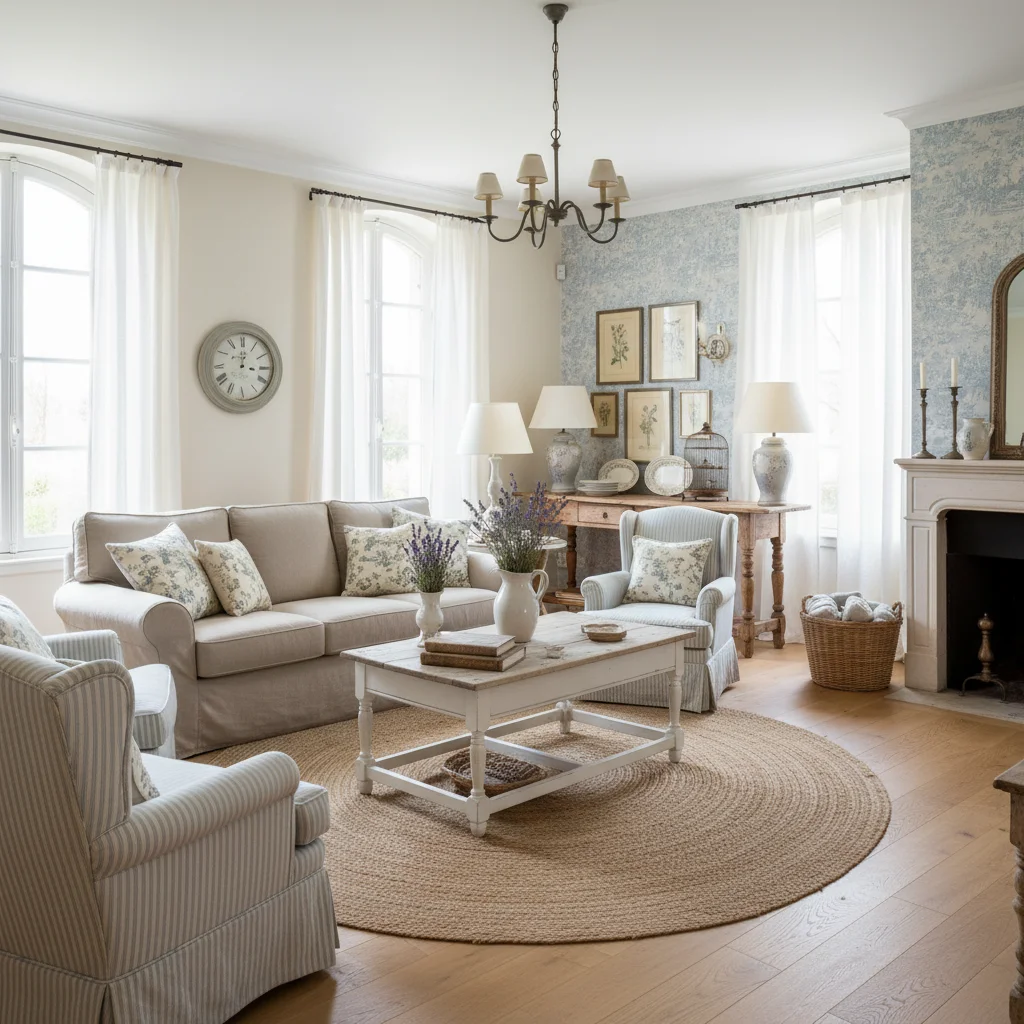 Formal Garden vs French CountryFrench Country is the relaxed interior style with Provençal colors, while Formal Garden reflects the grand, ordered French garden tradition outdoors.
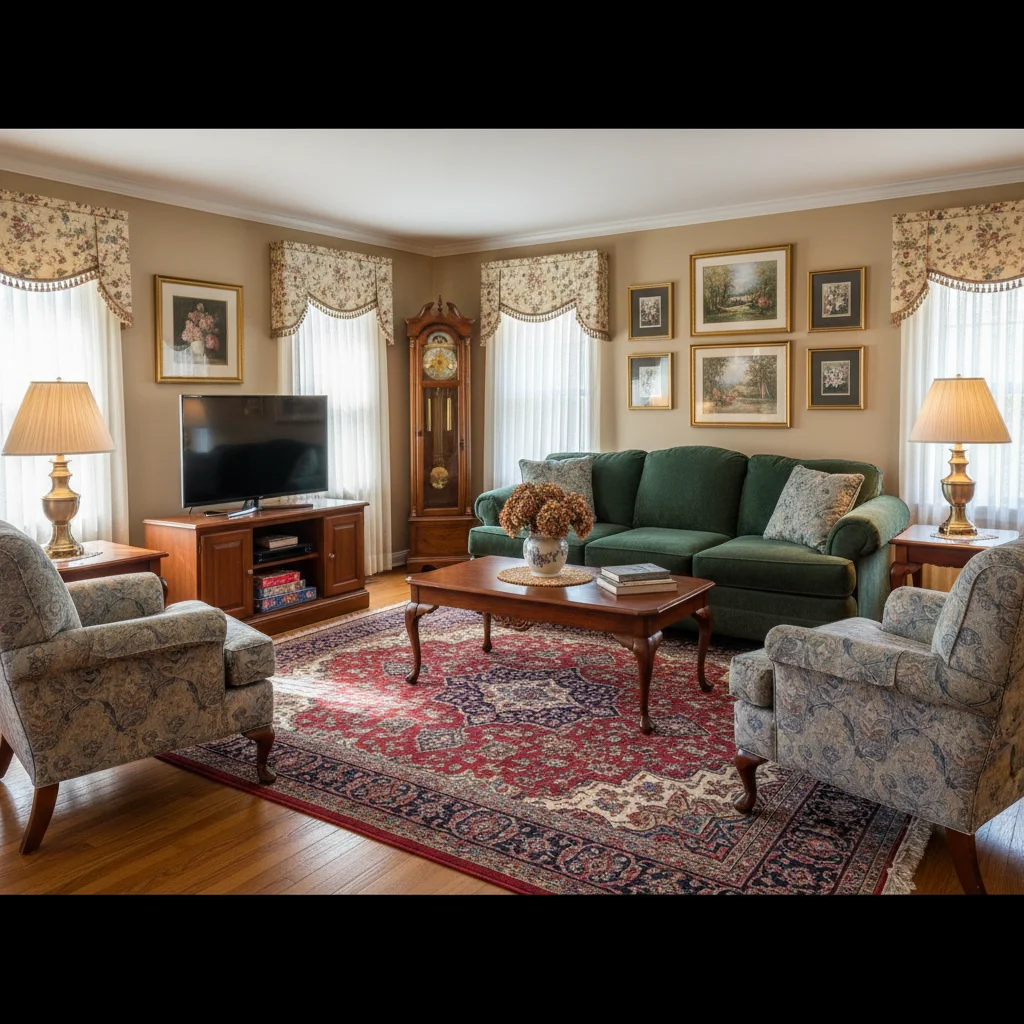 Formal Garden vs TraditionalTraditional is the interior style with symmetry and classic furniture that matches a Formal Garden's order.
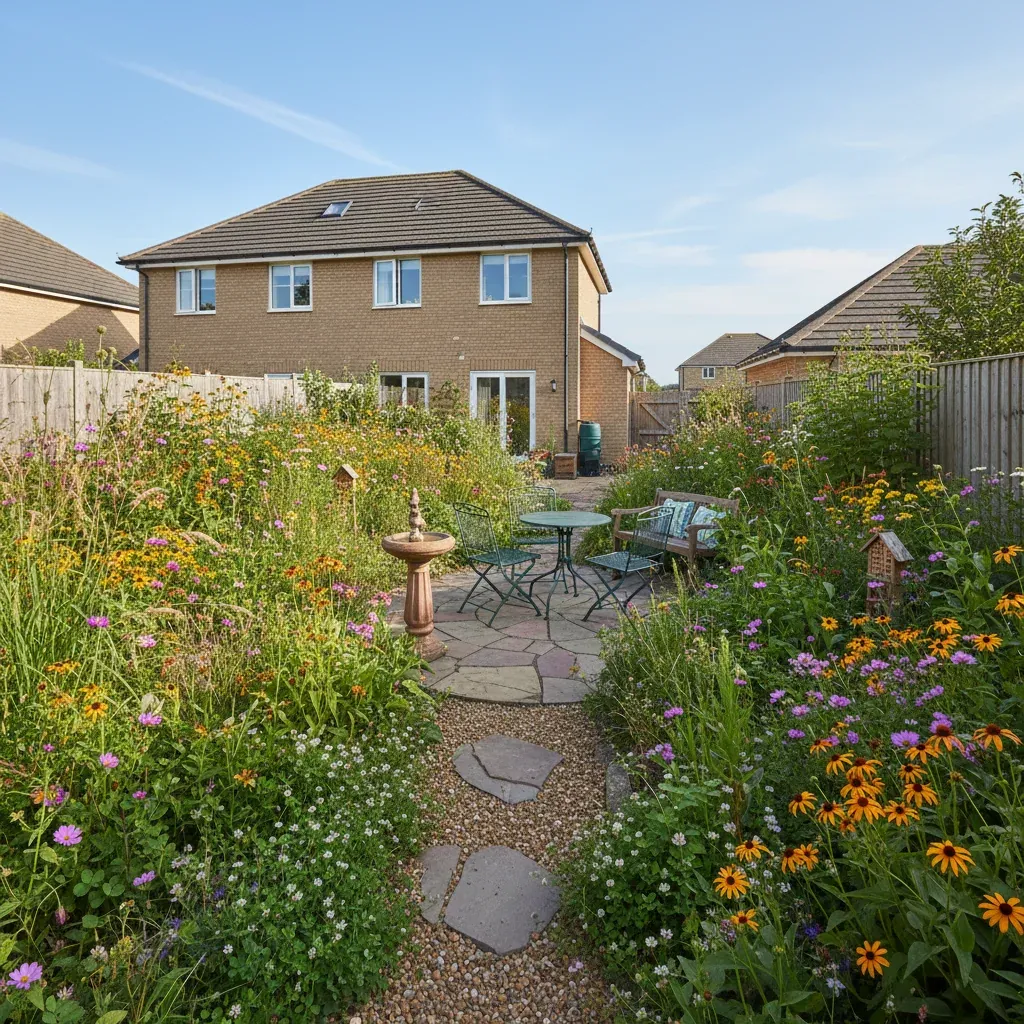 Formal Garden vs Wild GardenWild Garden is the opposite approach, with loose meadow planting and winding mown paths.
Frequently Asked Questions
What is a formal garden?
A formal garden is a garden laid out with symmetry, straight lines and geometric shapes. It typically includes clipped hedges, topiary, parterres, straight gravel or stone paths, lawns and a central focal point such as a fountain or urn. The design is usually centered on a door or window of the house.
What plants are used in formal gardens?
Formal gardens use plants that take clipping well, such as boxwood (Buxus sempervirens), yew (Taxus baccata), hornbeam, Japanese holly (Ilex crenata), bay laurel and privet. Lavender, roses and white flowering plants are often placed inside hedged beds. Pleached limes or hornbeams create raised hedges along paths.
How do I design a small formal garden?
To design a small formal garden, draw a center line from the main door or window, then mirror everything on both sides. Use a central path, low box-edged beds, two matching planters or topiary and one focal point at the end such as an urn or bench. Keep the plant list short and repeated.
What can I use instead of boxwood for hedges?
Good boxwood alternatives for low hedges are Japanese holly (Ilex crenata), dwarf yew, Euonymus japonicus, Pittosporum 'Golf Ball' and Lonicera nitida. They resist box blight and box tree moth, which damage many boxwood hedges. Choose one suited to your climate and clip it two to three times a year.
What is a parterre garden?
A parterre is a formal garden bed made of low clipped hedges, usually boxwood, arranged in symmetrical patterns on level ground. The spaces between hedges are filled with gravel, flowers, herbs or lawn. Parterres were developed in sixteenth and seventeenth-century France and are designed to be seen from above.


Unlock the Full Power of Decor Copilot
Upload a photo and see your room redesigned in seconds. Start for free today.
No credit card required