
Mid-Century Modern Interior Design: Colors & Furniture
Mid-century modern interior design is a style from roughly 1945 to 1969 defined by low, organic, and geometric furniture on tapered legs, warm woods such as teak and walnut, and earth tones accented with mustard, orange, and teal. It combines new materials of the period, like molded plywood and fiberglass, with clean lines and an open connection to the outdoors.
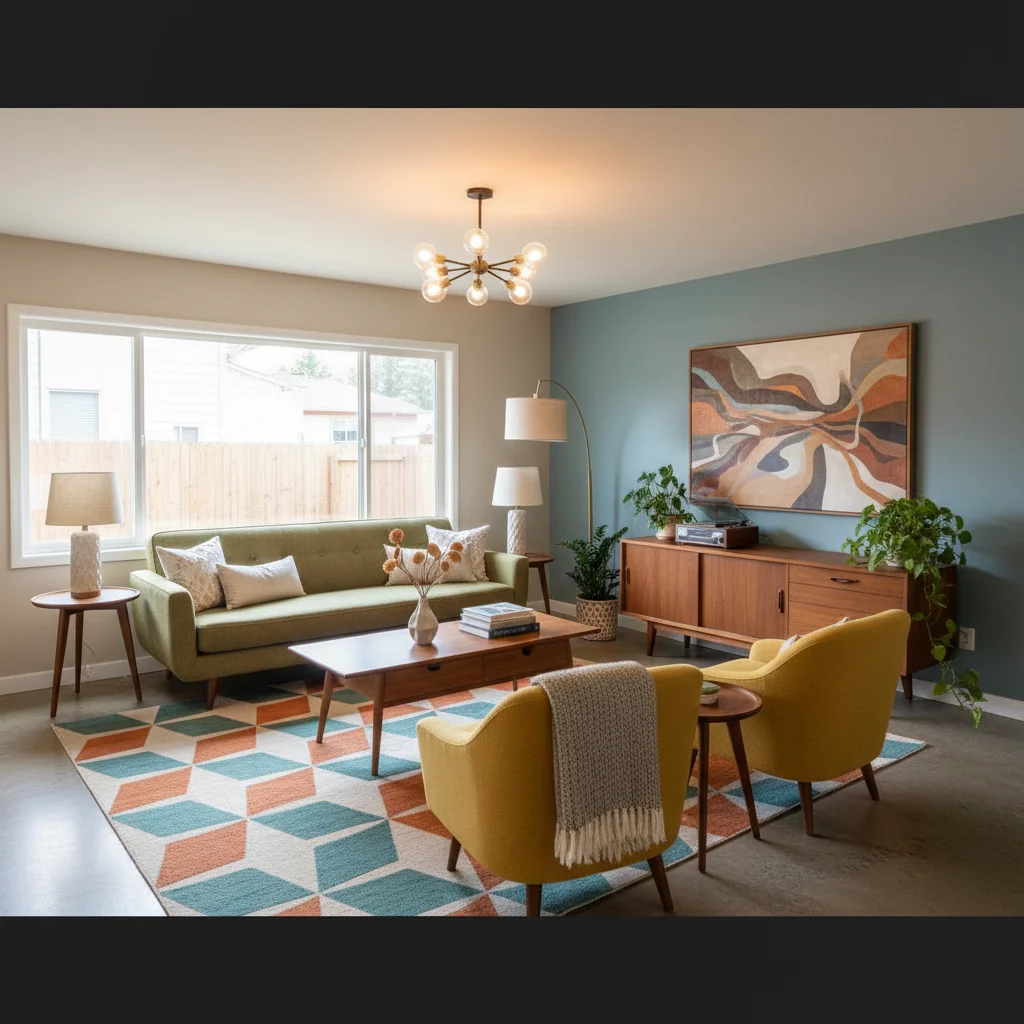
What is Mid-Century Modern style?
Mid-century modern developed after the Second World War, when designers such as Charles and Ray Eames, Eero Saarinen, George Nelson, Arne Jacobsen, and Hans Wegner used wartime manufacturing advances in plywood, fiberglass, and steel to make affordable modern furniture. Suburban homes with large windows and open plans suited the look. The term was coined by author Cara Greenberg in 1984. Renewed interest since the 2000s comes from vintage collecting and the warmth it brings to modern rooms.
Mid-Century Modern color palette
- Walnut brown#5C4033
- Teak#A0673C
- Mustard yellow#D4A017
- Burnt orange#CC5500
- Teal#2A7B7B
- Warm cream#F1E9D8
Key features of Mid-Century Modern design
- 1
Furniture raised on slim, splayed, tapered legs.
- 2
Warm wood tones, especially teak and walnut, in most rooms.
- 3
Earthy colors punctuated by mustard, burnt orange, olive, and teal.
- 4
Organic curves combined with clean geometric lines.
- 5
Statement lighting such as Sputnik chandeliers, arc lamps, and globe pendants.
- 6
Large windows and indoor plants that connect the room to the outdoors.
Materials
- Teak, walnut, and rosewood veneer
- Molded plywood
- Fiberglass and molded plastic
- Brass and chrome accents
- Wool tweed and bouclé upholstery
- Terrazzo and cork
Furniture
- Lounge chair and ottoman in molded plywood and leather
- Low sofa with a tight back and tapered walnut legs
- Long, low teak sideboard with sliding doors
- Tulip-style pedestal dining table
- Molded shell chairs with wooden dowel legs
- Arc floor lamp with a dome shade
Mid-Century Modern style room by room
Mid-Century Modern living room
Place a long teak sideboard under a wall of art, pair a low tweed sofa with a molded plywood lounge chair, and add an arc lamp over the seating.
Try it on your living roomMid-Century Modern dining room
Use a round pedestal table with molded shell chairs, and hang a Sputnik or globe pendant 75 to 90 cm above the tabletop.
Try it on your dining roomMid-Century Modern bedroom
Choose a walnut bed on tapered legs, matching low nightstands, and a geometric-pattern throw in mustard or teal.
Try it on your bedroom
Mistakes to avoid
- Turning the room into a period set; mix a few authentic pieces with modern basics.
- Using every accent color at once; choose two, such as mustard and teal, plus wood.
- Bulky, overstuffed furniture that hides its legs; keep pieces raised and slim.
- Too much matching teak; balance wood with white walls, upholstery, and metal.
Get the Mid-Century Modern look on a budget
- Search second-hand markets for teak sideboards and chairs; many 1960s pieces cost less than new furniture.
- Screw tapered wooden legs onto an existing sofa, bed, or cabinet to give it a mid-century profile.
- Add mustard and teal cushions and a sunburst mirror to a neutral room for an instant period reference.
Mid-Century Modern vs similar styles
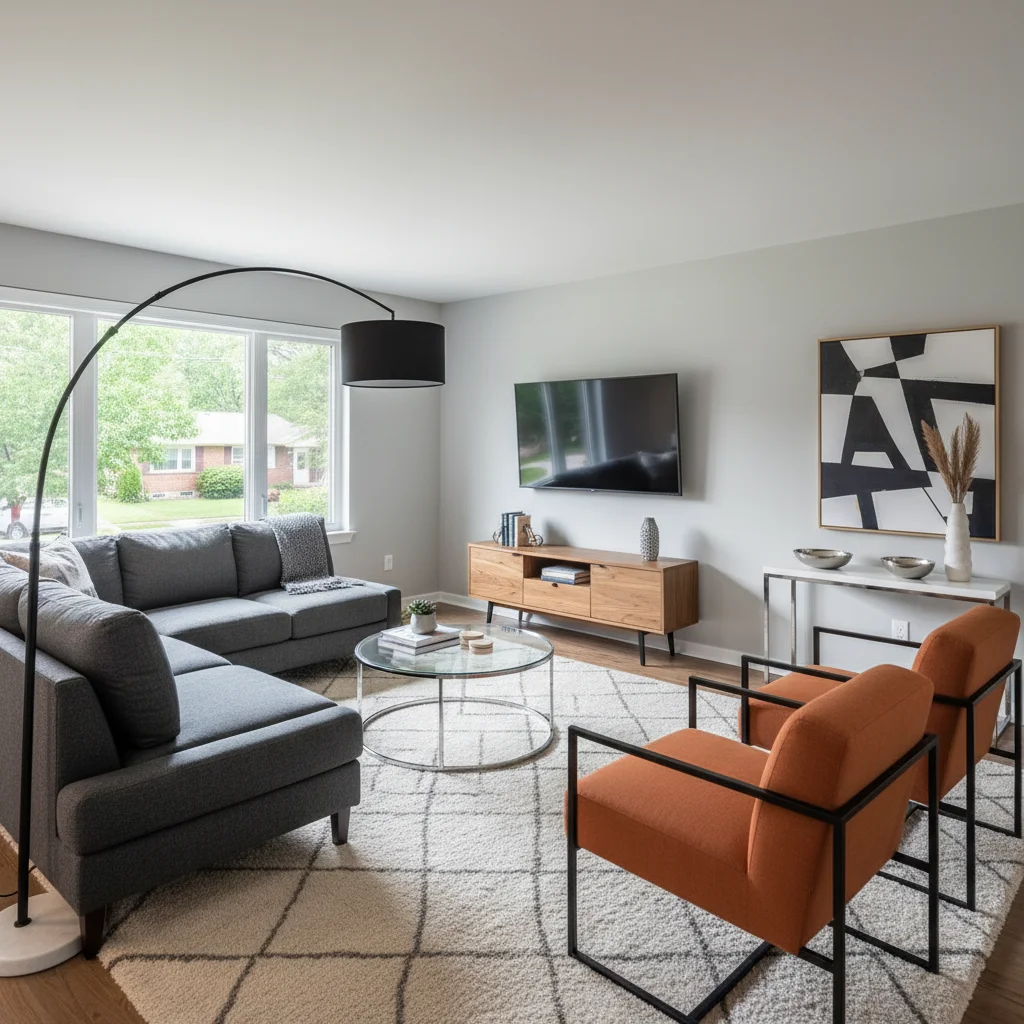 Mid-Century Modern vs ModernModern is broader and cooler, with more steel and glass, while mid-century modern is warmer with teak, walnut, and accent colors.
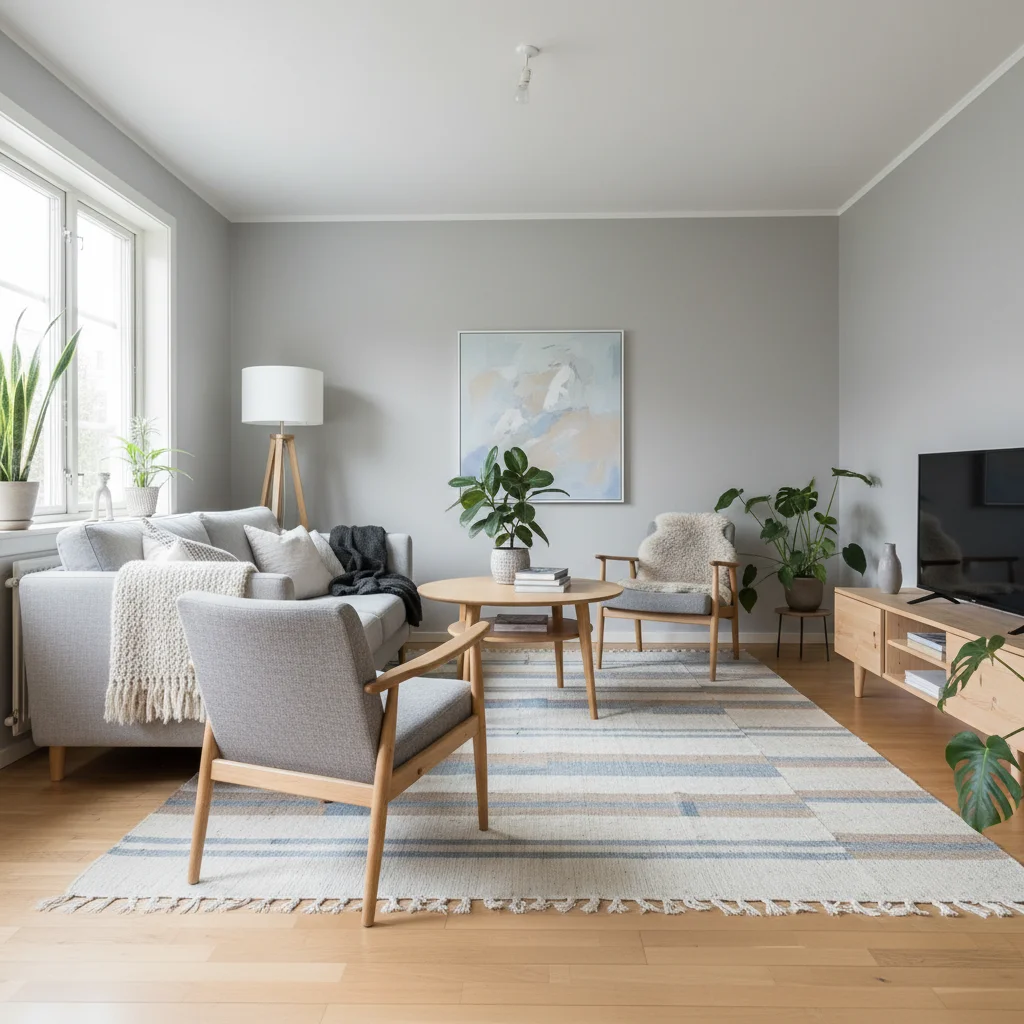 Mid-Century Modern vs ScandinavianScandinavian shares Danish designers but uses paler woods and softer, lighter colors.
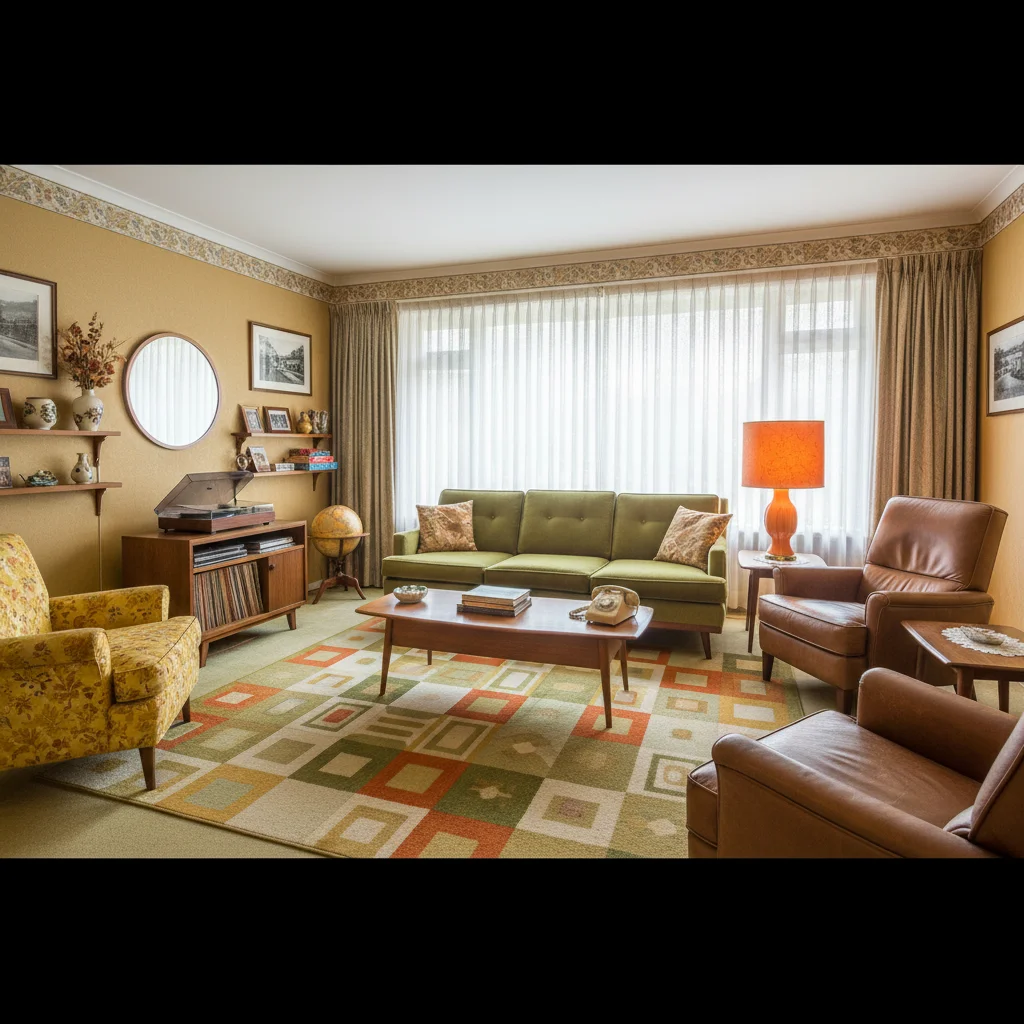 Mid-Century Modern vs VintageVintage mixes pieces from many past decades, while mid-century modern focuses on 1945 to 1969 design.
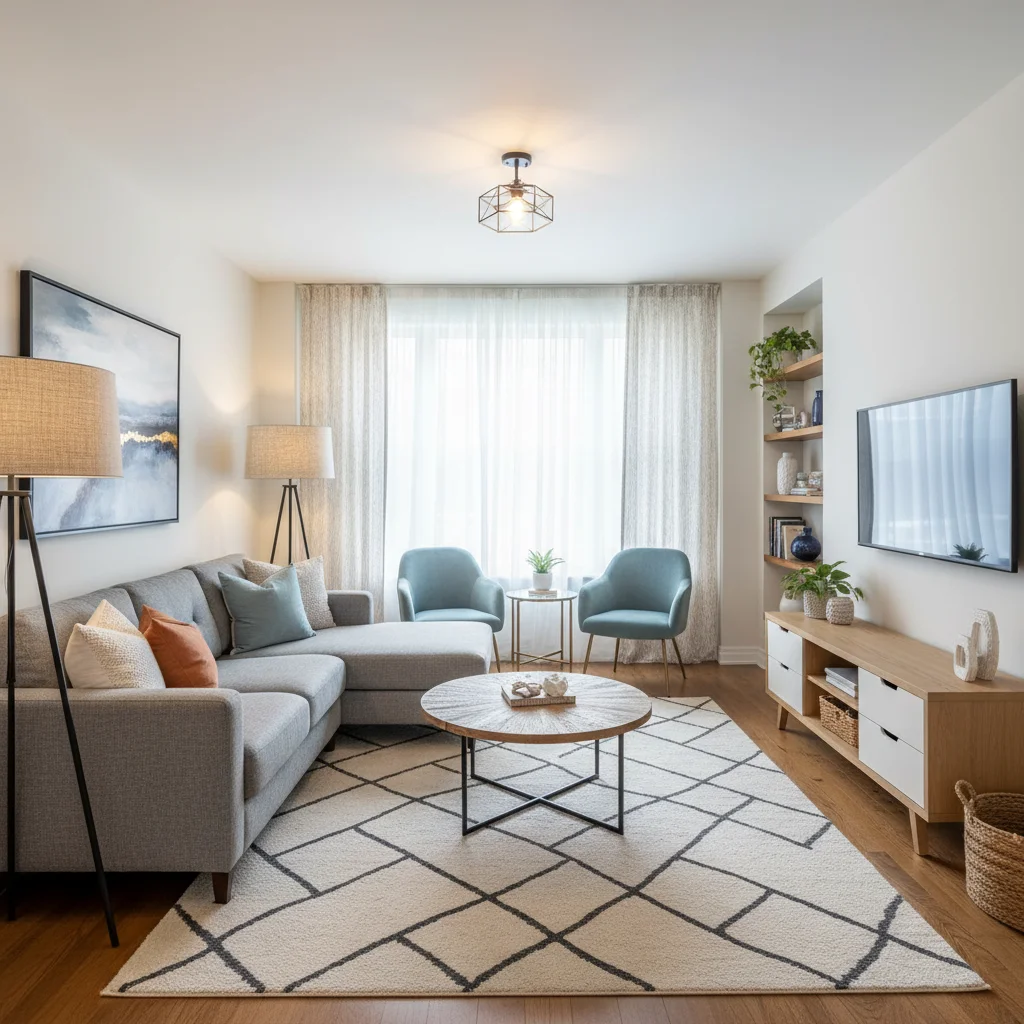 Mid-Century Modern vs ContemporaryContemporary follows current trends with curved upholstered pieces, while mid-century modern is tied to a specific historical period.
Frequently Asked Questions
What is mid-century modern interior design?
Mid-century modern interior design is a style from about 1945 to 1969 known for low furniture on tapered legs, warm teak and walnut wood, organic curves, and earth tones accented with mustard, orange, and teal. Designers such as Charles and Ray Eames, Eero Saarinen, and Hans Wegner defined its iconic chairs, tables, and lighting.
What colors are used in mid-century modern design?
Mid-century modern interiors use warm wood browns, cream, and white as the base, with accent colors such as mustard yellow, burnt orange, teal, olive green, and avocado. Colors are often used in blocks on upholstery, cabinet doors, or geometric textiles. Black and brass appear in lighting and small details.
What is the difference between modern and mid-century modern?
Mid-century modern is a specific period within modern design, from about 1945 to 1969. Modern design in general emphasizes steel, glass, and neutral colors. Mid-century modern is warmer, using teak and walnut, molded plywood, organic shapes, and bolder accent colors such as mustard and teal.
What furniture is typical of mid-century modern style?
Typical pieces include molded plywood lounge chairs with ottomans, low sofas on tapered legs, long teak sideboards, tulip pedestal tables, molded shell chairs, and arc floor lamps. Furniture sits low, shows its legs, and combines organic curves with simple geometric forms. Many designs from the period are still produced today.
How do I add mid-century modern style to a modern home?
Add one or two key pieces, such as a teak sideboard and a molded plywood lounge chair, rather than redoing the whole room. Choose furniture on tapered legs, add an arc lamp or globe pendant, and bring in mustard or teal through cushions or a rug. Keep walls light so the wood stands out.


Unlock the Full Power of Decor Copilot
Upload a photo and see your room redesigned in seconds. Start for free today.
No credit card required