
Traditional Interior Design: Colors, Furniture & Ideas
Traditional interior design is a classic style based on 18th and 19th-century European decor, especially English Georgian and French styles. It features carved wood furniture in mahogany, cherry, and walnut, rich colors, patterned fabrics such as damask and florals, symmetrical layouts, layered window treatments, and Oriental rugs, producing formal yet comfortable rooms.
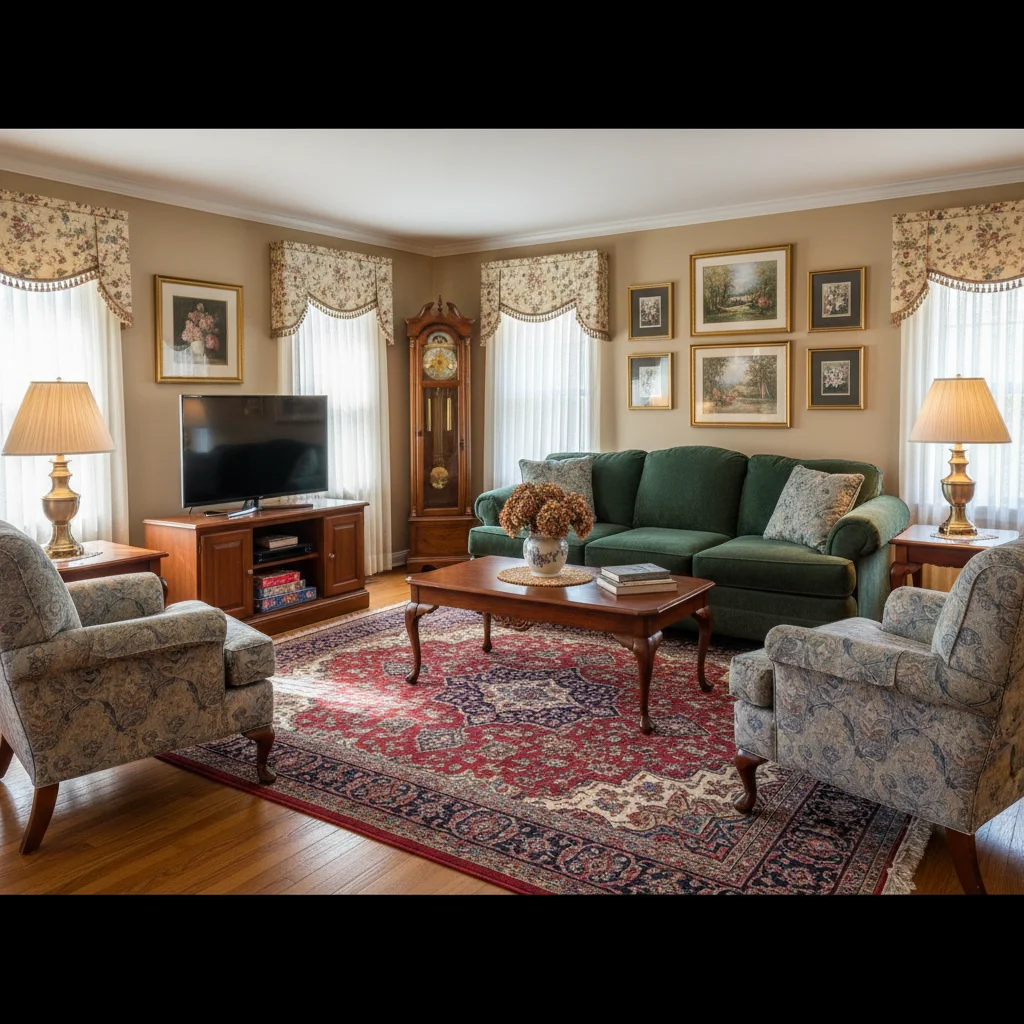
What is Traditional style?
Traditional design draws on the furniture and interiors of 18th and 19th-century England and France, including the work of cabinetmakers such as Thomas Chippendale, George Hepplewhite, and Thomas Sheraton. Colonial America adapted these styles, and they became the standard look of well-furnished homes for two centuries. People still choose it because it feels familiar and comfortable, suits older houses with molding and fireplaces, and uses quality furniture that lasts for generations.
Traditional color palette
- Cream#F2E8D5
- Mahogany#5B2C1E
- Burgundy#6D2232
- Forest green#2F4B3A
- Navy#24324F
- Antique gold#B08D57
Key features of Traditional design
- 1
Symmetrical arrangements around a fireplace or other focal point.
- 2
Carved, turned, and curved details on wood furniture.
- 3
Layered window treatments with curtains, valances, and tiebacks.
- 4
Patterned fabrics such as damask, chintz florals, stripes, and plaid.
- 5
A Persian or Oriental rug anchoring the main seating area.
- 6
Crystal chandeliers, brass sconces, and classical landscape paintings in gilt frames.
Materials
- Mahogany, cherry, and walnut
- Silk, velvet, and damask fabrics
- Antique brass and polished bronze
- Crystal and cut glass
- Marble for fireplaces and tabletops
- Hand-knotted wool rugs
Furniture
- Rolled-arm sofa with skirted or turned legs
- Wingback armchair with nailhead trim
- Carved wood dining table with matching upholstered chairs
- Chesterfield sofa with deep button tufting
- Four-poster or sleigh bed in dark wood
- Glass-front china cabinet or secretary desk
Traditional style room by room
Traditional living room
Arrange a sofa facing the fireplace with matching wingback chairs on either side, and anchor them on a Persian rug that leaves 30 to 45 cm of floor showing at the walls.
Try it on your living roomTraditional dining room
Center a crystal or brass chandelier over a carved wood table, and choose a rug at least 60 cm wider than the table on every side so chairs stay on it when pulled out.
Try it on your dining roomTraditional bedroom
Choose a four-poster or sleigh bed, layer floral or damask bedding with a solid quilt, and place matching bedside tables and lamps on each side.
Try it on your bedroom
Mistakes to avoid
- Matching furniture suites in one wood; mix two wood tones and one upholstered piece.
- Too many patterns of the same scale; pair one large pattern with a small one and a solid.
- Dark walls with dark wood and heavy drapes in a small room; use cream walls to keep it bright.
- Overfilling every surface; leave space around collections and group objects in odd numbers.
Get the Traditional look on a budget
- Buy antique and vintage wood furniture second-hand; solid pieces often cost less than new reproductions.
- Add picture-frame molding to plain walls with MDF trim and paint for a period look.
- Hang curtains on a wood or brass pole close to the ceiling with tiebacks to make windows feel grand.
Traditional vs similar styles
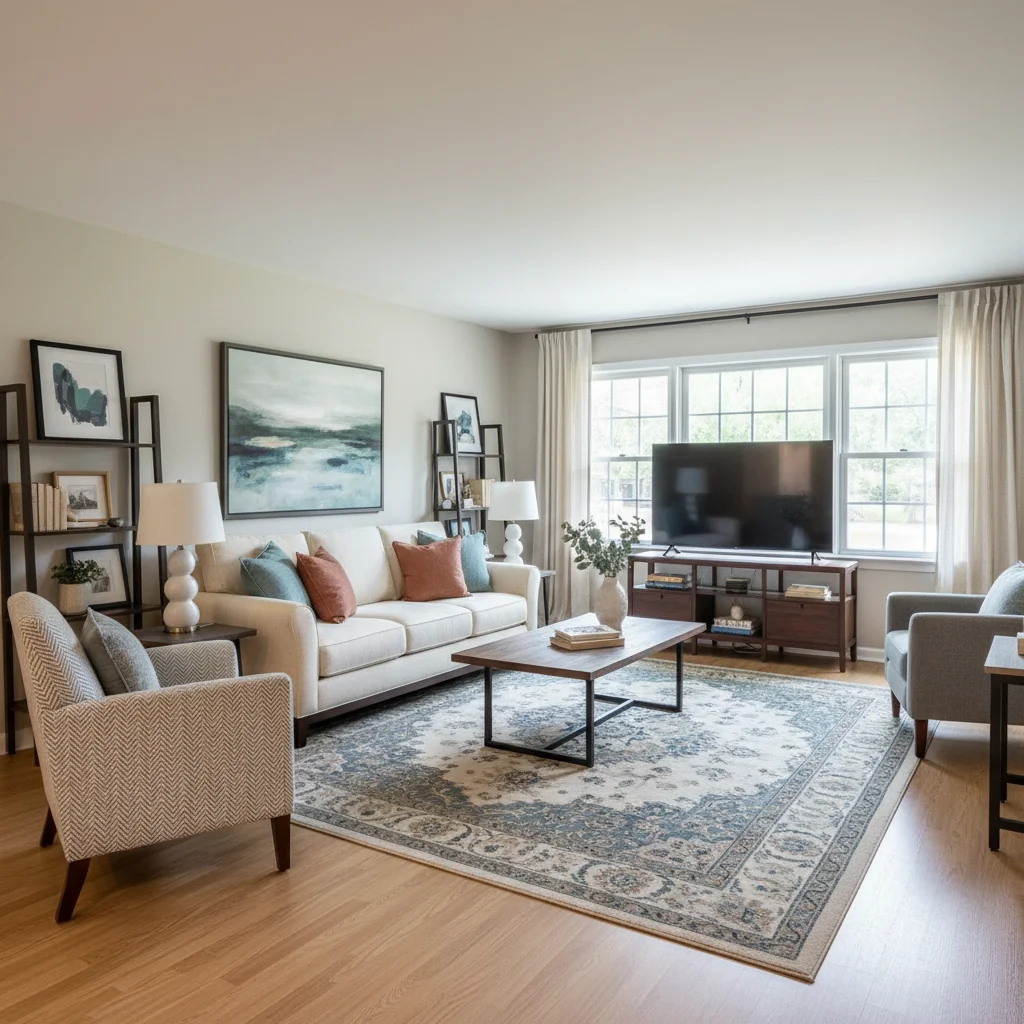 Traditional vs TransitionalTransitional keeps classic shapes but removes ornament and uses a calmer neutral palette.
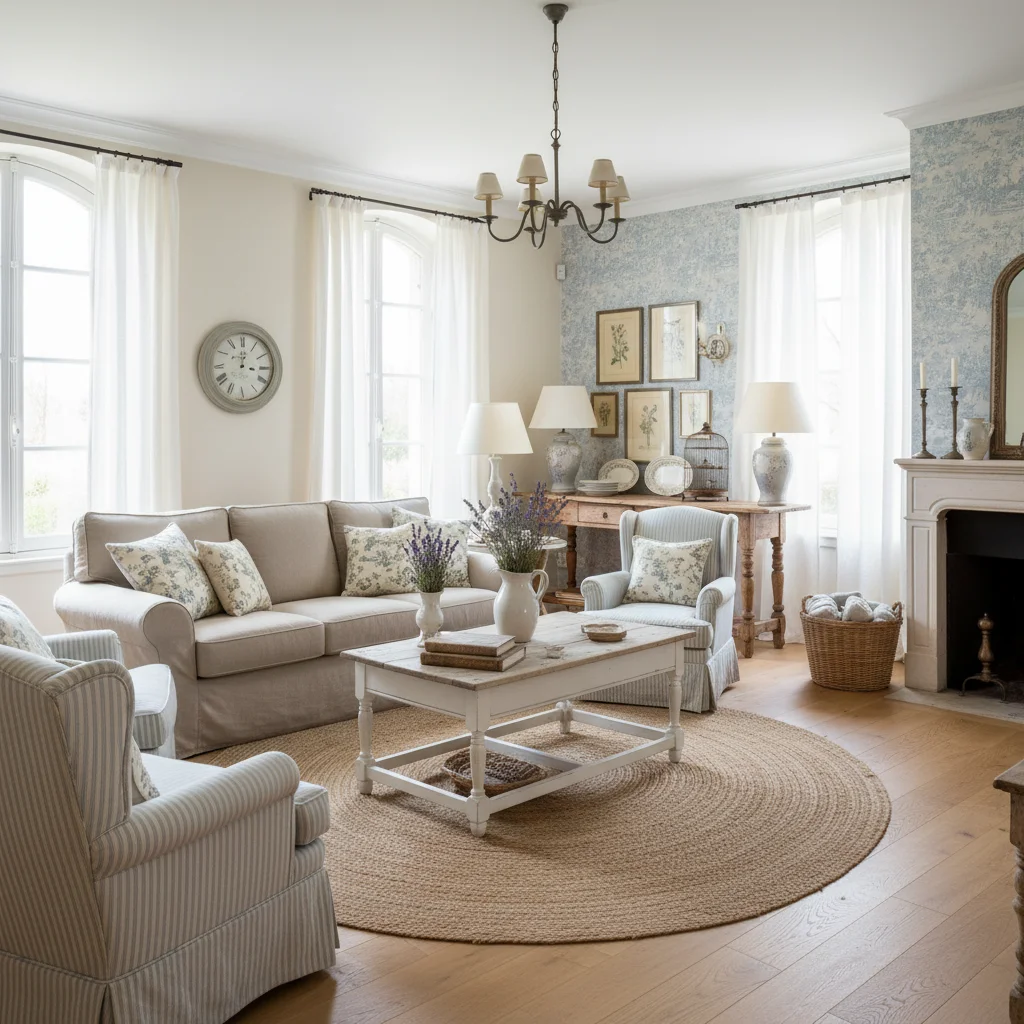 Traditional vs French CountryFrench Country is lighter and more rustic, with painted, distressed furniture and toile fabrics.
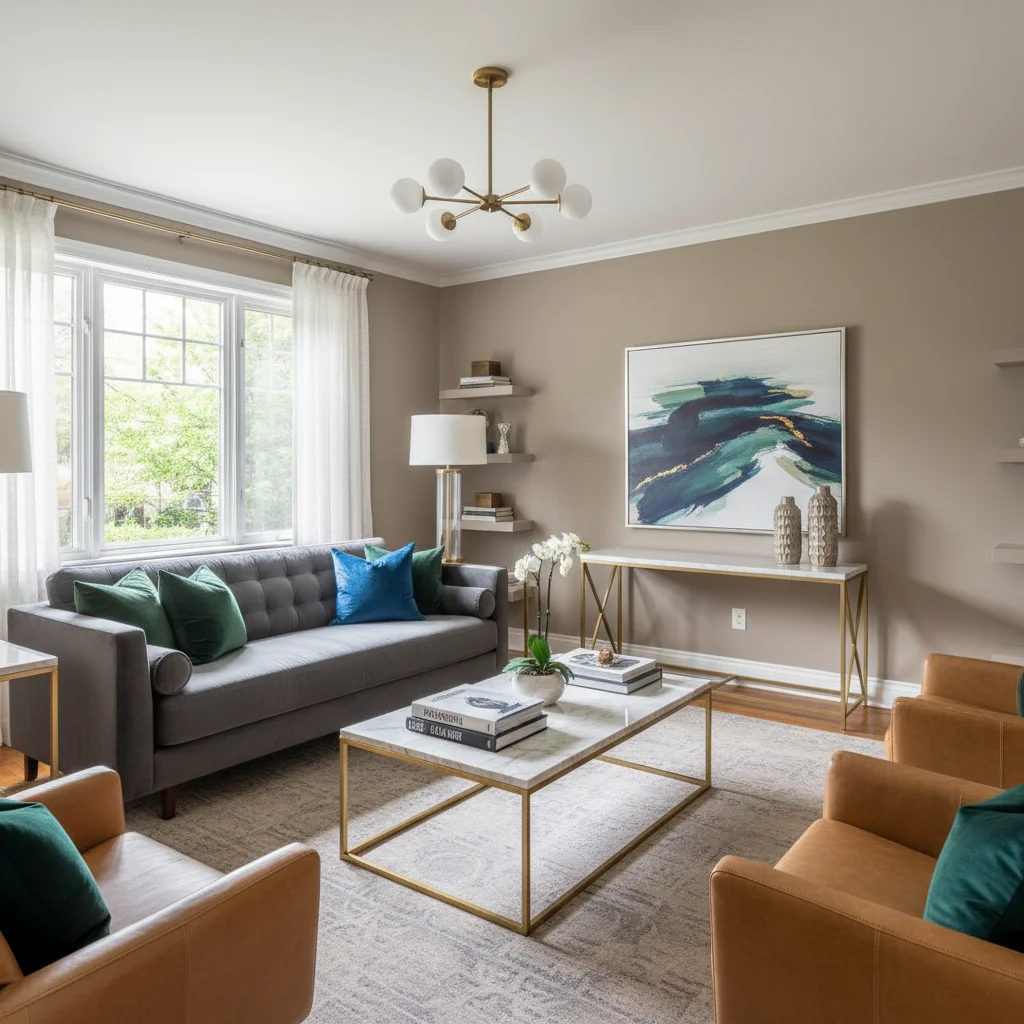 Traditional vs LuxuryLuxury focuses on high-end contemporary finishes and statement materials, while traditional relies on classic forms and period furniture.
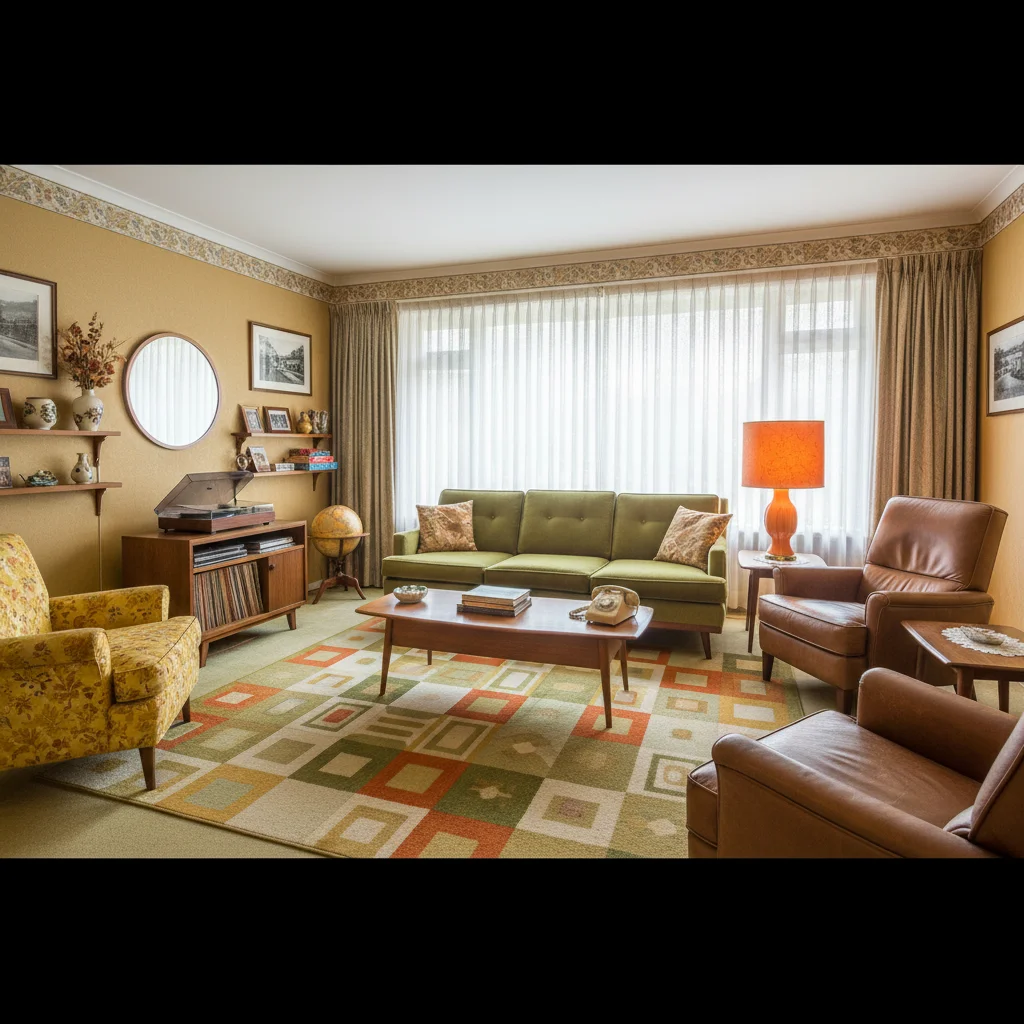 Traditional vs VintageVintage mixes pieces from various 20th-century decades, while traditional centers on 18th and 19th-century European design.
Frequently Asked Questions
What is traditional interior design?
Traditional interior design is a classic style based on 18th and 19th-century English and French interiors. It uses dark carved wood furniture, rich colors such as burgundy and forest green, patterned fabrics like damask and florals, symmetrical layouts, layered curtains, and Oriental rugs. Rooms feel formal, warm, and comfortable.
What colors are used in traditional interior design?
Traditional interiors use cream, ivory, and beige for walls, with rich jewel and earth tones for fabrics and accents: burgundy, forest green, navy, deep red, and gold. Dark wood tones such as mahogany, cherry, and walnut dominate the furniture. Colors are layered through patterned rugs, upholstery, and curtains.
What is the difference between traditional and transitional design?
Traditional design uses ornate carved furniture, rich colors, and many patterns. Transitional design keeps the classic furniture shapes and symmetry but removes most decoration, uses neutral colors like greige and taupe, and replaces bold patterns with plain textures. Transitional feels lighter and more current, while traditional feels richer and more formal.
How do I make a traditional room look less dated?
Lighten the walls to cream or warm white, reduce the number of patterns to two or three, and remove heavy valances in favor of simple curtains on a pole. Mix in one or two modern pieces, such as a plain lamp or an abstract print, and clear surfaces of excess accessories so the furniture stands out.
What furniture is used in traditional style?
Traditional furniture includes rolled-arm sofas, Chesterfield sofas, wingback chairs, carved dining tables with upholstered chairs, four-poster and sleigh beds, china cabinets, and secretary desks. Pieces are usually made from mahogany, cherry, or walnut, with turned legs, carving, button tufting, or nailhead trim.


Unlock the Full Power of Decor Copilot
Upload a photo and see your room redesigned in seconds. Start for free today.
No credit card required