
Botanical Interior Design: Plants, Colors & Ideas
Botanical interior design is a style that makes living plants the main decoration of a room. It combines large floor plants, trailing and hanging plants, terracotta and ceramic pots, rattan, bamboo and natural wood, botanical prints and an earthy green palette, so the space feels like an indoor garden filled with daylight.
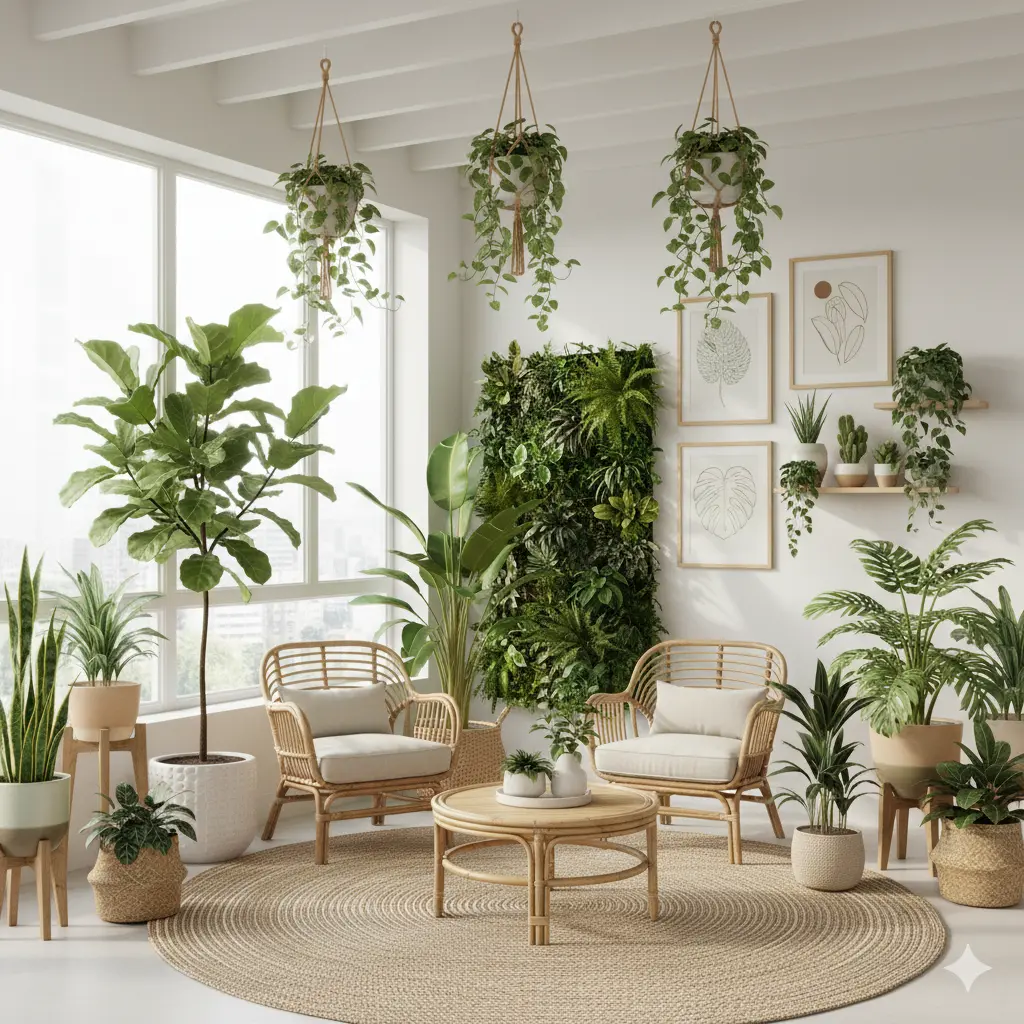
What is Botanical style?
Botanical interiors trace back to Victorian conservatories and the fashion for collecting ferns and palms, then to the 1970s houseplant boom with macramé hangers and spider plants. The style returned strongly in the late 2010s, helped by social media "plant parent" culture and urban living with little outdoor space. People like it because plants soften hard modern interiors, add color that changes over time and make a home feel calm and alive.
Botanical color palette
- Leaf green#4F7942
- Deep fern#2F4A33
- Sage#B2BFA0
- Terracotta#C8714B
- Natural rattan#C9A46C
- Warm white#F5F2EA
Key features of Botanical design
- 1
One tall anchor plant per room, such as a fiddle leaf fig, monstera or bird of paradise.
- 2
Plants at three heights: floor, tabletop and hanging or trailing from shelves.
- 3
Groups of plants in odd numbers with pots in related materials.
- 4
Botanical prints, pressed leaves or leaf-pattern wallpaper on at least one wall.
- 5
Sheer curtains that let in bright indirect light.
- 6
Natural textures such as rattan, jute and wood beside the greenery.
Materials
- Unglazed terracotta pots
- Glazed stoneware and ceramic planters
- Rattan, cane and wicker
- Bamboo
- Light oak and teak
- Linen and cotton in green or natural tones
- Jute and sisal rugs
Furniture
- Tiered plant stand in wood or metal
- Rattan or cane armchair
- Wall-mounted plant shelves near a bright window
- Ceiling hooks with macramé or ceramic hanging planters
- Low oak coffee table with space for a plant group
- Linen sofa in a soft green or natural tone
- Glass cabinet used as an indoor greenhouse
Botanical style room by room
Botanical living room
Place a 150–180 cm fiddle leaf fig or monstera within 1–2 m of a bright window and group three smaller plants on a tiered stand beside it.
Try it on your living roomBotanical bathroom
Use humidity-loving plants like Boston fern, pothos and calathea on a shelf or hanging from the ceiling if the room has a window.
Try it on your bathroomBotanical bedroom
Choose low-maintenance plants such as snake plant and ZZ plant on the bedside or floor, and add a botanical print above the bed.
Try it on your bedroom
Mistakes to avoid
- Choosing plants for looks only; match each plant to the room's actual light level.
- Pots without drainage holes; use a nursery pot inside a decorative cover pot.
- Spreading single small plants everywhere; group them for impact and easier watering.
- Placing plants next to radiators or air-conditioning vents, which dry out leaves.
Get the Botanical look on a budget
- Grow new plants from cuttings of pothos, philodendron and tradescantia in water before potting them.
- Buy small plants and let them grow; a 12 cm monstera costs a fraction of a 150 cm one.
- Frame free public-domain botanical illustrations or pressed leaves from your own garden.
Botanical vs similar styles
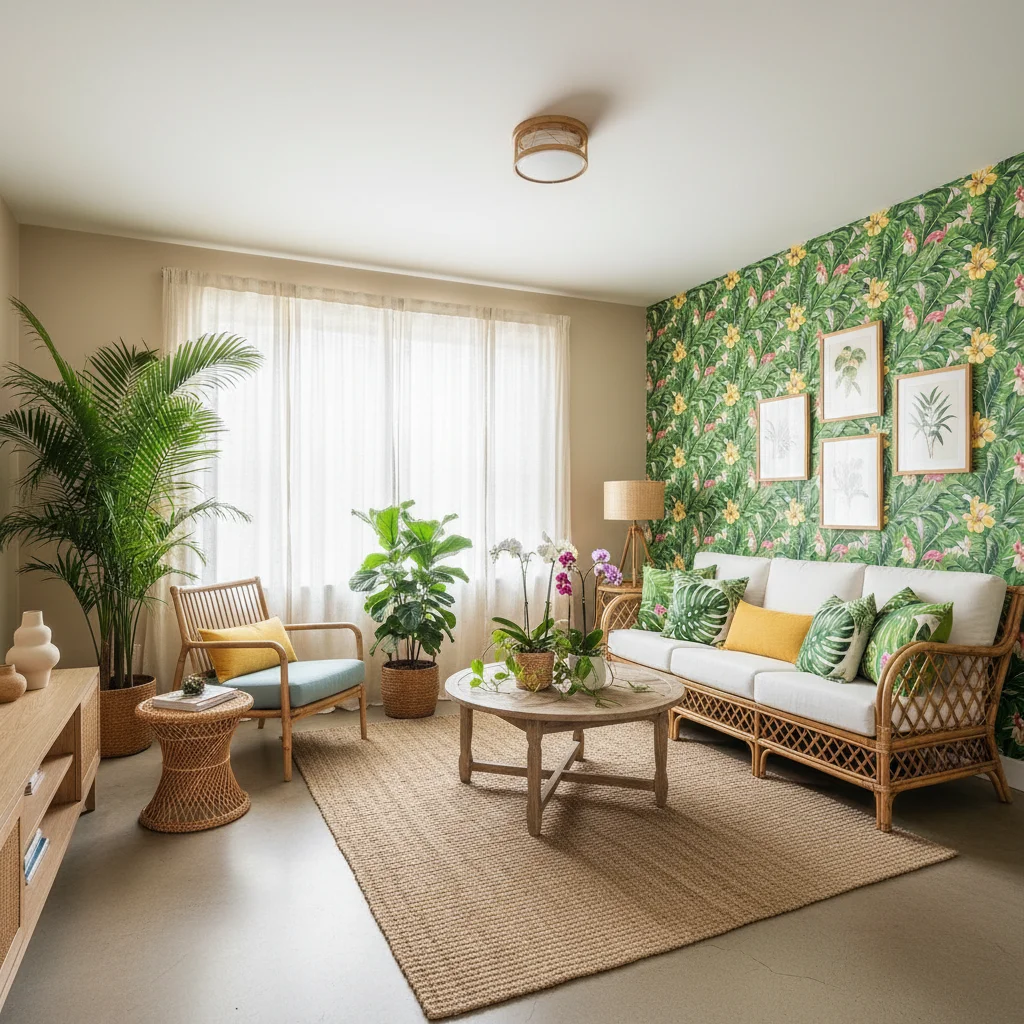 Botanical vs TropicalTropical uses bold palm prints, bright colors and island furniture, while Botanical is calmer and centers on real plants.
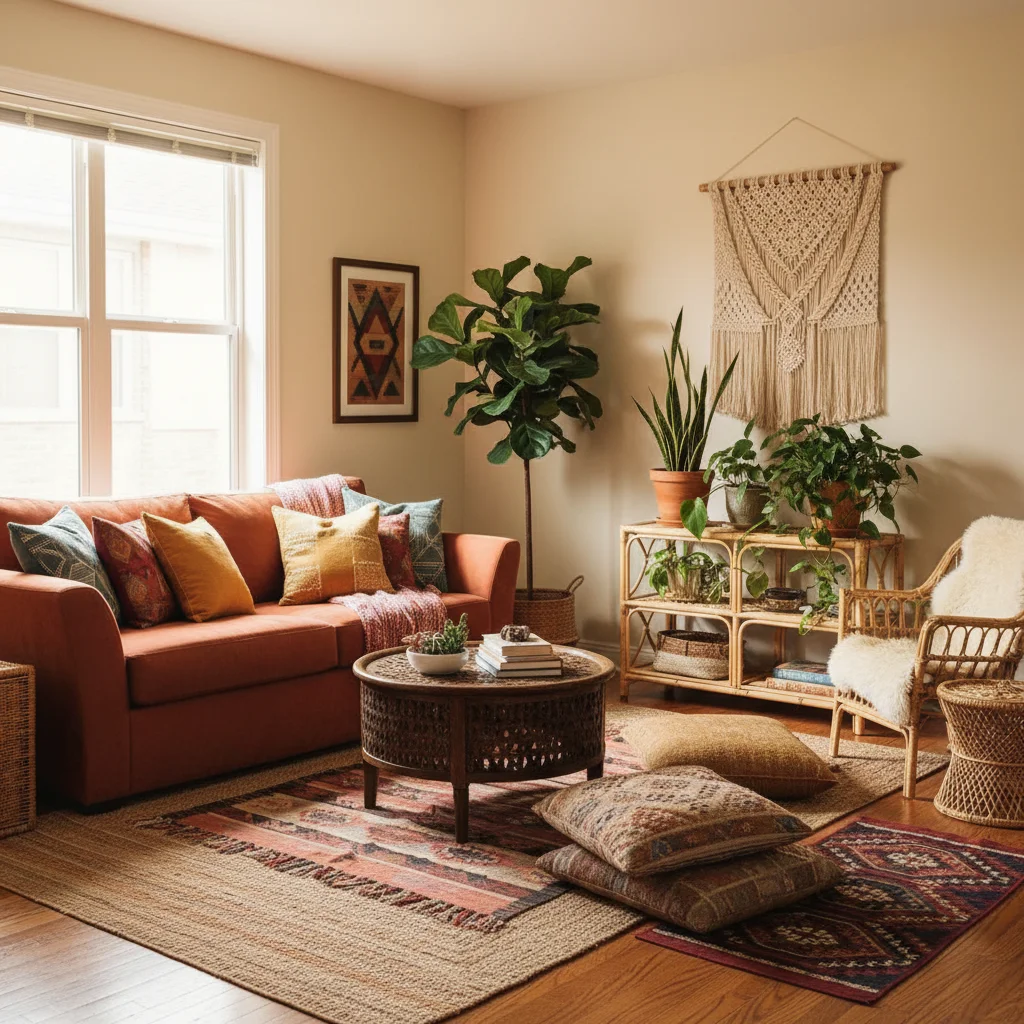 Botanical vs BohemianBohemian includes plants but adds global textiles and layered patterns, while Botanical keeps the focus on greenery.
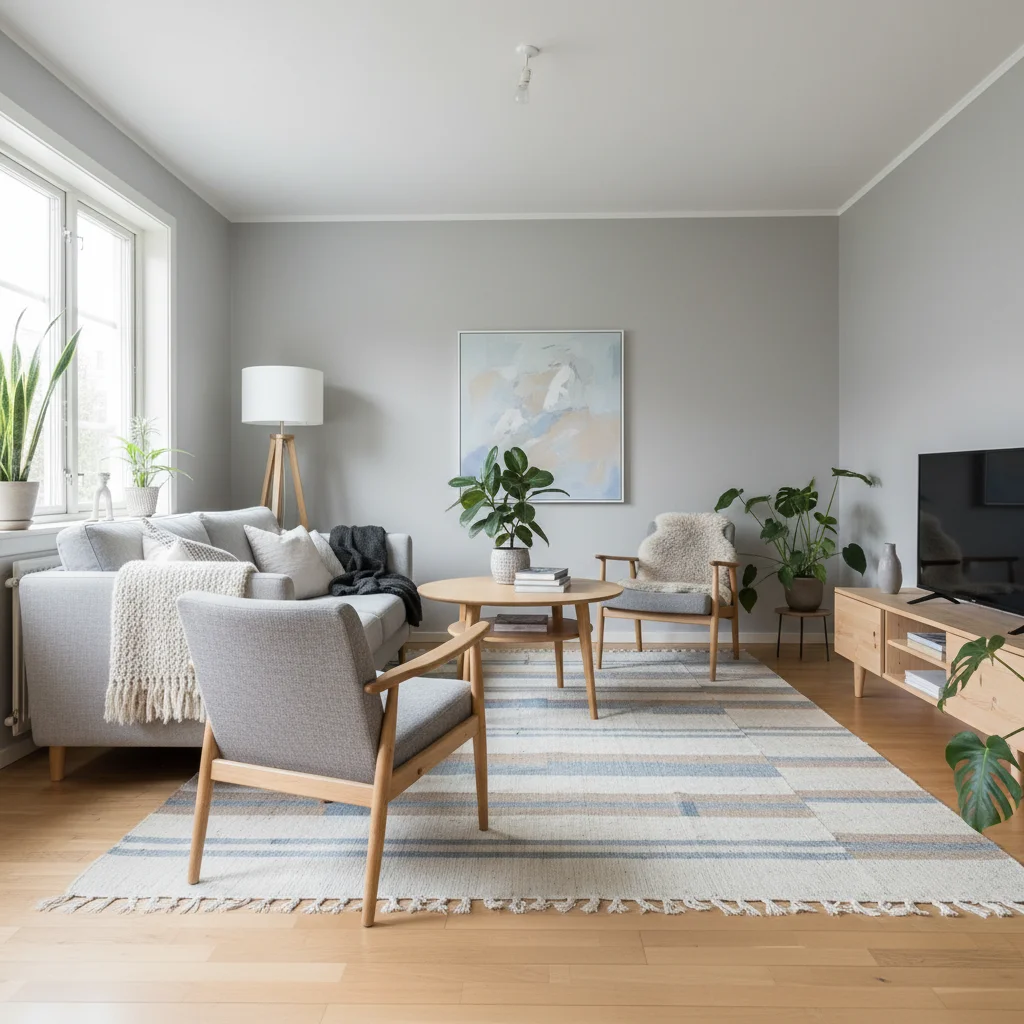 Botanical vs ScandinavianScandinavian is mostly white and wood with a few plants, while Botanical makes plants the main design feature.
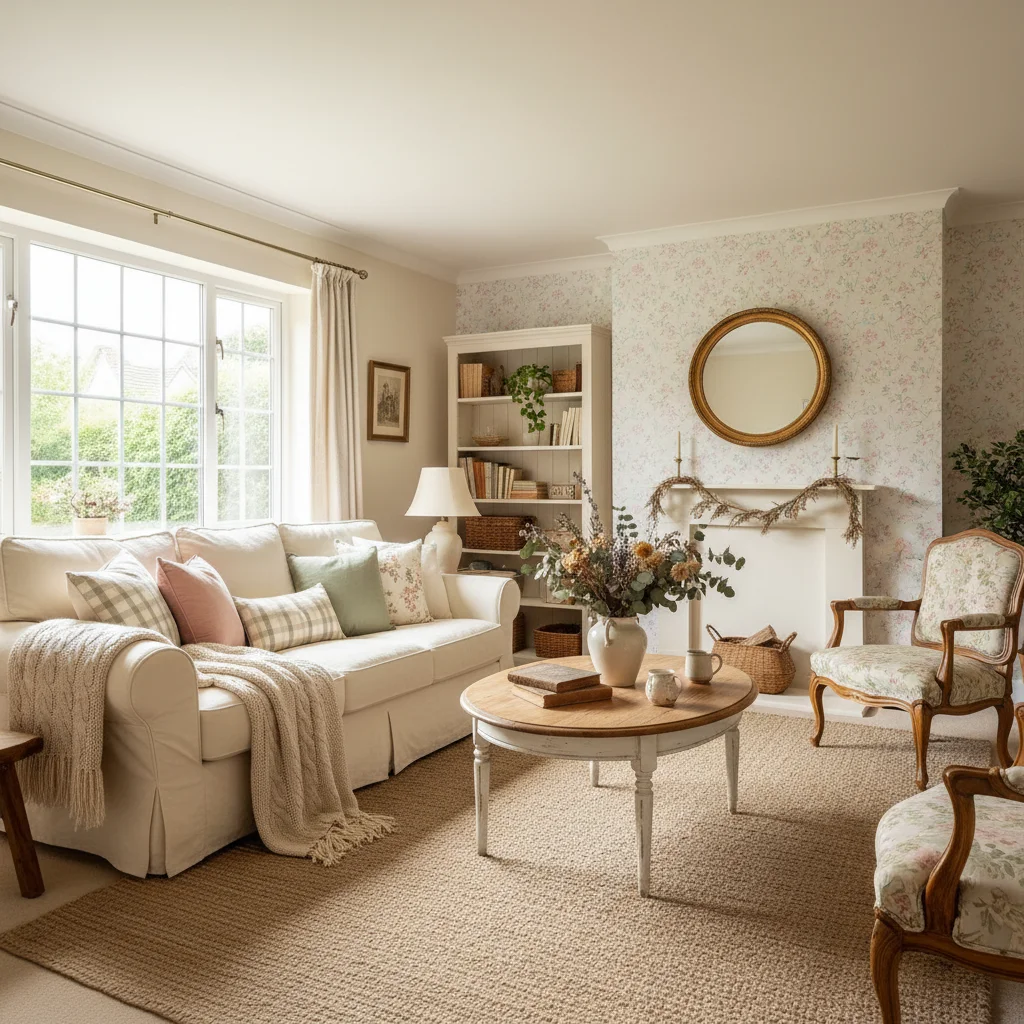 Botanical vs CottagecoreCottagecore uses flowers and pastel florals, while Botanical centers on foliage plants in a green palette.
Frequently Asked Questions
What is botanical interior design?
Botanical interior design is a style that uses living plants as the main decor of a room. It combines tall floor plants, hanging and trailing plants, terracotta and ceramic pots, rattan and wood furniture, botanical prints and a green, earthy palette to create an indoor-garden feel.
What are the best indoor plants for low light?
The best indoor plants for low light are snake plant (Dracaena trifasciata), ZZ plant (Zamioculcas zamiifolia), pothos, cast iron plant (Aspidistra elatior) and heartleaf philodendron. They tolerate rooms several meters from a window or with north-facing light, though they grow slower. Water them less often than plants in bright light.
Which large plants work best in a living room?
The best large living room plants are fiddle leaf fig, monstera deliciosa, bird of paradise (Strelitzia nicolai), rubber plant (Ficus elastica) and kentia palm. Most need bright indirect light within about 2 m of a window. Kentia palm and rubber plant tolerate lower light better than fiddle leaf fig.
How many plants should be in a room?
There is no fixed number, but a botanical room usually has one large anchor plant plus three to six smaller plants at different heights. Group them in odd numbers near the best light source. Only add as many as you can water and check each week.
How do I keep plants healthy in a botanical-style room?
Keep plants healthy by matching each one to the room's light, using pots with drainage holes and watering only when the top 2–3 cm of soil is dry. Wipe dust off large leaves monthly, rotate pots a quarter turn every few weeks and keep plants away from heaters and air-conditioning vents.


Unlock the Full Power of Decor Copilot
Upload a photo and see your room redesigned in seconds. Start for free today.
No credit card required