
Japandi Interior Design: Colors, Furniture & Ideas
Japandi interior design is a hybrid style that combines Japanese minimalism with Scandinavian comfort. It uses low, simply built furniture in light and dark woods, an earthy neutral palette of warm white, sand, clay, and charcoal, natural materials such as linen, paper, and stone, and a few handmade objects, creating calm, uncluttered rooms.
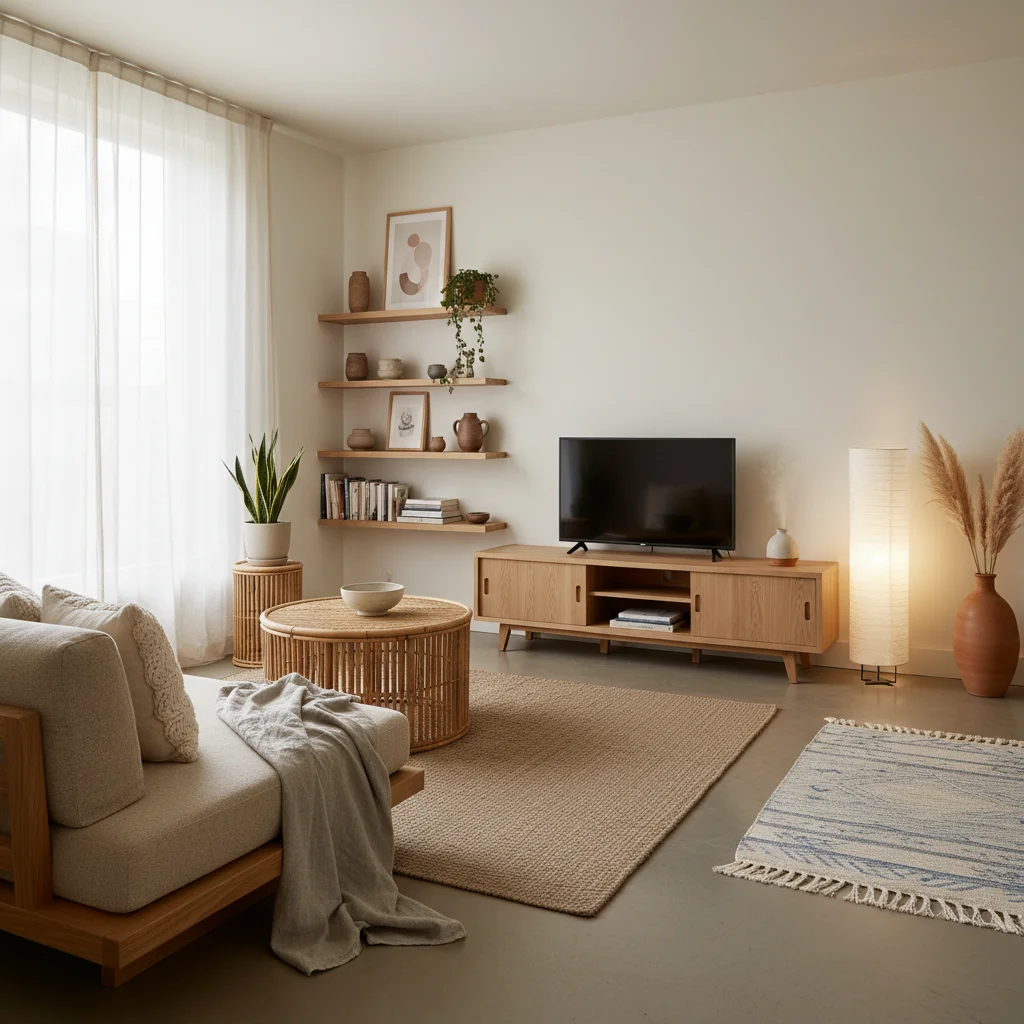
What is Japandi style?
Japandi grew from long-standing links between Japanese and Scandinavian design: Danish designers studied Japanese joinery and proportion from the 1950s onward, and both cultures value craftsmanship, natural materials, and restraint. The name became popular around 2017 to 2020 through design media and social platforms. People choose it now because it offers the calm of minimalism without feeling cold, suits small homes, and supports a slower, less cluttered way of living.
Japandi color palette
- Warm white#F4F1EA
- Sand#D8CBB3
- Clay#B88A6B
- Sage grey#9A9A88
- Smoked oak#6B5440
- Charcoal#2F2E2C
Key features of Japandi design
- 1
Furniture that sits low to the floor with clean lines and soft, rounded edges.
- 2
A contrast of pale and dark woods within the same room.
- 3
An earthy, muted palette with no bright colors.
- 4
Handmade, imperfect objects in the spirit of wabi-sabi, such as uneven ceramics.
- 5
Diffused light through paper shades and linen curtains.
- 6
Ample empty space, with a single branch arrangement or plant as decoration.
Materials
- Light oak and smoked or stained oak
- Bamboo and rattan
- Washi paper
- Linen and cotton
- Handmade stoneware and raku ceramics
- Natural stone and limewash plaster
Furniture
- Low platform bed in solid wood
- Low sofa with a wide seat and wooden frame
- Solid oak dining table with simple bench seating
- Round paper floor lamp or pendant
- Slatted wood room divider or sideboard
- Low wood coffee table with rounded corners
Japandi style room by room
Japandi living room
Choose a low linen sofa, a rounded oak coffee table, a wool or jute rug, and a paper floor lamp, and keep the rest of the floor clear.
Try it on your living roomJapandi bedroom
Use a low solid-oak platform bed with linen bedding in sand or clay, a single paper pendant, and a slatted wood bench at the foot.
Try it on your bedroomJapandi bathroom
Pair a floating oak vanity with limewash or microcement walls, a stone basin, linen towels, and a wooden bath mat.
Try it on your bathroom
Mistakes to avoid
- Mixing too many wood tones; limit the room to one light and one dark wood.
- Adding mass-produced decor with logos or bright colors; choose handmade ceramics and natural fibers.
- Using only cool greys; Japandi relies on warm sand, clay, and oak tones.
- Filling shelves; leave more than half of each shelf empty and display only a few objects.
Get the Japandi look on a budget
- Replace a standard shade with a round paper lantern pendant or floor lamp.
- Swap synthetic bedding and cushions for washed linen in sand, clay, or charcoal.
- Remove decor until only a few handmade pieces remain, then add one dried or fresh branch in a stoneware vase.
Japandi vs similar styles
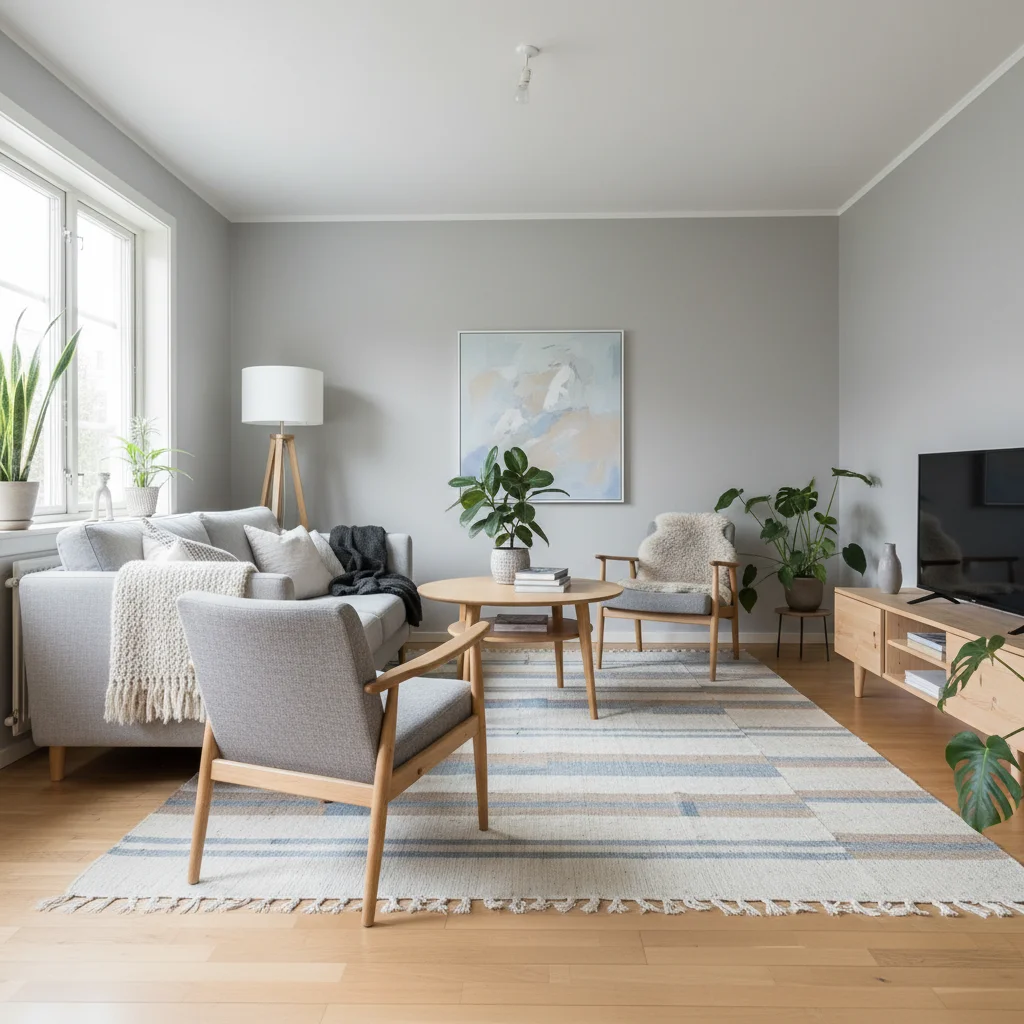 Japandi vs ScandinavianScandinavian uses paler woods, more soft textiles, and a brighter palette, while Japandi is lower, darker, and more restrained.
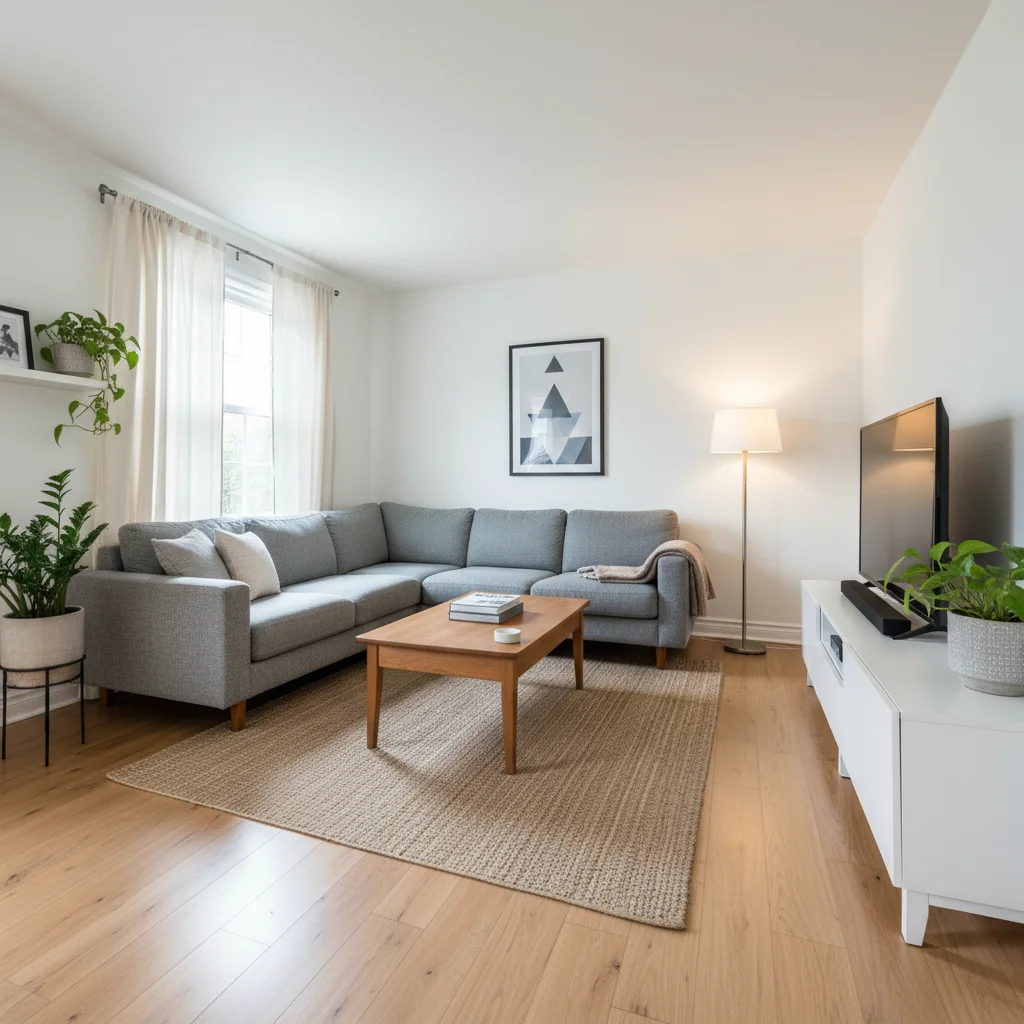 Japandi vs MinimalistMinimalist can be stark and white, while Japandi adds warm earthy tones, wood contrast, and handmade objects.
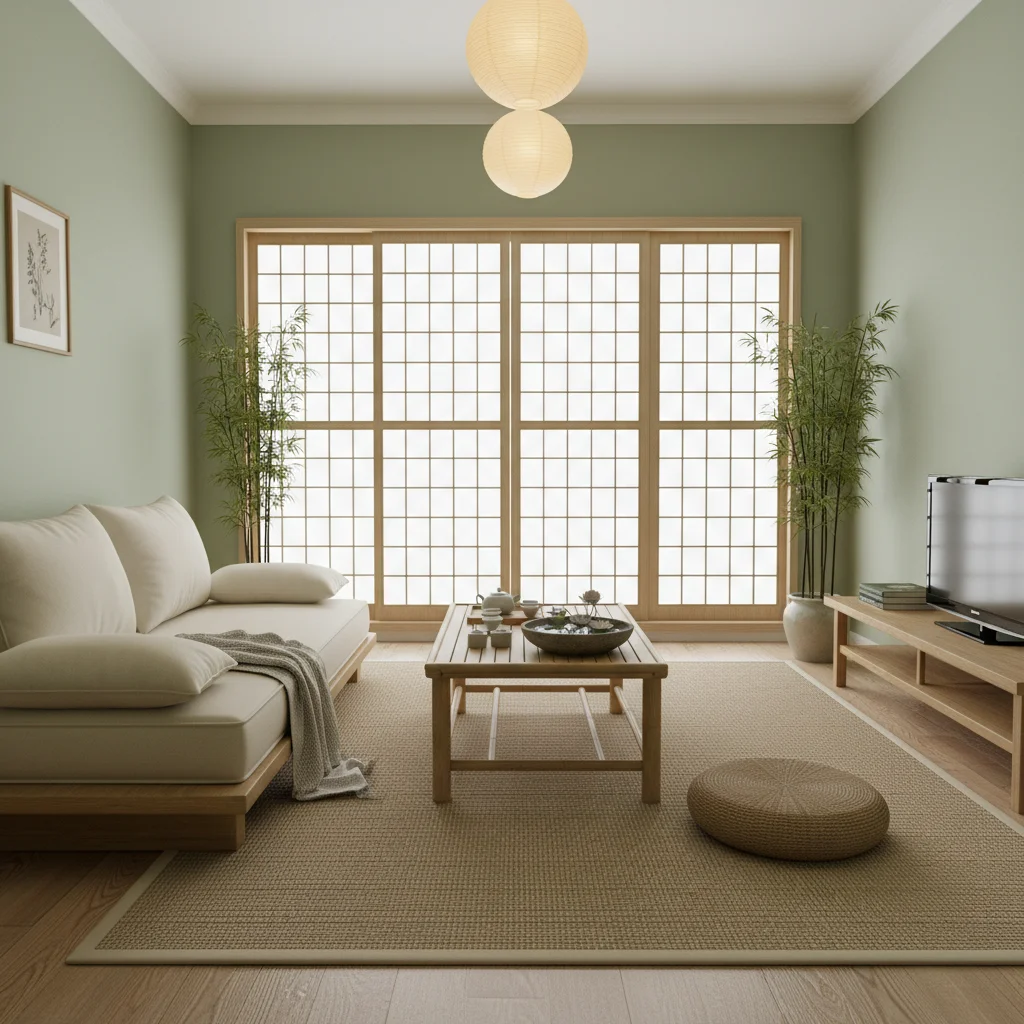 Japandi vs Asian ZenAsian Zen draws only on East Asian traditions such as tatami and shoji, while Japandi mixes Japanese restraint with Nordic comfort.
Frequently Asked Questions
What is Japandi interior design?
Japandi interior design is a mix of Japanese minimalism and Scandinavian comfort. It uses low wooden furniture with clean lines, an earthy neutral palette of warm white, sand, clay, and charcoal, natural materials like linen, paper, bamboo, and stone, and a few handmade objects. Rooms feel calm, warm, and uncluttered.
What colors are used in Japandi design?
Japandi uses warm, muted neutrals: warm white, beige, sand, clay, terracotta, sage grey, and charcoal. Wood tones range from pale oak to smoked or dark stained oak, often in the same room. Bright and saturated colors are avoided, and black appears only in small details such as frames and lamp bases.
What is the difference between Japandi and Scandinavian design?
Scandinavian design uses pale woods, white walls, and many cozy textiles for a bright, lived-in room. Japandi adds Japanese restraint: furniture sits lower, the palette includes darker earth tones and contrasting woods, textiles are fewer and simpler, and decor is limited to handmade, imperfect objects in a wabi-sabi spirit.
What furniture is used in Japandi style?
Japandi furniture includes low platform beds, low sofas with wooden frames, solid oak dining tables with benches, slatted wood sideboards and room dividers, rounded low coffee tables, and paper floor lamps. Pieces are made from solid wood with visible joinery, simple shapes, and soft corners, and they sit close to the floor.
How do I make a room Japandi on a budget?
Start by clearing out excess items, since space is central to the style. Paint walls warm white or sand, add a paper lantern, swap bedding and cushions for linen in earthy tones, and use a jute or wool rug. Add one wooden piece in a darker finish and one handmade ceramic for contrast.


Unlock the Full Power of Decor Copilot
Upload a photo and see your room redesigned in seconds. Start for free today.
No credit card required