
Transitional Interior Design: Colors, Furniture & Ideas
Transitional interior design is a style that blends traditional furniture shapes, such as rolled arms and wingback chairs, with the clean lines and restraint of modern design. It uses a calm neutral palette, tone-on-tone textures instead of busy patterns, and balanced, often symmetrical layouts, producing rooms that feel classic but uncluttered.
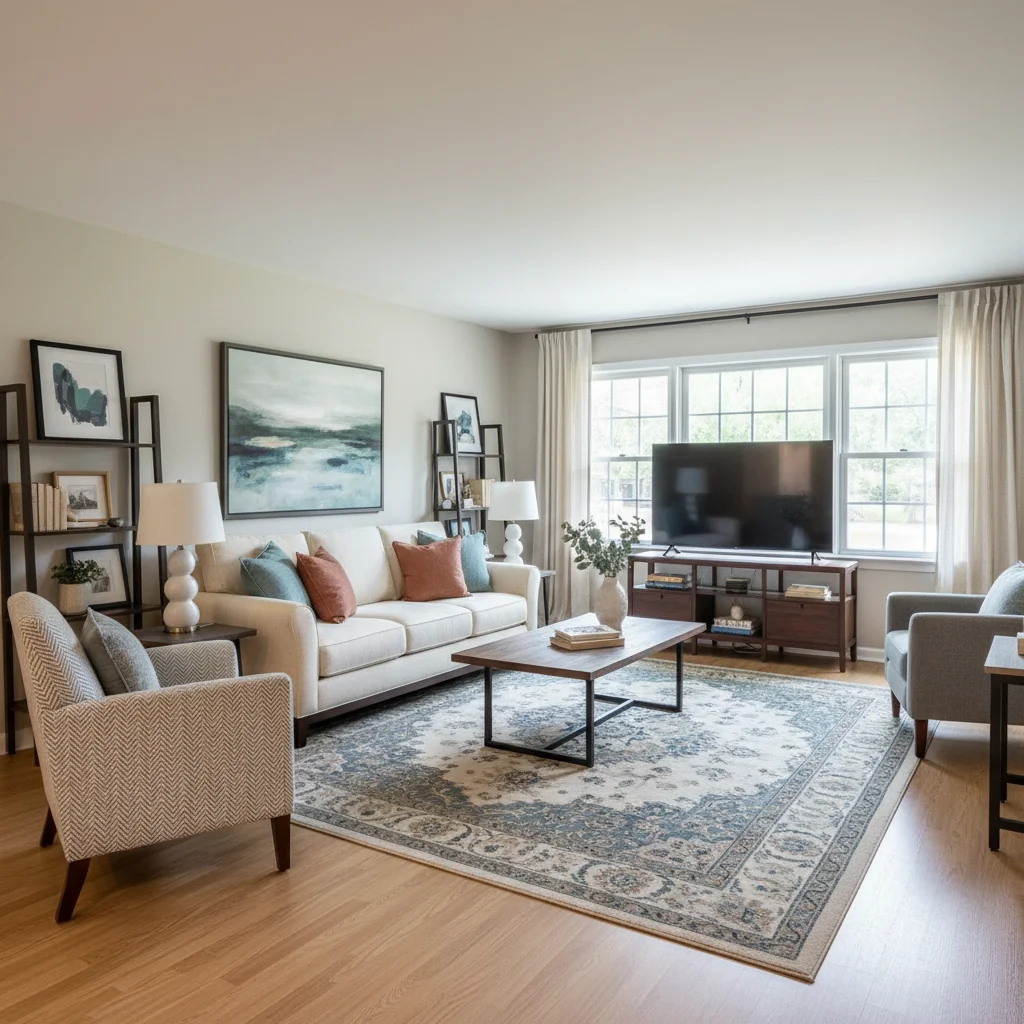
What is Transitional style?
Transitional design became popular in the United States in the 1990s and 2000s as homeowners wanted comfort and familiarity without the heavy ornament of traditional rooms or the coldness of strict modernism. Designers kept the proportions of classic furniture but simplified the details, replaced florals with solid textures, and lightened wood tones. It remains one of the most requested styles because it suits both older and new-build homes and works well for households with mixed tastes.
Transitional color palette
- Ivory#F3EEE3
- Greige#C8BFB1
- Taupe#9C8F80
- Soft grey#A9AAA6
- Navy#2B3A55
- Espresso wood#4A3628
Key features of Transitional design
- 1
Classic furniture shapes with simplified, unornamented details.
- 2
A neutral palette layered tone on tone, with color used sparingly.
- 3
Texture from linen, wool, and subtle tone-on-tone patterns instead of bold prints.
- 4
Symmetrical arrangements, such as matching lamps and chairs on either side of a focal point.
- 5
A mix of curved and straight lines in the same room.
- 6
Crown molding and wall paneling kept but painted in a single neutral.
Materials
- Linen and performance linen-look fabrics
- Dark stained oak or walnut
- Painted wood in white or greige
- Marble or quartz with soft veining
- Brushed nickel and antique brass
- Wool and viscose-blend rugs
Furniture
- Rolled-arm or track-arm sofa in plain linen
- Tailored wingback or slipper chair
- Rectangular coffee table in dark wood with simple legs
- Upholstered bed with a plain or simply tufted headboard
- Console table behind the sofa with a pair of lamps
- Dining chairs with upholstered seats and a classic Parsons shape
Transitional style room by room
Transitional living room
Center the sofa on the fireplace or main wall, place two matching chairs opposite, and use a pair of identical lamps for balance.
Try it on your living roomTransitional dining room
Pair a dark wood table with upholstered Parsons chairs and a simple drum or lantern chandelier about one-half to two-thirds the table width.
Try it on your dining roomTransitional bedroom
Use an upholstered headboard flanked by matching bedside tables and lamps, with white bedding and a textured throw in taupe.
Try it on your bedroom
Mistakes to avoid
- Mixing too many styles; keep the balance close to half classic, half modern.
- Busy florals or large damask prints; use tone-on-tone stripes, herringbone, or plain weaves.
- All-grey rooms that feel flat; add warm wood, brass, and creamy whites.
- Matching every finish; combine one dark wood, one painted finish, and one metal.
Get the Transitional look on a budget
- Paint existing paneling, trim, and walls the same greige to give an older room a calmer, transitional base.
- Replace patterned cushions with solid linen and one tone-on-tone stripe or herringbone weave.
- Buy two matching lamps for a console or bedside to add symmetry quickly.
Transitional vs similar styles
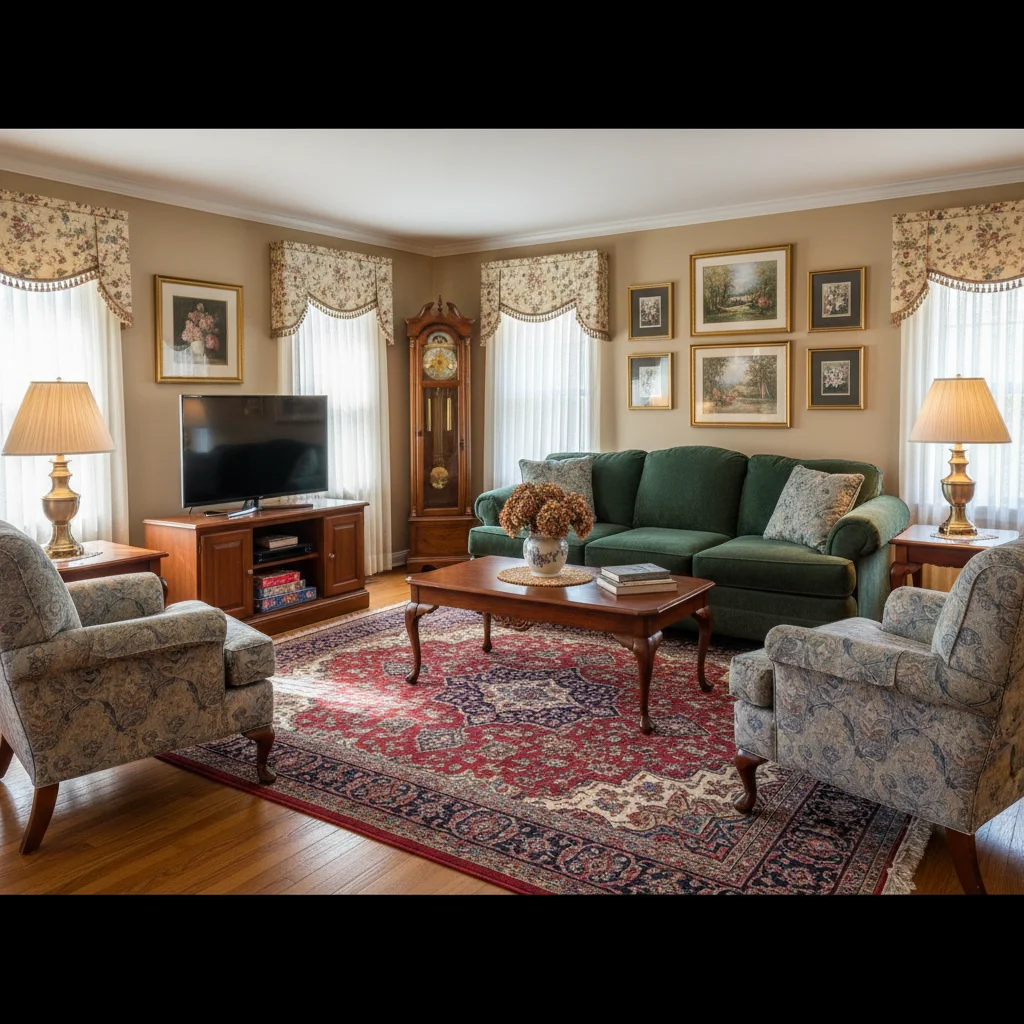 Transitional vs TraditionalTraditional keeps carving, rich colors, and patterned fabrics, while transitional strips those details back to plain textures and neutrals.
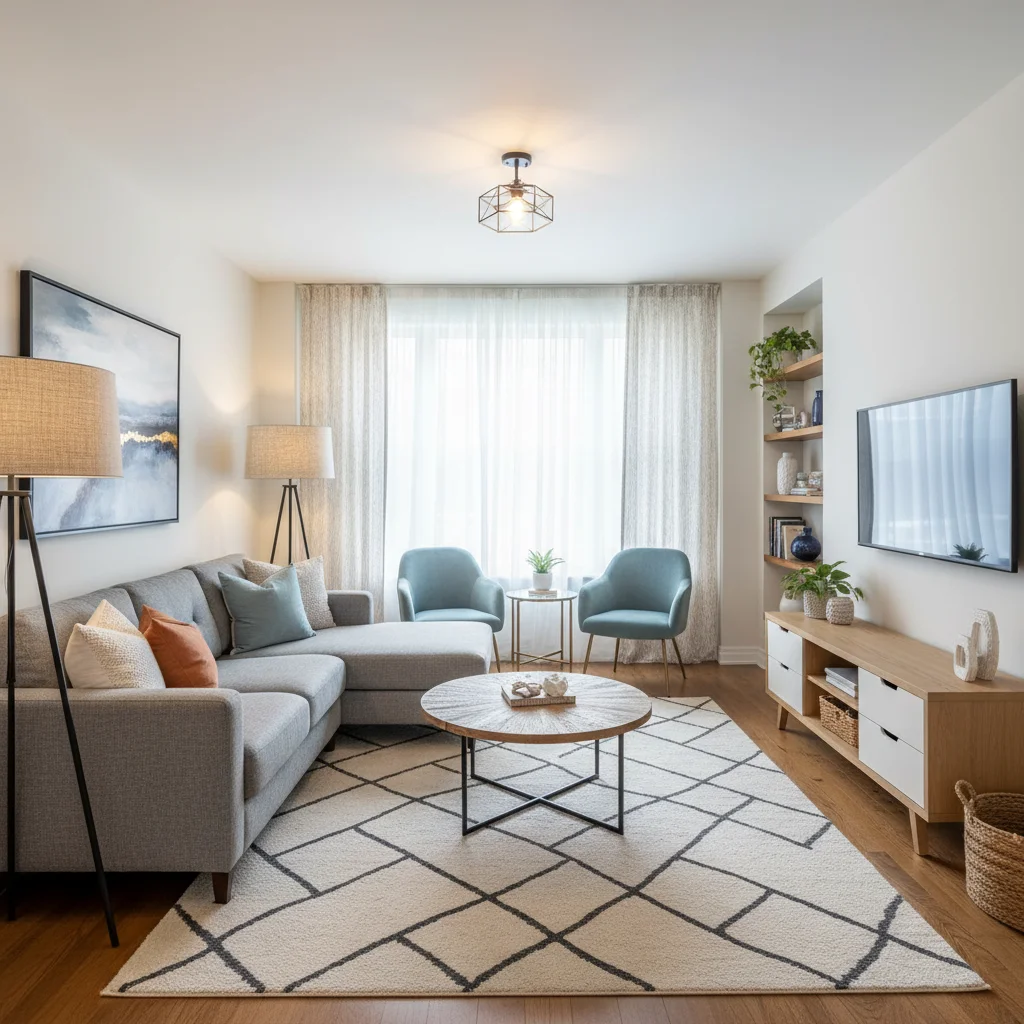 Transitional vs ContemporaryContemporary follows current trends with no historical references, while transitional keeps classic furniture shapes.
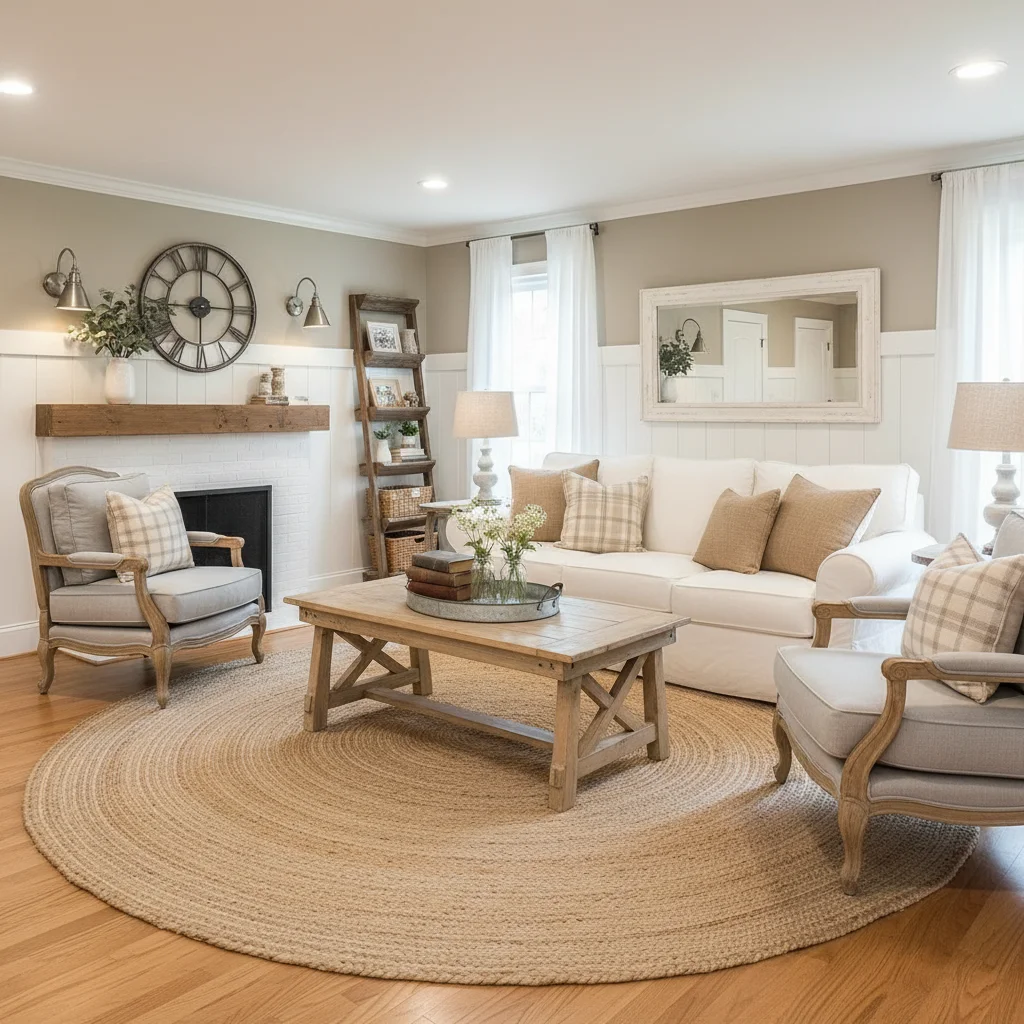 Transitional vs FarmhouseFarmhouse adds rustic reclaimed wood and vintage accents, while transitional uses smooth, refined finishes.
Frequently Asked Questions
What is transitional interior design?
Transitional interior design combines traditional and modern elements. It keeps classic furniture shapes such as rolled arms, wingbacks, and turned legs, but simplifies the details and uses a calm neutral palette with tone-on-tone textures. The result is a balanced room that feels familiar and comfortable without heavy ornament or cold minimalism.
What colors are used in transitional interior design?
Transitional interiors use ivory, greige, taupe, soft grey, and cream as the base, with dark wood tones such as espresso or walnut for contrast. Accent colors are muted and used sparingly, most often navy, slate blue, sage, or charcoal. Patterns stay subtle, so color variation comes mainly from texture.
What is the difference between transitional and traditional design?
Traditional design uses ornate carving, rich colors such as burgundy and forest green, and patterned fabrics like damask and florals. Transitional design keeps the classic furniture shapes and symmetry but removes most ornament, lightens the palette to neutrals, and swaps bold patterns for plain textures, making rooms feel calmer and more current.
What furniture is used in transitional design?
Common transitional pieces include rolled-arm or track-arm sofas in plain linen, tailored wingback chairs, upholstered Parsons dining chairs, dark wood coffee tables with straight legs, and upholstered beds with simple headboards. Furniture has classic proportions but smooth, unornamented surfaces, and fabrics are usually solid neutrals or tone-on-tone weaves.
How do I make my home transitional?
Start with a neutral wall color such as greige or warm white and keep any existing molding painted the same shade. Choose one classic-shaped sofa in plain fabric, add a dark wood table, and arrange matching lamps or chairs symmetrically. Use texture instead of pattern, and mix brushed nickel or brass with wood for warmth.


Unlock the Full Power of Decor Copilot
Upload a photo and see your room redesigned in seconds. Start for free today.
No credit card required