
Industrial Interior Design: Colors, Furniture & Ideas
Industrial interior design is a style inspired by converted factories and warehouses that leaves structural materials such as brick, concrete, steel beams, and ductwork exposed. It pairs them with reclaimed wood, patinated leather, and metal furniture in a palette of greys, blacks, browns, and rust, creating raw but carefully composed loft-like rooms.
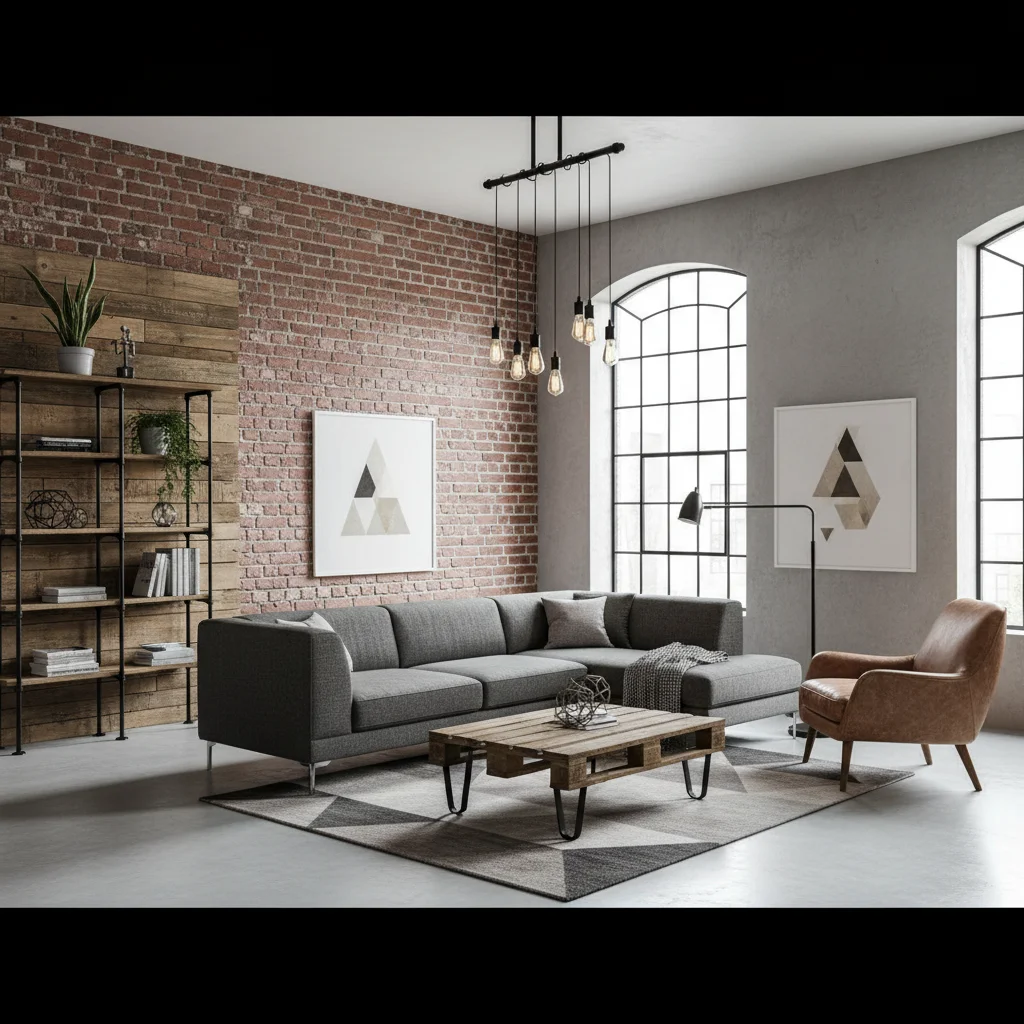
What is Industrial style?
Industrial style began in the 1950s to 1970s when artists in cities such as New York, especially SoHo, moved into empty factories and warehouses for cheap space and large windows. Instead of covering brick walls, iron columns, and pipes, they left them visible. Developers later copied the look in new loft apartments, cafes, and offices. People like it today because it is durable, forgiving of wear, gender-neutral, and works well in open-plan spaces with high ceilings.
Industrial color palette
- Concrete grey#8E8C88
- Charcoal#3B3B3A
- Blackened steel#232323
- Brick red#9A4E3A
- Cognac leather#8B5A2B
- Warm off-white#ECE7DF
Key features of Industrial design
- 1
Exposed brick, concrete, or plaster walls left in their raw state.
- 2
Visible structural elements such as steel beams, columns, pipes, and ducts.
- 3
Factory-style pendant lights in metal, often with exposed filament bulbs.
- 4
Large steel-framed windows or glass partitions.
- 5
A mix of metal and reclaimed wood on most furniture.
- 6
Open-plan layouts with high ceilings and few interior walls.
Materials
- Exposed brick
- Polished or raw concrete
- Blackened and raw steel
- Reclaimed wood
- Distressed leather
- Wired, ribbed, or Crittall-style framed glass
Furniture
- Chesterfield or club sofa in cognac leather
- Reclaimed-wood dining table on a steel base
- Metal and wood open shelving units
- Metal stools at a kitchen counter
- Vintage-style factory cart used as a coffee table
- Steel-framed bed or bookcase with exposed welds
Industrial style room by room
Industrial living room
Combine a cognac leather sofa with a reclaimed wood and steel coffee table on a large wool rug, and hang a cluster of metal pendants at different heights.
Try it on your living roomIndustrial kitchen
Use matte black or dark grey cabinets, a concrete or dark stone worktop, open steel shelving, and metal stools at the counter.
Try it on your kitchenIndustrial home office
Choose a wood desk on a steel frame, a metal task lamp, and wall-mounted pipe shelving, with a leather chair for warmth.
Try it on your home office
Mistakes to avoid
- Rooms that feel cold and empty; add a large wool rug, leather, and plants to soften hard surfaces.
- Too many exposed filament bulbs; combine them with warm lamps and indirect lighting for usable light.
- Using only black and grey; bring in cognac, rust, and warm wood tones.
- Fake brick wallpaper with a printed look; use real brick slips or a plaster finish instead.
Get the Industrial look on a budget
- Apply a microcement or concrete-effect plaster to one wall instead of exposing real brick.
- Build open shelving with black steel pipe and scaffold boards.
- Replace a standard ceiling light with a black metal dome pendant and a warm-tone exposed filament bulb.
Industrial vs similar styles
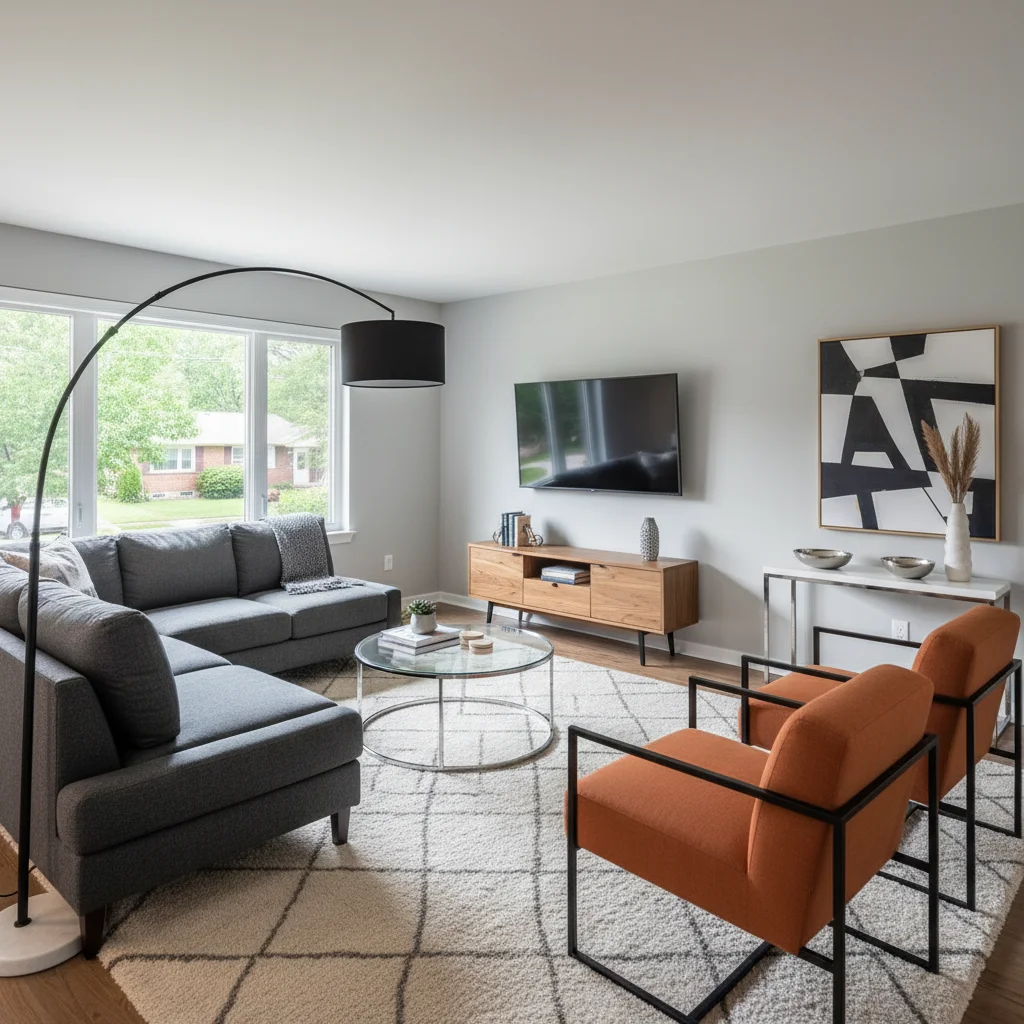 Industrial vs ModernModern uses smooth, finished surfaces and clean lines, while industrial leaves raw materials exposed.
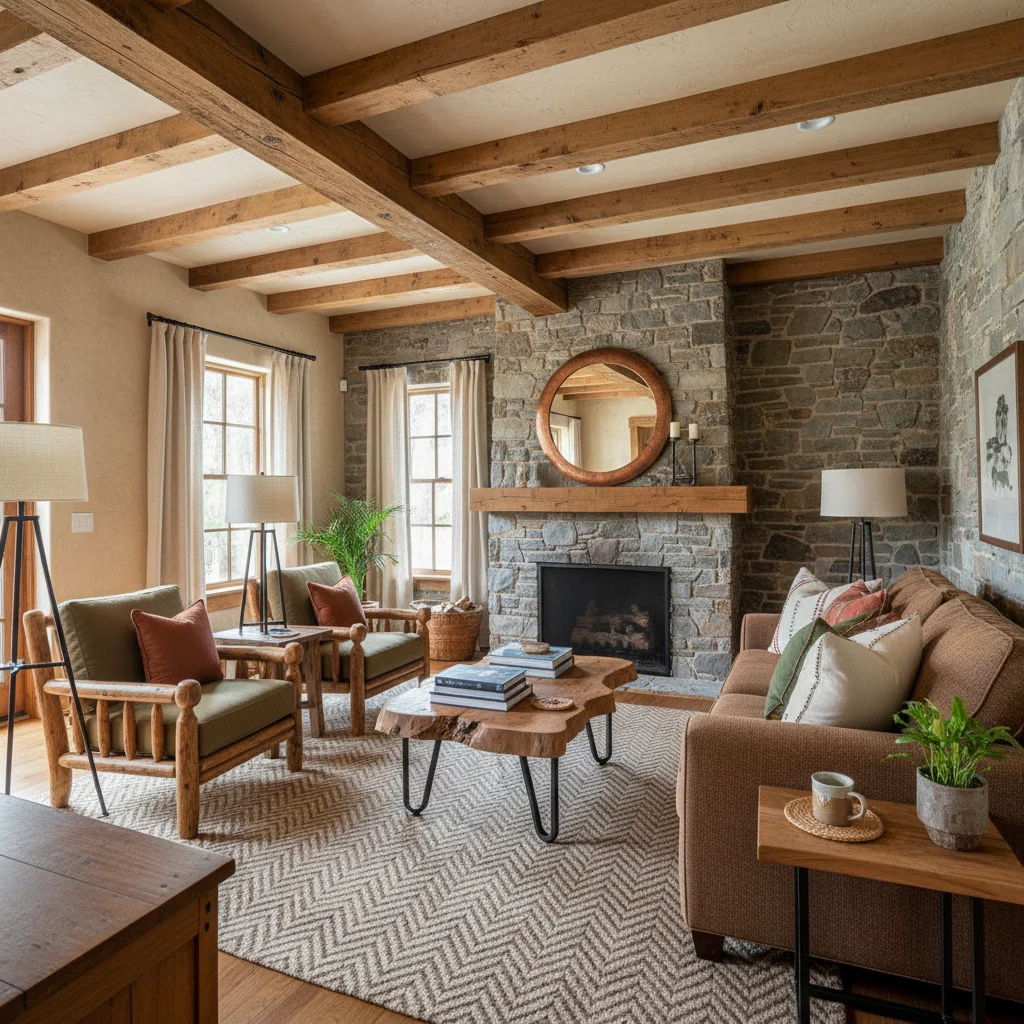 Industrial vs RusticRustic focuses on rough natural wood and stone in a rural setting, while industrial combines wood with steel and brick in an urban setting.
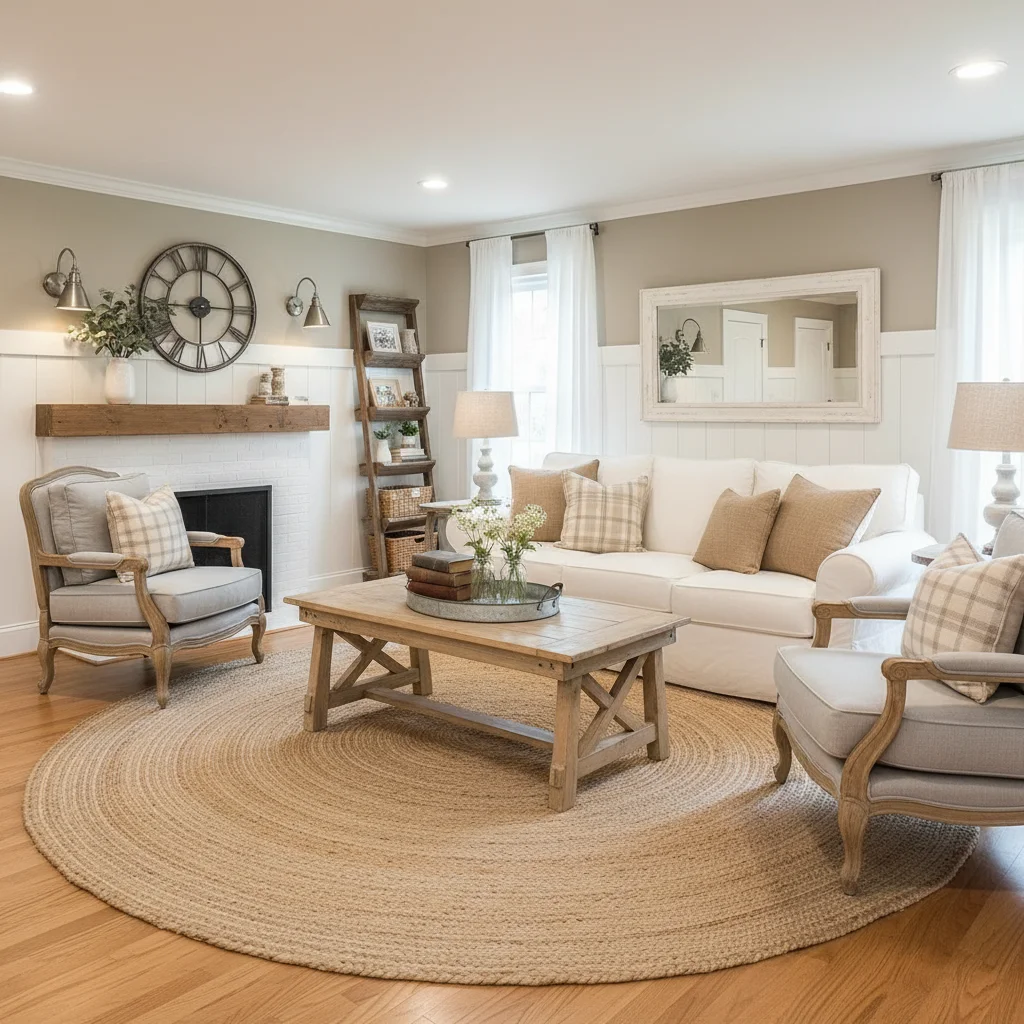 Industrial vs FarmhouseFarmhouse is lighter and rural, with white walls and painted wood, while industrial is darker and urban.
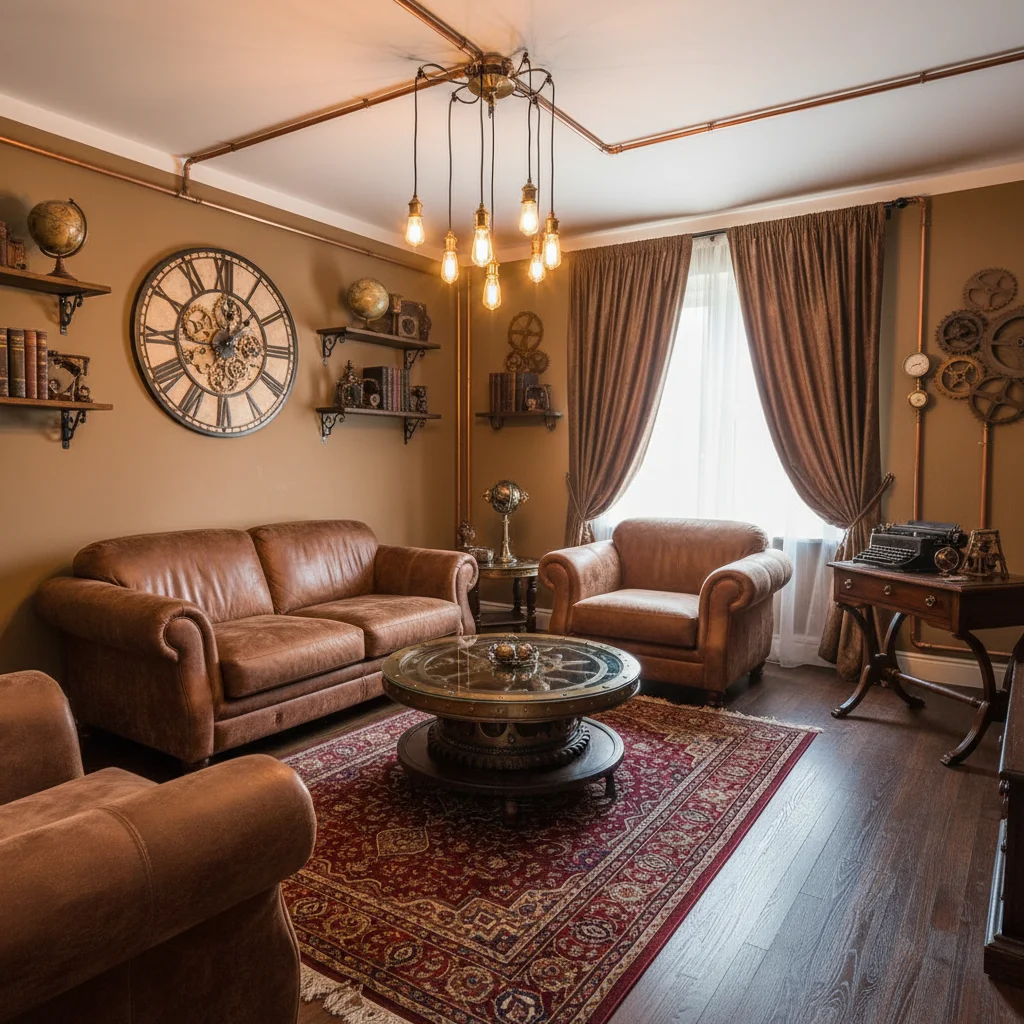 Industrial vs SteampunkSteampunk adds Victorian ornament, brass gears, and decorative pipes, while industrial keeps the metalwork plain and functional.
Frequently Asked Questions
What is industrial interior design?
Industrial interior design is a style based on converted factories and warehouses. It leaves structural elements such as brick, concrete, steel beams, and ductwork exposed, and pairs them with reclaimed wood, metal furniture, leather seating, and factory-style lighting. The palette is mostly grey, black, brown, and rust, and layouts are usually open-plan.
What colors are used in industrial interior design?
Industrial interiors use concrete grey, charcoal, and black as the main colors, combined with the red-brown of exposed brick and the warm browns of wood and leather. Off-white walls balance the darker tones. Accent colors are muted and earthy, such as rust, olive, or deep navy.
How do I make industrial design feel warm?
Add soft, warm materials to the hard ones. Use a large wool or vintage rug, a cognac leather sofa, reclaimed wood, and linen or wool textiles. Light the room with warm 2700K bulbs from several lamps, not only overhead pendants. Plants such as fiddle-leaf figs and large ferns also soften brick and concrete.
Can I get the industrial look without exposed brick?
Yes. Use a concrete-effect plaster or microcement finish, paint one wall charcoal, or install thin brick slips on a single wall. The look also comes from furniture and lighting: metal and wood tables, open steel shelving, leather seating, black metal pendants, and black-framed glass partitions or mirrors.
What furniture is used in industrial style?
Industrial furniture includes leather Chesterfield or club sofas, reclaimed-wood tables on steel bases, metal and wood shelving, metal counter stools, factory carts used as coffee tables, and steel-framed beds or bookcases. Pieces show their construction, such as welds, bolts, and rivets, and finishes look aged rather than polished.


Unlock the Full Power of Decor Copilot
Upload a photo and see your room redesigned in seconds. Start for free today.
No credit card required