Why Your Room Doesn't Feel Cohesive (and How to Fix It)
Full of things you like but the room still feels off? Here's why rooms lose cohesion, a 10-point checklist to fix it, and how to test a unified version of your own room before you buy anything.
Hoceine
9 min read15 views
In this article
- Why does my room feel off when I like everything in it?
- What makes a room feel cohesive?
- The 10-point cohesion checklist
- How many colors should a room have?
- Why does repeating colors and materials matter so much?
- Is my art hung too high?
- Do I need to pick one design style?
- What people on Reddit say
- What should I fix first if I'm on a budget?
- See a unified version of your own room
- Frequently asked questions
Short answer: a room feels cohesive when a few colors and materials repeat across it and decor sits at related heights. Rooms that feel "off" usually have too many one-off colors, art hung too high and furniture pushed against the walls. Pick two or three colors, repeat each three times, lower the art and add a large rug.
Why does my room feel off when I like everything in it?
This is one of the most common questions on r/DesignMyRoom. Someone posts a living room full of things they chose with care, a vintage chair, a favorite print, a rug from a trip, and asks why it still doesn't feel finished. Another asks for help to "hate my bedroom less" because nothing seems to go together.
The problem is rarely the individual pieces. It's that each piece was chosen on its own, at a different time, for a different reason. The eye looks for patterns when it scans a room. When it finds a color in only one spot, a wood tone that appears once, and art floating at a random height, it reads the room as a collection of separate items instead of one space.
Cohesion doesn't mean everything matches. It means things relate. A room can mix eras, woods and patterns and still feel calm, as long as the mix follows a few repeated threads.
What makes a room feel cohesive?
Designers usually point to five things:
- A limited palette. Two or three main colors plus neutrals, each repeated in several places.
- Repeated materials. The same wood, metal or fabric texture showing up at least twice.
- A clear anchor. One large item (usually the rug or sofa) that sets the colors for everything else.
- Consistent heights. Art, lamps, curtains and shelves that line up with the furniture below them instead of floating.
- Furniture in conversation. Pieces grouped on a rug and facing each other, not lined up around the walls.
If your room feels off, one or more of these is usually missing.
The 10-point cohesion checklist
Work through this list in order. The early items cost nothing.
| # | Check | Target | Fix if it fails |
|---|---|---|---|
| 1 | Count your colors | 2-3 main colors plus 1-2 neutrals | Remove or swap the one-off colors |
| 2 | Repeat each color | Each main color in at least 3 spots | Add pillows, a throw, a print, a vase |
| 3 | Count wood tones | 1 dominant, up to 2 supporting | Repeat each tone twice, or swap one piece |
| 4 | Count metal finishes | 1-2 finishes | Change lamp bases, frames or hardware |
| 5 | Art height | Center of art at 57-60 in from the floor | Rehang lower |
| 6 | Gap above furniture | 6-10 in between sofa or console and art | Lower the art or use a bigger piece |
| 7 | Rug size | Front legs of all main seating on the rug | Size up (often 8x10 or 9x12) |
| 8 | Furniture placement | Seating grouped within about 8-10 ft | Pull pieces off the walls |
| 9 | Curtain height | Rod 4-6 in above the window frame or higher | Raise and widen the rod |
| 10 | Lighting | At least 3 light sources at different heights | Add a floor or table lamp |
Most rooms that feel "off" fail items 1, 5 and 7 at the same time. Fix those three and the change is usually obvious.
How many colors should a room have?
The 60-30-10 guideline is a simple starting point. About 60 percent of the room is your main color (often walls and the largest furniture), 30 percent is a secondary color (rug, curtains, an accent chair), and 10 percent is the accent (pillows, art, small decor).
The rule is less about exact percentages and more about having a hierarchy. A room with six colors at equal strength feels busy. A room with one dominant color, one supporting color and one accent feels planned, even when the pieces came from different places.
To find your palette, start with the item you love most and can't easily replace. That is often the rug or a large artwork. Pull two or three colors from it and repeat them around the room. A color harmony generator can help if you're stuck choosing the accent.
Why does repeating colors and materials matter so much?
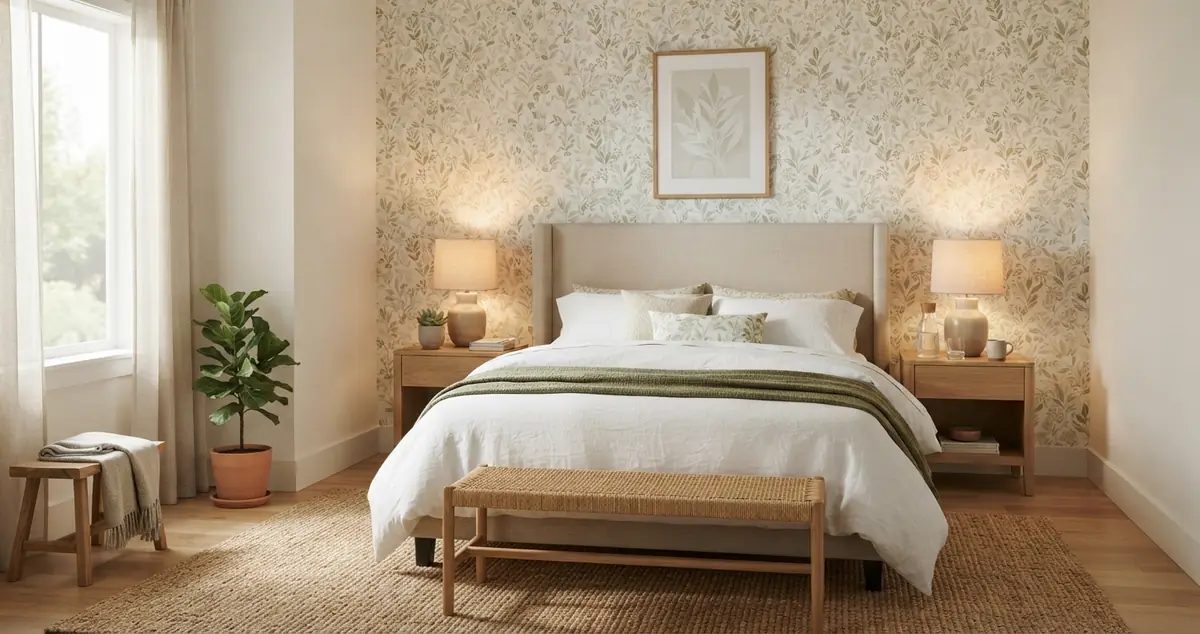
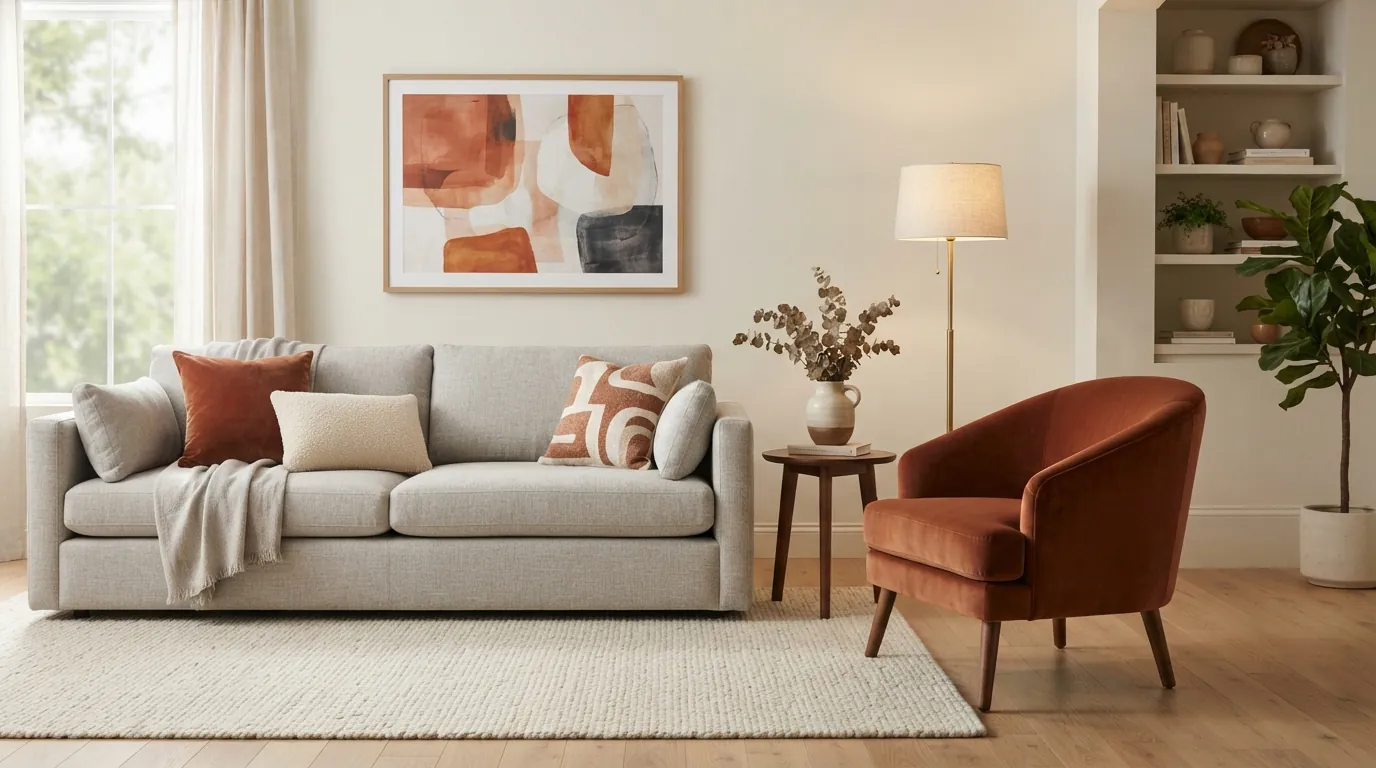
Repetition is how the eye connects things across a room. If your rug has rust in it, a rust pillow on the sofa and a rust-toned print across the room tie those three areas together. Without the repeats, the rug's rust looks like an accident.
The same goes for materials. If you have one black metal lamp, add a black picture frame and a black curtain rod. If you have one walnut side table, repeat walnut in a frame, a tray or a shelf. Our guide on how to mix wood tones goes deeper on getting several woods to work in one room.
A useful habit: stand in the doorway and point at each accent color. If you can only point once, add two more.
Is my art hung too high?
Almost certainly, if the room feels disjointed. Homeowners on r/HomeDecorating bring this up constantly: decor hung near the ceiling, with a big empty band of wall between the furniture and the art. That gap makes the art and the furniture read as two separate groups.
Use these numbers:
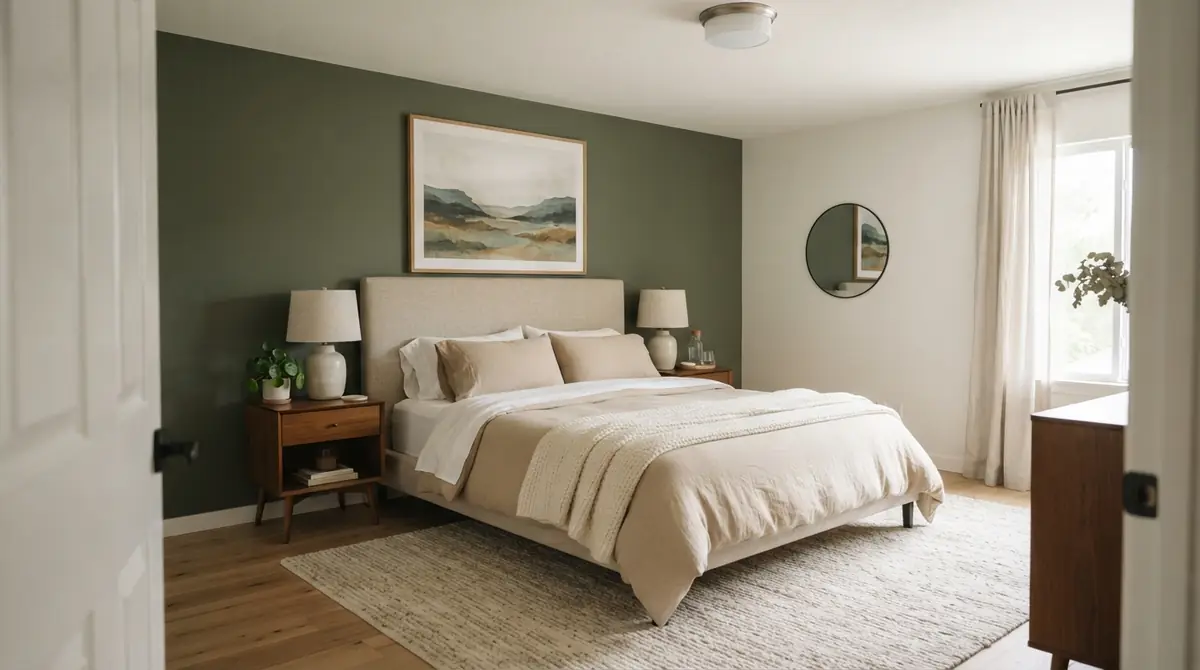
- Hang art so its center is about 57 to 60 inches from the floor (average eye level).
- Over a sofa, bed or console, leave 6 to 10 inches between the top of the furniture and the bottom of the frame.
- Art over a sofa should be about two-thirds of the sofa's width. See what size art goes above a couch for exact sizes.
Lowering art is the cheapest fix on this list, and often the most noticeable.
Do I need to pick one design style?
Not strictly, but it helps to have one style lead. A room that is half farmhouse, half mid-century and half boho usually feels unresolved. A room that is mostly modern with two vintage pieces feels intentional.
Try this: describe your room in three words. If you can't, you probably don't have a lead style yet. If you don't know what your current mix is called, our guide on what style is my room walks through the common ones. Transitional, a mix of traditional shapes and modern simplicity, is often the easiest home for a room full of pieces from different eras.
Once you choose a lead style, keep about 70 to 80 percent of the room in it and let the rest be the personal mix.
What people on Reddit say
Across threads on r/DesignMyRoom, r/interiordecorating and r/HomeDecorating, the same advice comes up again and again:
- Lower everything. Art, mirrors and shelves hung too high are the most common critique. Commenters suggest grouping decor closer to the furniture it belongs to.
- Pick two or three colors and repeat them. Several people point out that a room "full of things I like" usually has a dozen colors at the same strength.
- Get a bigger rug. Small rugs floating in the middle of the floor come up in nearly every thread.
- Edit before you buy. Removing a few items often does more than adding new ones. Some people suggest emptying shelves completely and putting back only what fits the palette.
- Pull furniture off the walls. Sofas and chairs lined up around the edges leave a dead zone in the middle.
The pattern is consistent: most fixes are moves and removals, not purchases.
What should I fix first if I'm on a budget?
Do the free steps before spending anything:
- Remove every item that doesn't share a color with something else in the room.
- Rehang art at 57 to 60 inches to center.
- Pull the sofa and chairs into a tighter group.
- Move lamps so light comes from at least three points.
Then spend in this order: a rug that is large enough, curtains hung high and wide, and two or three small accessories in your accent color. A new sofa is rarely the fix for a room that lacks cohesion. If your room feels sparse rather than mismatched, see why does my room feel empty instead.
See a unified version of your own room
The hardest part of fixing a room that feels off is picturing it with one clear direction. You can try it on your own photo before moving anything.
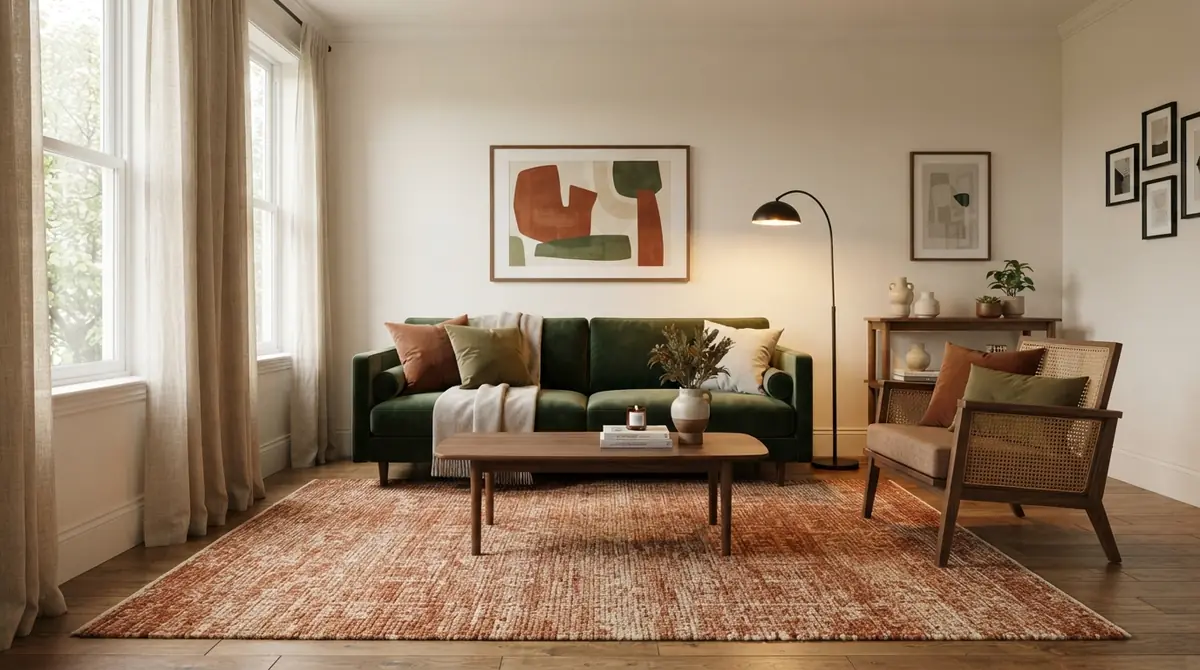
Upload a photo of the room to the AI room designer and pick one style, for example transitional or warm minimal. In the custom instructions, list what you're keeping ("keep the green velvet sofa and the rust rug, keep the windows and doors"), so the result builds a palette around your anchor pieces. The suggestions panel can also analyze the photo and propose directions that fit the room. Compare two or three styles side by side, then copy the palette, art placement and rug size from the one that feels right. Your first design is free, with no card needed.
Frequently asked questions
How do I make a room feel cohesive without buying new furniture?
Limit the room to two or three main colors and remove one-off items, repeat each color at least three times with things you already own, rehang art lower, and group furniture closer together on a rug.
What is the 60-30-10 rule?
About 60 percent of the room in a main color, 30 percent in a secondary color and 10 percent in an accent. It is a guideline for hierarchy, not an exact formula.
Can I mix different design styles and still have a cohesive room?
Yes. Let one style lead (roughly 70 to 80 percent of the room) and tie the other pieces in through shared colors, wood tones or metal finishes.
How many wood tones can one room have?
Usually two or three. Pick one dominant tone, repeat each tone at least twice, and keep the undertones related (all warm or all cool).
Why does my room look better in photos than in person?
Photos flatten the room and crop out clutter and mismatched heights. Walk the room standing up and check art height, rug size and how many colors you see from the doorway.