Accent Wall Visualizer: Preview One Wall in a Different Color
Most room apps paint every wall the same color, so you can't test an accent wall. Here's how to pick the right wall, which colors work, how much paint you need, and how to preview one wall on your own photo.
Hoceine
8 min read15 views
In this article
- Why can't most room design apps show an accent wall?
- Which wall should be the accent wall?
- What colors work best for an accent wall?
- How much paint do you need for one accent wall?
- Should the accent wall color go on the trim and ceiling too?
- How do you preview an accent wall on your own room?
- What people on Reddit say about accent walls
- Try it with DecorCopilot
- Frequently asked questions
Short answer: to preview an accent wall, you need a visualizer that lets you select one wall and give it its own color while the others stay as they are. Most free room apps treat all walls as one surface. Upload a photo, tap the wall, try two or three colors, then test the winner with a large sample.
An accent wall is one of the cheapest ways to change a room. It's also easy to get wrong: the wrong wall, a color that fights the rest of the room, or a shade that looked fine on a chip and feels heavy on a full wall. Previewing it on your own photo removes most of that guesswork.
Why can't most room design apps show an accent wall?
Most free "room design" apps are really furniture planners. You place a sofa, a rug and a bed in a 3D box, and the walls are a single background fill. Change the wall color and every wall changes at once.
Paint brand apps are better, but many still detect "the wall" as one connected area. In an open room, that can mean your accent color spills onto the adjoining wall or into the hallway.
That's why accent wall questions keep showing up online. People end up using workarounds like home-building video games just to see one wall in a different color.
What you need is per-wall selection: tap one wall, assign it a color, and leave the rest alone. That's the core feature of a good accent wall visualizer.
Which wall should be the accent wall?
The right wall is usually the one your eye lands on first when you walk in. In most rooms, that's one of these:
| Room | Best accent wall | Why it works |
|---|---|---|
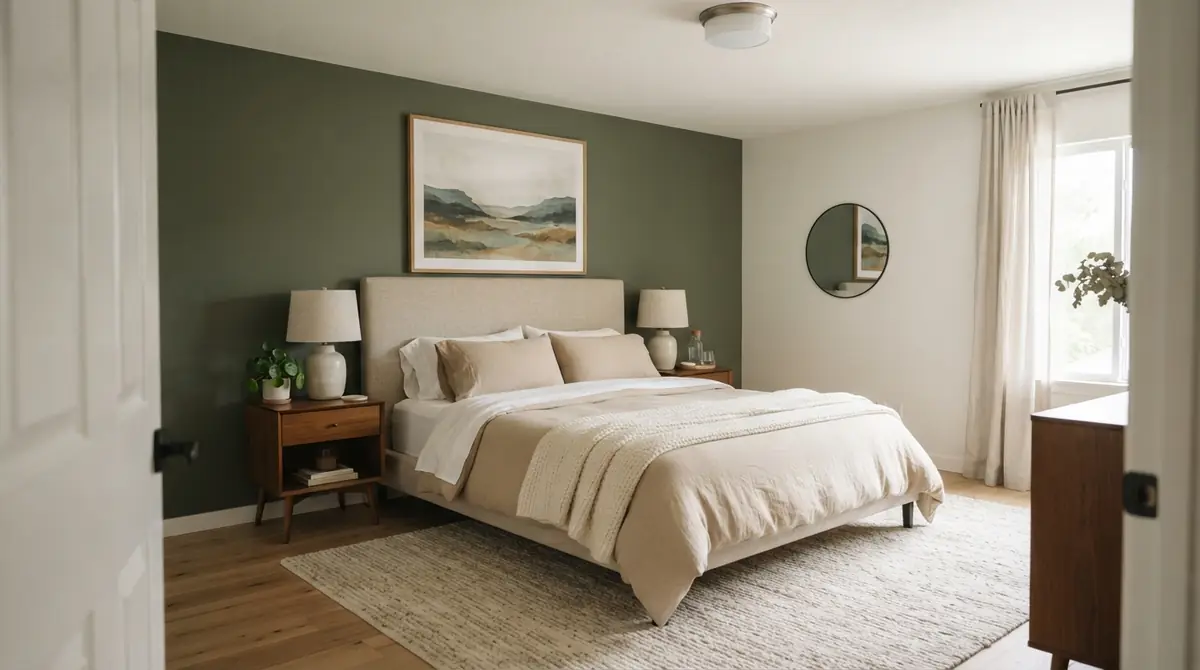
| Bedroom | The wall behind the headboard | It frames the bed and you don't stare at it from bed |
| Living room | The wall behind the sofa or the TV/fireplace wall | It's already the focal point |
| Dining room | The wall facing the entry, or behind a sideboard | It gives the table a backdrop |
| Home office | The wall behind your desk chair (seen on video calls) or the wall you face | Adds depth on camera or a calm view while working |
| Entryway | The wall facing the front door | First thing you see when you come home |
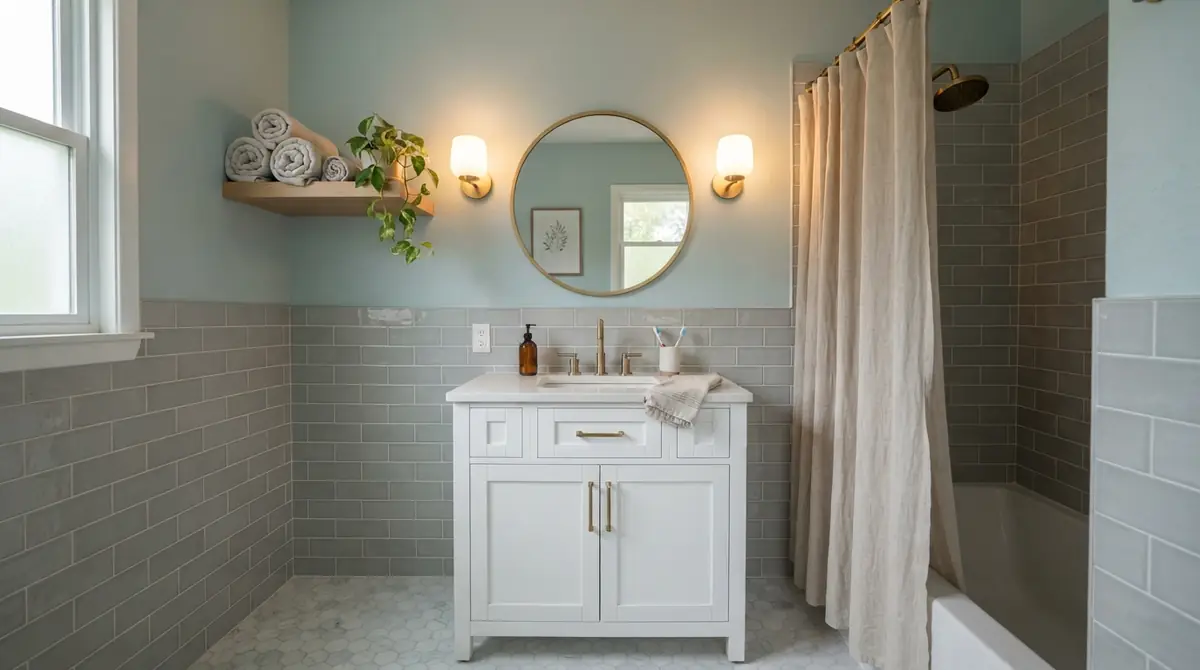
| Bathroom | The wall behind the vanity | The mirror and lights frame it |
A few walls usually make poor accent walls:
- Walls broken up by doors and windows. If more than about half the wall is openings, the color reads as scattered patches.
- The wall with the window in a dark room. A dark color there frames bright glare, and the contrast is tiring.
- A random side wall. If there's no furniture or feature on it, the accent looks arbitrary.
If you're unsure, the free accent wall selector walks you through the choice based on your room layout.
What colors work best for an accent wall?
There's no single rule, but these approaches hold up in most rooms:
- Deeper version of the main wall color. If your walls are a warm white, try a mushroom, clay or deep olive in the same warm family. It looks planned, not random.
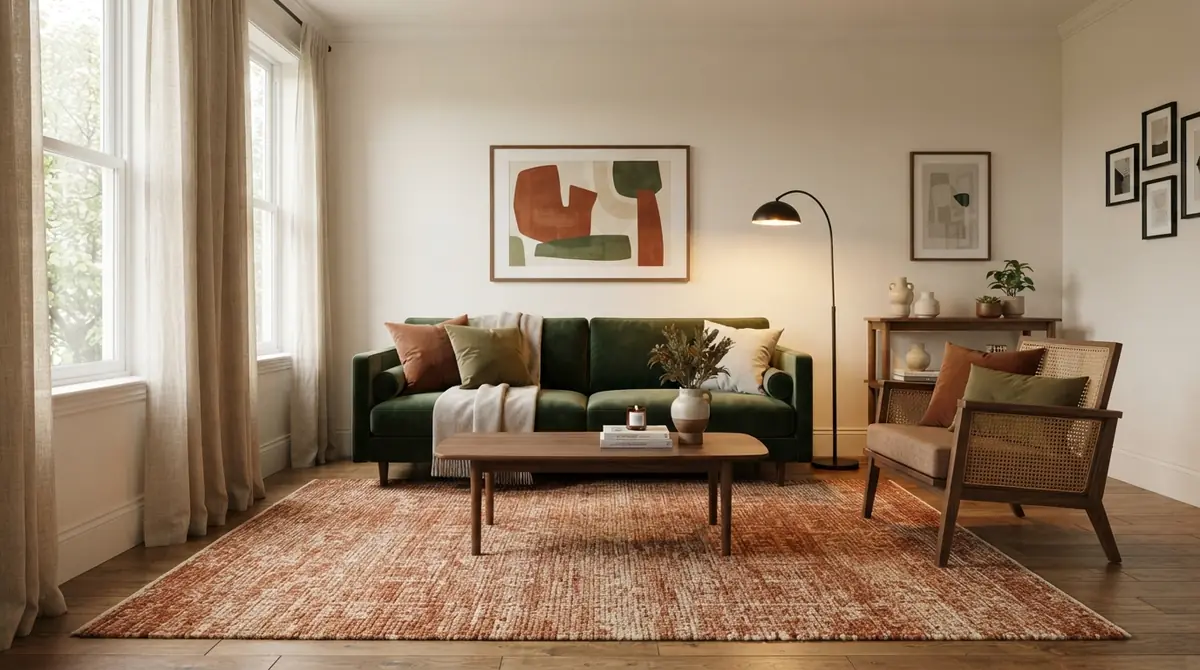
- Pull a color from something already in the room. A rug, a pillow, artwork or a sofa gives you a color that already belongs.
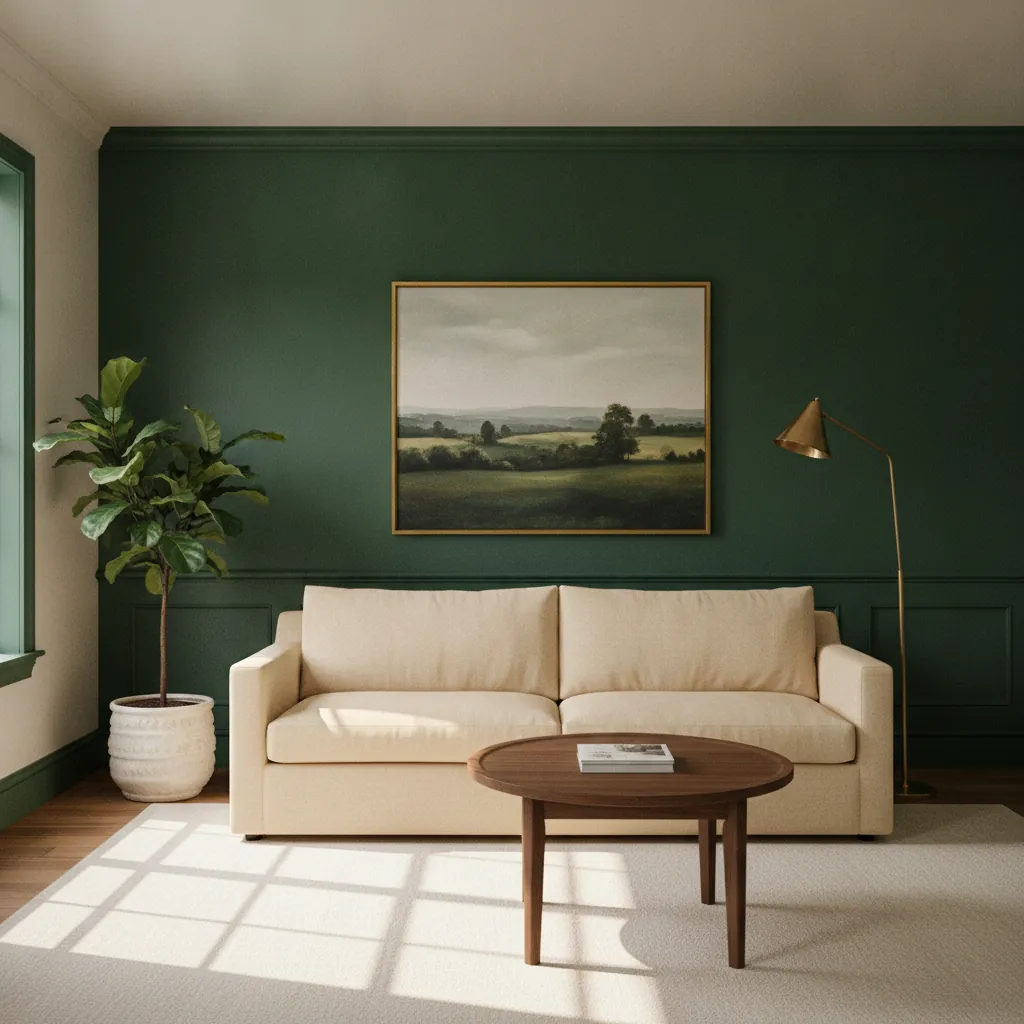
- Go dark for contrast. Navy, forest green, charcoal and deep brown work well behind light furniture and wood.
- Go soft for calm. In a bedroom, a muted sage, dusty blue or soft clay behind the bed feels restful without being dramatic.
Avoid colors that are bright and saturated at full strength, like a pure red or lime, unless the whole room is designed around it. They look great on a chip and loud on a 12-foot wall.
Also think about undertones. A cool navy next to warm beige walls can clash. Put the chip next to your existing wall color before you commit.
For more combinations, see our accent wall ideas guide.
How much paint do you need for one accent wall?
One wall is a small job. Here's a quick estimate for two coats at about 350 to 400 square feet per gallon:
| Wall size | Wall area | Paint for 2 coats |
|---|---|---|
| 10 x 8 ft | 80 sq ft | 1 quart is often too tight; buy a gallon or 2 quarts |
| 12 x 8 ft | 96 sq ft | About half a gallon |
| 14 x 9 ft | 126 sq ft | About 2/3 of a gallon, buy 1 gallon |
| 16 x 9 ft | 144 sq ft | 1 gallon |
| 20 x 10 ft | 200 sq ft | 1 to 1.5 gallons |
Subtract doors (about 20 sq ft each) and windows (about 15 sq ft each). Deep colors like navy or forest green often need a third coat or a gray-tinted primer, so add 30 to 50 percent if you're going dark over white. The paint calculator handles odd sizes and openings.
Should the accent wall color go on the trim and ceiling too?
You have three options:
- Leave trim white. Classic and clean. Works best with mid-tone colors.
- Paint the trim on that wall the same color. This "color drench" look makes the wall feel more architectural and modern, especially with dark colors.
- Carry the color onto the ceiling. Only for rooms with good height. It makes the space feel cocooned, which suits bedrooms and small dens.
If you're debating the ceiling question, our guide on painting the ceiling the same color as the walls covers when it works.
How do you preview an accent wall on your own room?
- Take a photo from the doorway. Stand where you'd usually enter so you see the room the way you'll experience it. Include the accent wall and at least one neighboring wall.
- Use daylight and turn off lamps, or take a second photo in the evening with your usual bulbs on.
- Select only the accent wall. Tap it and assign a color. Leave the other walls as they are, or assign them a matching main color.
- Try three options: one safe, one medium, one bold. You'll often find the medium option wins.
- Compare side by side. Look for whether the color makes the room feel smaller, darker or more balanced.
- Test the shortlist in real life. Put up a 2 x 2 foot sample on the accent wall itself and check it morning, afternoon and night.
What people on Reddit say about accent walls
On r/interiordecorating, one person asked for a free room design app that could handle "multiple wall colours" because they wanted an accent wall and none of the apps they tried supported it. They had resorted to a home-building game to mock it up. Replies mostly pointed to furniture planners that couldn't do it either.
Homeowners on r/HomeDecorating raise the same problem in paint threads, often asking if anyone could mock up a quick visual for them. The advice from people who've done accent walls tends to agree on a few things: choose the wall with the bed, sofa or fireplace, avoid walls cut up by doors, and don't trust a small chip for a dark color. Several also said their first accent wall looked too heavy and they went one shade lighter on the second try, which is a good argument for previewing first.
Try it with DecorCopilot
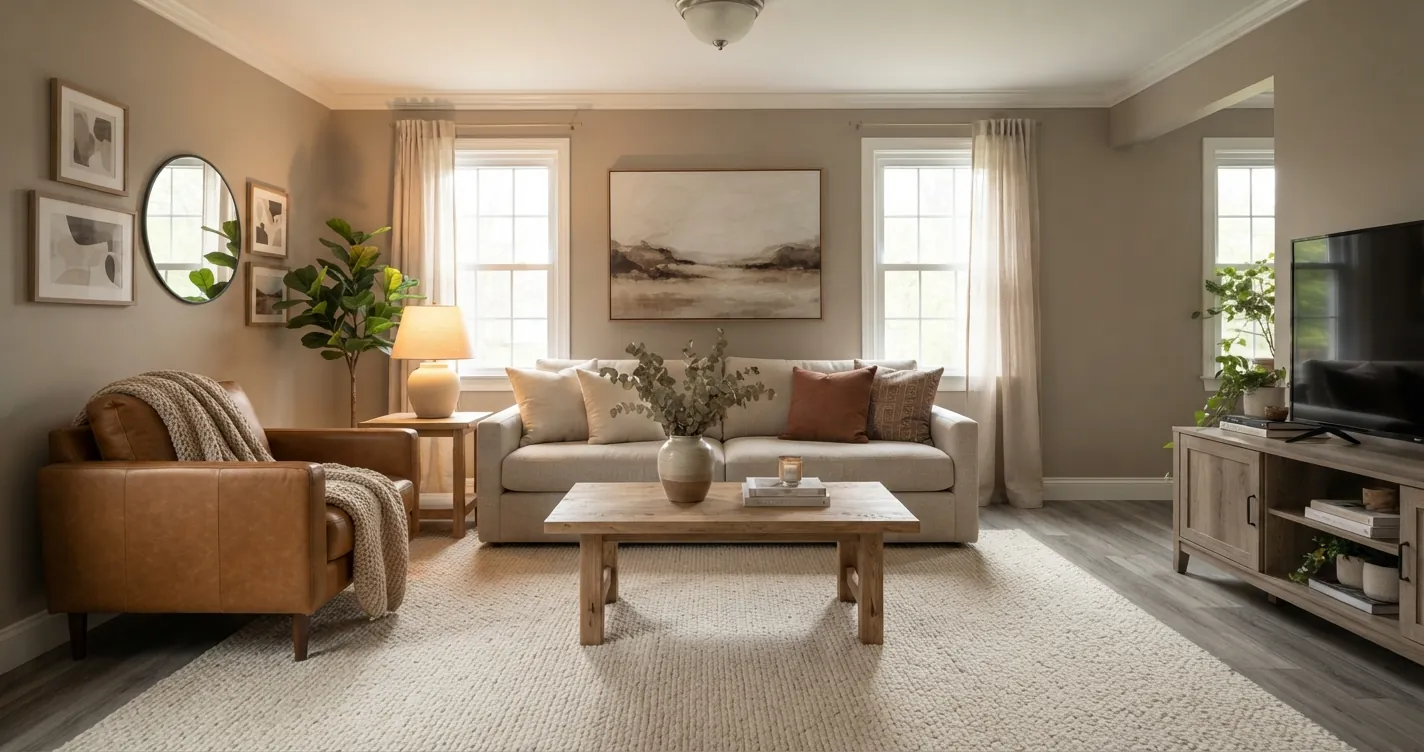
The Wall Painter lets you tap each wall in your photo and give it its own color. Select only the wall behind the bed or sofa, assign a deep green or navy, and keep the other walls in your current white. Or give every wall a different color to test a two-tone room. The AI repaints only the walls you picked and keeps the light and shadows realistic, so a dark accent reads as dark.
Your first design is free, no card needed. If you're comparing many colors across several rooms, Pro Unlimited is $14.99 a month.
If you want ideas for the rest of the wall too, see large blank wall ideas.
Frequently asked questions
Which wall should be the accent wall in a bedroom?
Usually the wall behind the headboard. It frames the bed, and since you face away from it when lying down, a darker color won't feel heavy.
Do accent walls make a room look smaller?
A dark color on the wall facing the entry can make a room feel shorter in that direction, but it also adds depth. Light or mid-tone accents rarely make a room feel smaller. Preview it before you decide.
Are accent walls out of style?
Random single walls in bright colors have faded, but accent walls behind beds, sofas and fireplaces in deeper, muted colors are still common. Color drenching that wall, including trim, is a current take on the idea.
How much paint do I need for one accent wall?
For a typical 12 x 8 foot wall, about half a gallon for two coats. Buy a full gallon if you're going dark over white, since deep colors often need a third coat.
Can I preview an accent wall for free?
Yes. DecorCopilot's Wall Painter lets you select one wall and color it on your own photo, and your first design is free with no card required.