Painting the Ceiling the Same Color as the Walls: When It Works (and When It Doesn't)
Color drenching looks great online, but will a same-color ceiling make your room feel smaller? Here's when it works, when to lighten the ceiling instead, and which finish to use.
Hoceine
8 min read21 views
In this article
- Why paint the ceiling the same color?
- When does it work well?
- What about low ceilings?
- The middle option: a tinted ceiling
- What finish should you use on the ceiling?
- What about trim?
- Colors that work well for a same-color ceiling
- How much more does it cost?
- Preview it before you roll
- Frequently asked questions
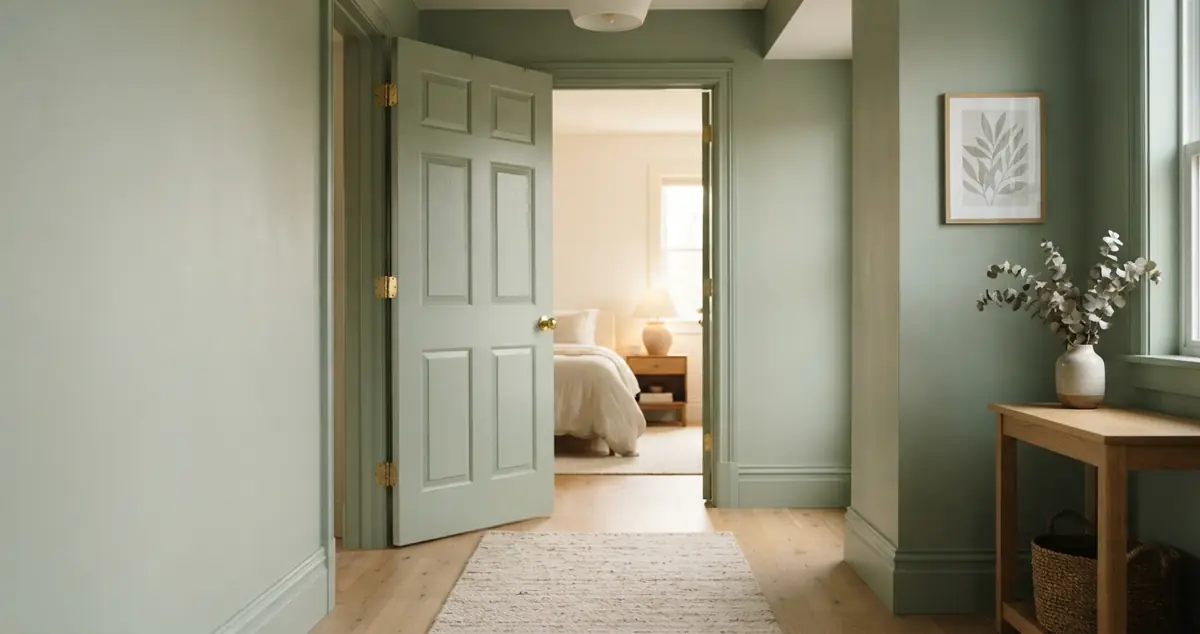
"Should I paint my bedroom ceiling the same color as the walls?" was the title of a well-received post on r/InteriorDesign. On r/HomeDecorating, someone asked, "Has anyone painted their ceiling the same colour as the walls?" and on r/Home, a third person wanted to know if they could simply use the wall paint they already had. The idea comes from color drenching, where walls, trim and sometimes the ceiling are all one color. It looks beautiful in magazines, but people worry it will make their own room feel like a box.
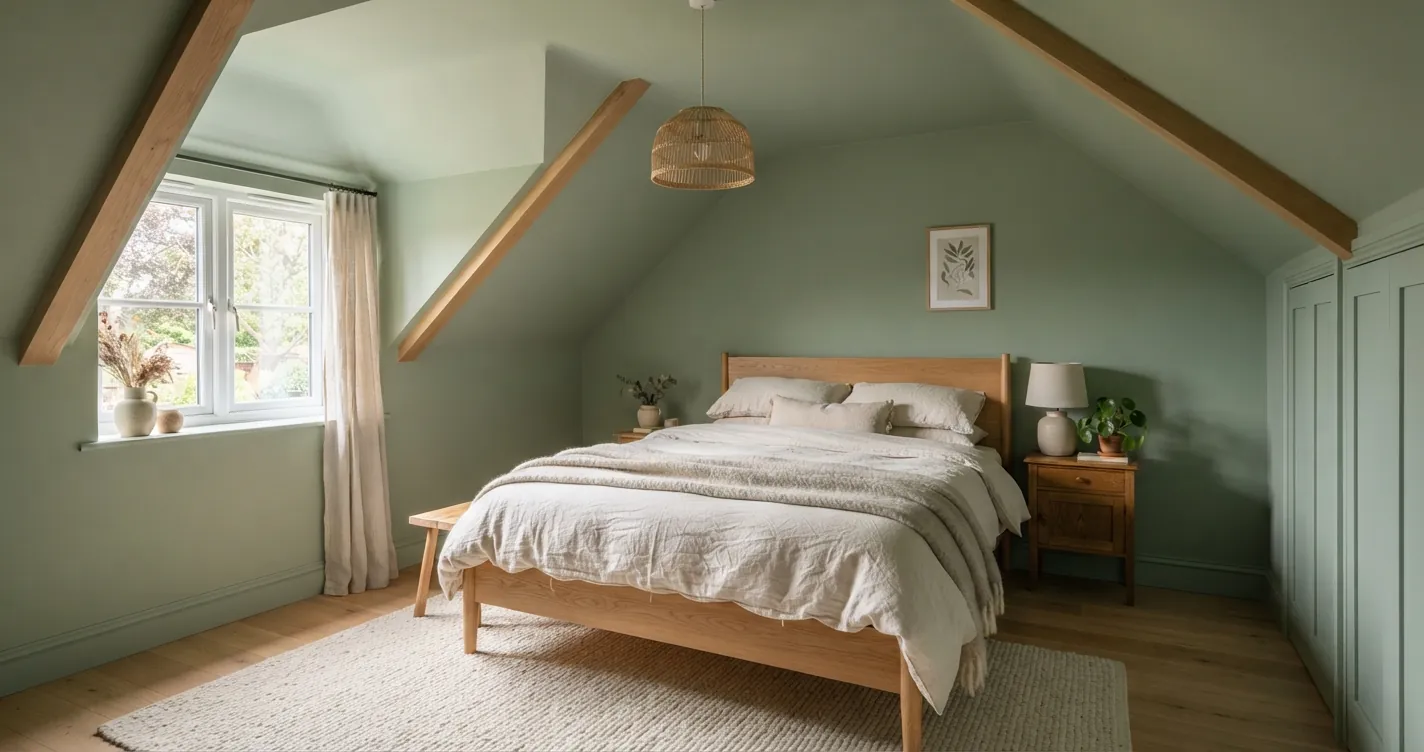
Short answer: it works best in rooms with sloped or attic ceilings, no crown molding, or where you want corners to blur, and with light to mid colors it can make the room feel taller. If you're unsure, paint the ceiling in the wall color mixed at 25 to 50% strength. Use a flat finish on the ceiling to hide flaws. Dark same-color ceilings make rooms feel lower and cozier.
Why paint the ceiling the same color?
A white ceiling over colored walls creates a sharp line where wall meets ceiling. Your eye stops there, which marks exactly how tall the room is. When the ceiling matches the walls, that line disappears and the boundaries of the room blur. Depending on the color, the result can feel taller, calmer or more enveloping.
It also helps in rooms where the wall-ceiling line is messy: uneven plaster, wavy corners or a ceiling that slopes. Getting a crisp line between two colors there is hard, and a single color hides the problem.
When does it work well?
| Room situation | Same color on ceiling? | Why |
|---|---|---|
| Sloped, attic or vaulted ceilings | Yes, usually great | Hard to say where the wall ends, so one color looks natural |
| No crown molding | Yes | No trim line to frame the room, color blurs the corner |
| Uneven wall-ceiling joint | Yes | Hides wobbly cut-in lines |
| Small room you want to feel cozy (study, powder room) | Yes, even dark | Wraps the space |
| Bedroom you want calm | Yes, or a lighter tint | Soft and restful when lying down |
| Low ceiling, under 8 ft, light color | Yes, often helps | Removes the visible ceiling line |
| Low ceiling, dark color | Usually no | Makes the ceiling feel heavier and lower |
| Room with little daylight, mid or dark color | Be careful | Ceiling stops bouncing light, room gets darker |
| Big open-plan space with many walls in other colors | Usually no | Hard to decide where the color stops |
What about low ceilings?
This is the main worry in every Reddit thread on the topic. The answer depends on lightness more than on matching.
- A light color on both walls and ceiling (soft white, pale greige, pale sage) usually makes a low ceiling feel taller, because there's no contrast line to measure the room by.
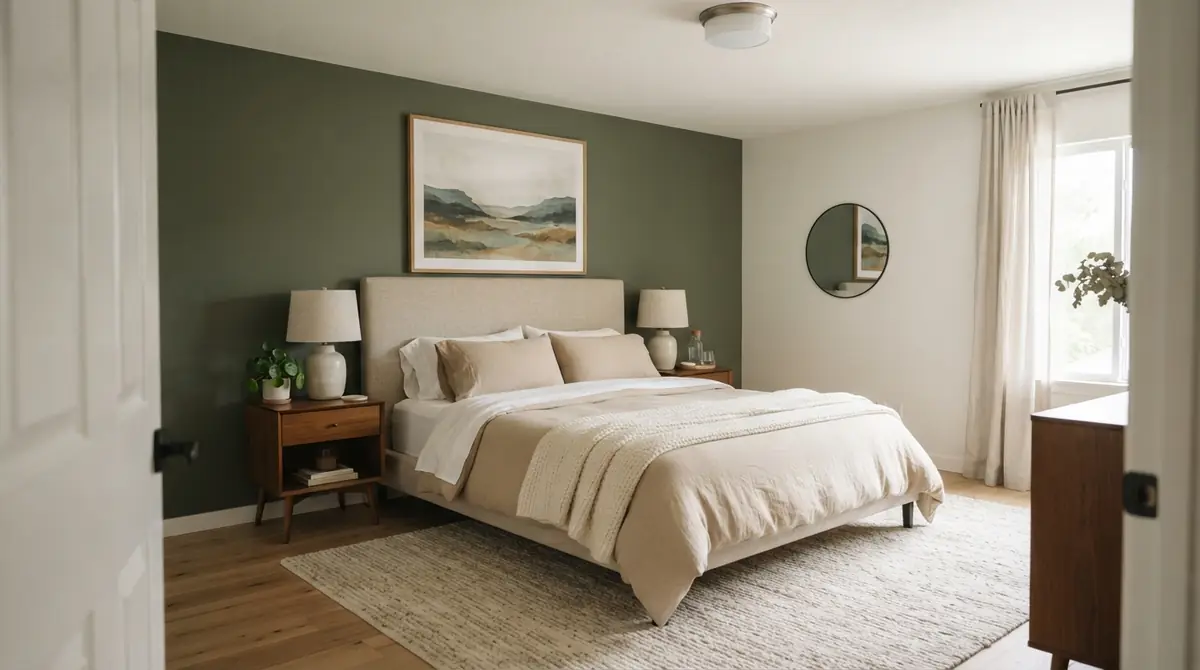
- A dark color on both (navy, charcoal, deep green) makes the ceiling feel closer. That can be lovely in a reading room or bedroom where cozy is the goal, but it won't make the room feel bigger.
- A white ceiling over dark walls draws attention to the height, which can make an 8-foot ceiling look lower than it is.
Light reflectance value, or LRV, is the number on a paint chip or manufacturer page that tells you how much light a color reflects, from 0 (black) to 100 (pure white). Ceilings reflect light down into the room, so for a same-color ceiling in a dim room, colors with an LRV above roughly 60 keep the room brighter. Mid-tone colors in the 30 to 60 range are where you'll notice the room getting darker.
The middle option: a tinted ceiling
If a full match feels like too much, have the paint store mix the wall color at reduced strength for the ceiling, often 25%, 50% or 75%. The paint is the same hue, just lighter, so the ceiling looks related to the walls without the full weight.
| Ceiling option | Effect |
|---|---|
| Wall color at 100% | Full drench, corners disappear, most dramatic |
| Wall color at 50% | Clearly related, lighter overhead, still soft |
| Wall color at 25% | Reads as a warm or cool white with a hint of the wall color |
| Standard ceiling white | Classic, sharp line at the top of the wall |
A tinted ceiling is a good fit for living rooms and bedrooms where you want a softer look than stark white without committing to a full drench.
What finish should you use on the ceiling?
Use a flat or matte finish on ceilings, even if the walls are eggshell. Ceilings get raking light from windows and lamps, which shows every patch, roller mark and seam. Flat paint reflects the least light and hides imperfections best. Many brands sell paint labeled "ceiling paint" in flat finish that's formulated to spatter less when rolling overhead.
If you're drenching with the same product, the slight difference in sheen between eggshell walls and flat ceiling is hard to see and usually looks fine. In kitchens and bathrooms, where humidity is higher, a matte finish made for moisture or a bathroom-specific paint is a safer choice than standard flat.
The paint sheen selector suggests a finish by room and surface.
What about trim?
In a full color drench, the trim (baseboards, window and door casing, crown molding) is painted the same color too, often in a satin or semi-gloss for durability. Whether you include the trim is a separate choice from the ceiling:
- Same color walls, ceiling and trim: the most immersive, modern look.
- Same walls and ceiling, white trim: softer, and the trim outlines the windows and doors.
- Same walls and trim, white ceiling: a common middle ground that keeps the ceiling bright.
If you have crown molding, it usually looks best either painted with the ceiling or with the walls. Painting it a third color tends to look busy.
Colors that work well for a same-color ceiling
Soft, slightly warm colors are the easiest to live with overhead. A few real paint colors people use for drenching:
- Benjamin Moore Pale Oak (OC-20), a soft greige
- Sherwin-Williams Alabaster (SW 7008), a warm white
- Farrow & Ball Setting Plaster (No. 231), a dusty pink
- Benjamin Moore Hale Navy (HC-154) or Farrow & Ball Hague Blue (No. 30) for a dark, cozy study or bedroom
Always test a large sample on the ceiling itself, not just the wall. Ceilings get less direct light, so colors usually look a shade or two darker overhead.
For more color ideas, see our guide to the best neutral paint colors.
How much more does it cost?
Painting the ceiling the wall color doesn't use more paint than painting it white, but if you're switching from white, the ceiling may need two coats. Cutting in becomes easier since there's no color line at the top. The room painting cost calculator estimates paint quantity and cost for walls and ceiling together.
Preview it before you roll
Painting a ceiling is tiring, and repainting one is worse. Start with the walls: upload a photo of your room to the AI room painter, tap each wall and assign the color you're considering. Then, to judge the ceiling, open the same photo in the AI room designer and use Magic Edit on the ceiling area with prompts like "ceiling painted the same sage green as the walls" and "ceiling in a lighter tint of the wall color." Ask for a few options and compare them with your current white ceiling before buying a gallon. New accounts get free credits to try it.
Frequently asked questions
Does painting the ceiling the same color as the walls make the room look smaller?
With light colors, it usually makes the room feel taller, because the line between wall and ceiling disappears. With dark colors, the ceiling feels lower and the room cozier.
Can I use wall paint on the ceiling?
Yes, in the same color. A flat or matte finish is better on ceilings because it hides flaws. If your wall paint is eggshell or satin, consider buying the same color in a flat finish for the ceiling.
Should the ceiling be lighter than the walls?
It's the safer choice for most rooms. Mixing the wall color at 25 to 50% strength gives a related, lighter ceiling that keeps the room bright.
What sheen is best for ceilings?
Flat or matte. It reflects the least light and hides roller marks, patches and uneven drywall best. Use a moisture-resistant matte in bathrooms.