Paint Wood Paneling or Keep It? Colors That Work (See It on Your Wall First)
Dark 70s paneling making the room feel like a cave? Here's how to decide whether to paint it, how to prep so the stain doesn't bleed through, and which colors actually work on paneled walls.
Hoceine
9 min read15 views
In this article
- Is your paneling worth keeping?
- How do you prep paneling so the paint doesn't peel or bleed?
- Should you fill the grooves or leave them?
- What color should you paint wood paneling?
- Will painted paneling look cheap?
- What if you rent or can't paint?
- How much will it cost to paint a paneled room?
- See the color on your paneling before you buy a gallon
- Frequently asked questions
One of the most upvoted threads on r/interiordecorating this year was a photo of a dark paneled living room with a simple caption: "Do I paint the wood paneling? Or..." Hundreds of comments later, the room had split into two camps. Half said paint it white tomorrow. The other half begged the owner to leave the wood alone and change everything around it.
Both camps were right about some rooms. The trick is knowing which kind of paneling you have.
Short answer: paint the paneling if it's thin veneer or printed hardboard in a room with limited light, which describes most 1970s paneling. Keep it if it's solid wood in good condition and the room gets decent daylight. If you paint, clean and degloss first, prime with a shellac or oil-based stain blocker so tannins don't bleed through, then finish in eggshell or satin. Warm whites, mushroom tones and deep greens all work well.
Is your paneling worth keeping?
Before you buy primer, figure out what's on the wall. Pull off a switch plate or outlet cover and look at the cut edge of the panel.
| What you see | What it is | Usual verdict |
|---|---|---|
| Wood grain all the way through, 1/2" to 3/4" thick boards | Solid tongue-and-groove (pine, cedar, knotty pine) | Often worth keeping or refinishing |
| A thin wood layer on a dark core, about 1/4" thick sheets | Wood veneer plywood | Good candidate for paint |
| A smooth brown core with printed "grain" on top | Hardboard or printed paneling | Paint it. There's no real wood to save |
| Boards with a raised bead or knots and a 1940s-60s house | Original knotty pine or beadboard | Think hard before painting. Buyers in some markets love it |
Light matters as much as material. A paneled den with two big south-facing windows can carry dark wood. A basement or north-facing room with one small window usually can't. Dark wood absorbs light, so a room that already struggles for daylight will feel smaller and dimmer with it.
There's a middle ground too. If the wood is solid but the orange tone bothers you, a refinish with a lighter or more neutral stain may solve the problem without paint. Our wood stain calculator estimates how much you'd need for the wall area.
How do you prep paneling so the paint doesn't peel or bleed?
This is where most painted-paneling disasters start. Paneling has a factory finish that's slick, and wood contains tannins that migrate through water-based paint as yellow or brown blotches. Skipping prep gets you peeling in high-touch spots and stains that show up a week after you finish.
- Clean. Wash with TSP substitute or a degreaser. Paneling in living rooms and dens often has decades of cooking residue, smoke or hand oils on it.
- Degloss. Lightly scuff with 120 to 180 grit sandpaper, or wipe on a liquid deglosser. You're giving the primer something to grip, not removing the finish.
- Fill. Patch nail holes with wood filler. Caulk any gaps at the trim and ceiling line.
- Prime with a stain blocker. Use a shellac-based primer such as Zinsser BIN or an oil-based one such as Zinsser Cover Stain. These seal in tannins and knots. Standard latex primer often won't.
- Paint two coats. Use a quality interior acrylic in eggshell or satin.
Flat paint is a poor choice on paneling. It shows roller marks and scuffs easily, and paneled rooms tend to be dens and family rooms that take abuse. Our paint sheen selector walks through the tradeoffs room by room.
Should you fill the grooves or leave them?
You have two looks to choose from.
Leave the grooves. Painted grooves read as intentional board-and-groove or shiplap-style texture. This is by far the easier route. Use a small brush or a roller with a thicker nap to get paint into the grooves before you roll the flat faces.
Fill the grooves. Skim the grooves with joint compound, sand, prime again and paint. You get a flat wall that looks like drywall from a few feet away. It takes roughly three times the labor of painting the paneling as-is, and on thin veneer panels the seams can telegraph through over time as the panels move with humidity. If you want a flat wall that badly, it's sometimes faster to hang 1/4" drywall right over the paneling.
Most people who've done both say the same thing: leave the grooves unless you truly hate them.
What color should you paint wood paneling?
Paneling has strong vertical lines, so color choice affects the room more than it would on a flat wall. Here are the families that work, with a few real paint names to sample.
Warm whites (LRV 80 and up)
This is the classic choice for a dark room. Warm whites bounce light without turning stark or blue in the shadows of the grooves. Sample Benjamin Moore White Dove, Sherwin-Williams Alabaster (LRV 82) or Benjamin Moore Swiss Coffee. Avoid stark, cool whites in rooms with little daylight. They tend to look gray in the grooves.
Mushroom, greige and soft taupe
If white feels too bright or you worry about it looking like a cheap rental, a mid-light neutral keeps some warmth from the original wood. Benjamin Moore Pale Oak and Sherwin-Williams Accessible Beige are popular starting points.
Deep green or navy for a moody room
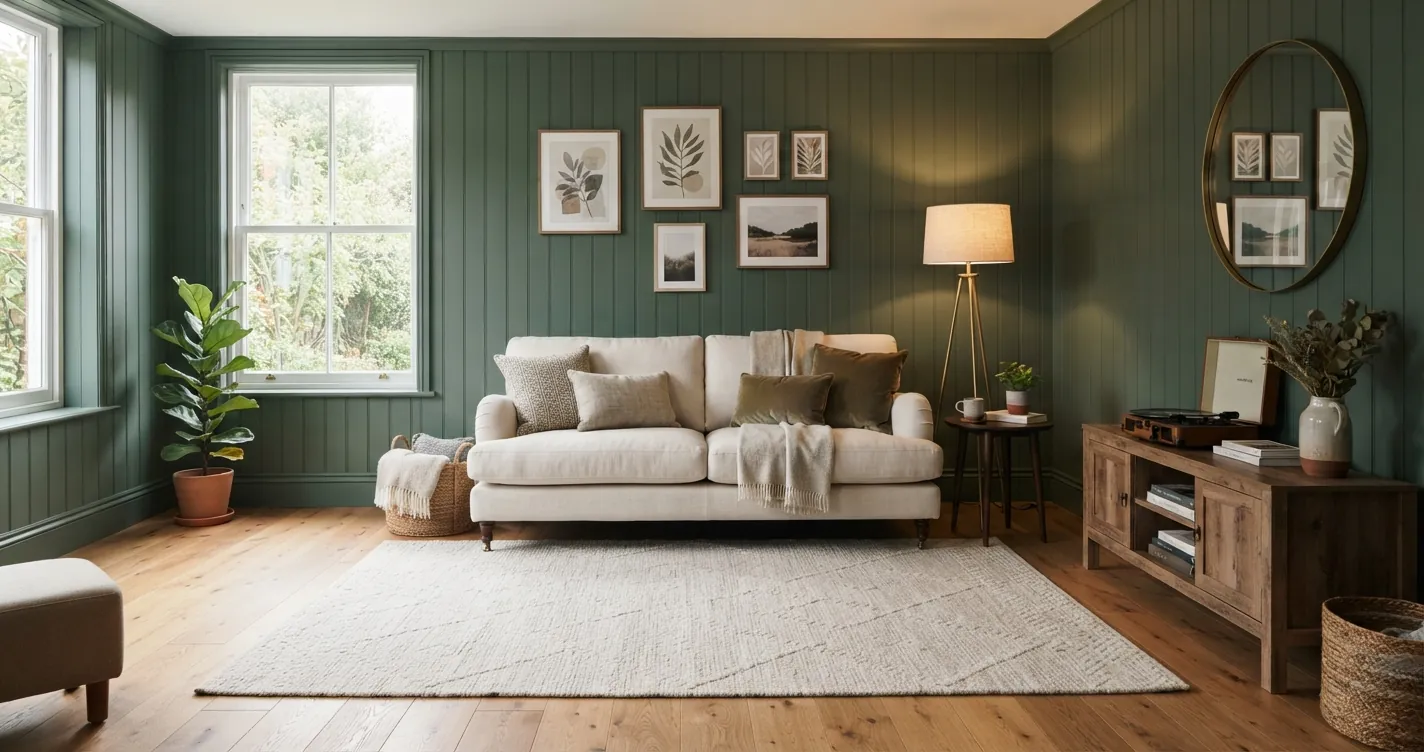
This is the one that surprises people. Instead of fighting the cave feeling, lean into it. A dark green or navy on paneling looks like a library or study, especially if you paint the trim the same color (color drenching). Try Sherwin-Williams Evergreen Fog for a muted green, or Benjamin Moore Hale Navy for a deep blue. Dark colors hide imperfections in old paneling much better than white does.
Two-tone with a chair rail
If you can't commit, paint only the lower third (or only the upper two-thirds) and add a chair rail at about 32 to 36 inches. You keep some of the wood character and still lift the room.
| Room situation | Color direction | Why it works |
|---|---|---|
| Small, dark basement den | Warm white, LRV 80+ | Reflects the most light |
| Large den with good windows | Deep green or navy, drenched | Feels cozy instead of gloomy |
| Open plan next to other rooms | Match the adjacent wall color | The paneling stops reading as a separate zone |
| You love wood but hate the orange | Mushroom or greige | Softens the look, keeps warmth |
Will painted paneling look cheap?
It can, but usually for fixable reasons: visible wood grain under one coat of paint, flat sheen, a too-cool white, or trim left in old stained wood next to freshly painted walls. Two coats over a proper primer, eggshell or satin sheen, and painted trim (in the same color or a slightly different white) solve almost all of it.
Lighting matters as well. Painted paneling under one dim ceiling fixture still looks dim. Add a couple of lamps at different heights and check the bulb color. 2700K to 3000K keeps warm whites warm. If you want to understand why, the light color temperature calculator shows how bulbs shift paint.
What if you rent or can't paint?
Landlords rarely approve painting paneling, because it's hard to undo. A few options that leave the wood intact:
- Peel-and-stick wallpaper can go over smooth paneling, though the grooves will show through and textured wallpaper hides them better.
- Limewash or chalk-based paint on solid wood sometimes gets approved because it's softer-looking, but it's still not truly removable, so ask first.
- Change everything else. A large light rug, light linen curtains hung high and wide, white or light-wood furniture and more lamps can make dark paneling read as a deliberate cabin or library look.
How much will it cost to paint a paneled room?
For a typical 12 x 14 foot room with 8-foot ceilings, you're painting around 400 square feet of wall. DIY materials (stain-blocking primer, two coats of paint, sandpaper, filler, brushes and rollers) usually land somewhere in the low hundreds of dollars. Shellac primers cost more per gallon than latex ones, so budget for that. Hiring a painter costs more for paneling than for drywall because of the prep and groove work. Run your own room size through the room painting cost calculator and the wall paneling calculator if you're also adding new panels.
See the color on your paneling before you buy a gallon
The scariest part of painting paneling is that it's a one-way door. Once the primer is on, going back to wood means stripping or replacing.
Take a photo of the room and open it in the Wall Painter. Tap the paneled wall, assign a color, and compare a few options side by side: a warm white, a greige and a deep green, for example. You'll see how each one reads with your actual floor, ceiling and furniture. If you want to see the whole room restyled around the painted walls, the AI room designer will redo the furniture and decor in any of its 30 styles from the same photo. New accounts get free credits, so you can test your room before you commit.
For more help choosing whites and neutrals, see our guide to the best neutral paint colors. If you decide to keep the wood, how to mix wood tones covers how to style furniture around it.
Frequently asked questions
Do I need to sand wood paneling before painting?
A light scuff with 120 to 180 grit sandpaper, or a liquid deglosser, is enough. You don't need to sand down to bare wood. The goal is to dull the factory sheen so the primer bonds.
What primer is best for painting wood paneling?
A shellac-based primer such as Zinsser BIN or an oil-based stain blocker such as Zinsser Cover Stain. Both stop tannins and knots from bleeding through. Regular water-based primer often lets yellow stains come back.
Should I paint paneling white or a dark color?
White or a warm white suits small, dim rooms because it reflects light. Dark green or navy works well in larger rooms with good windows and hides imperfections better. Sample both on the wall before deciding.
Does painted paneling hurt resale value?
Painting cheap veneer paneling rarely hurts and often helps, because buyers see a brighter room. Painting original solid knotty pine or quality hardwood paneling can turn off buyers who value it, so think twice in older homes.
Can I paint over paneling without filling the grooves?
Yes. Most people leave the grooves. Painted grooves look like intentional board-and-groove texture, and filling them takes about three times the work.