Layered Lighting for Living Rooms: How Many Lamps, Where, and What Bulbs
One ceiling light makes a living room look flat. Here's how to plan ambient, task and accent light, how many lumens you need, where each lamp goes, and which bulbs to buy.
Hoceine
7 min read23 views
In this article
- What are the three layers of lighting?
- How many lumens does a living room need?
- How many lamps should a living room have?
- Where should I put lamps in a living room?
- How tall should a floor lamp or table lamp be?
- What color temperature and CRI should living room bulbs be?
- Do I need dimmers?
- How do I add accent lighting without rewiring?
- What about recessed lights?
- See your room at night before buying lamps
- Frequently asked questions
A post on r/femalelivingspace was titled "Terrible at understanding layered lighting. Help!" Over on r/HomeDecorating, a long post called "Things I tell everyone after they buy a lamp, that designers charge $200/h to explain" collected the basics in one place, and r/Lighting has plenty of "light plan for the living room" threads. Lighting is the part of decorating most people skip, and it changes how a room feels more than almost anything else.
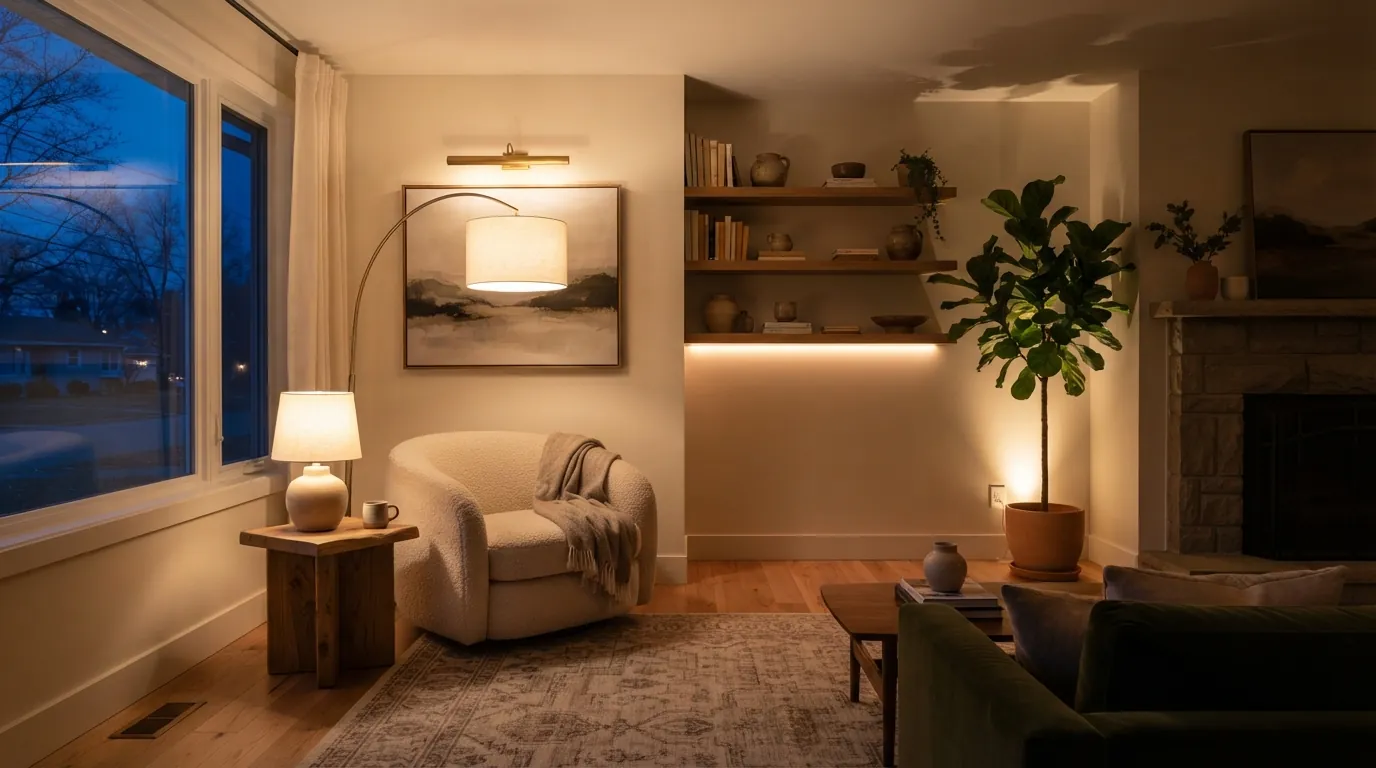
Short answer: plan three layers. Ambient light fills the room (about 10-20 lumens per square foot). Task light sits where you read or work. Accent light picks out art, shelves or plants. Use at least three light sources at different heights, arranged roughly in a triangle, with 2700K bulbs rated CRI 90 or higher. Put everything on dimmers or smart plugs.
What are the three layers of lighting?
| Layer | Job | Typical fixtures | Share of the room's light |
|---|---|---|---|
| Ambient | General light so you can see and move around | Ceiling fixture, recessed lights, uplighting floor lamps, cove lights | Most of it |
| Task | Bright, focused light for an activity | Reading floor lamp, table lamp beside a chair, desk lamp | A focused pool |
| Accent | Highlights and atmosphere | Picture lights, shelf LEDs, small uplights behind plants, candle-style lamps | A little, but it adds depth |
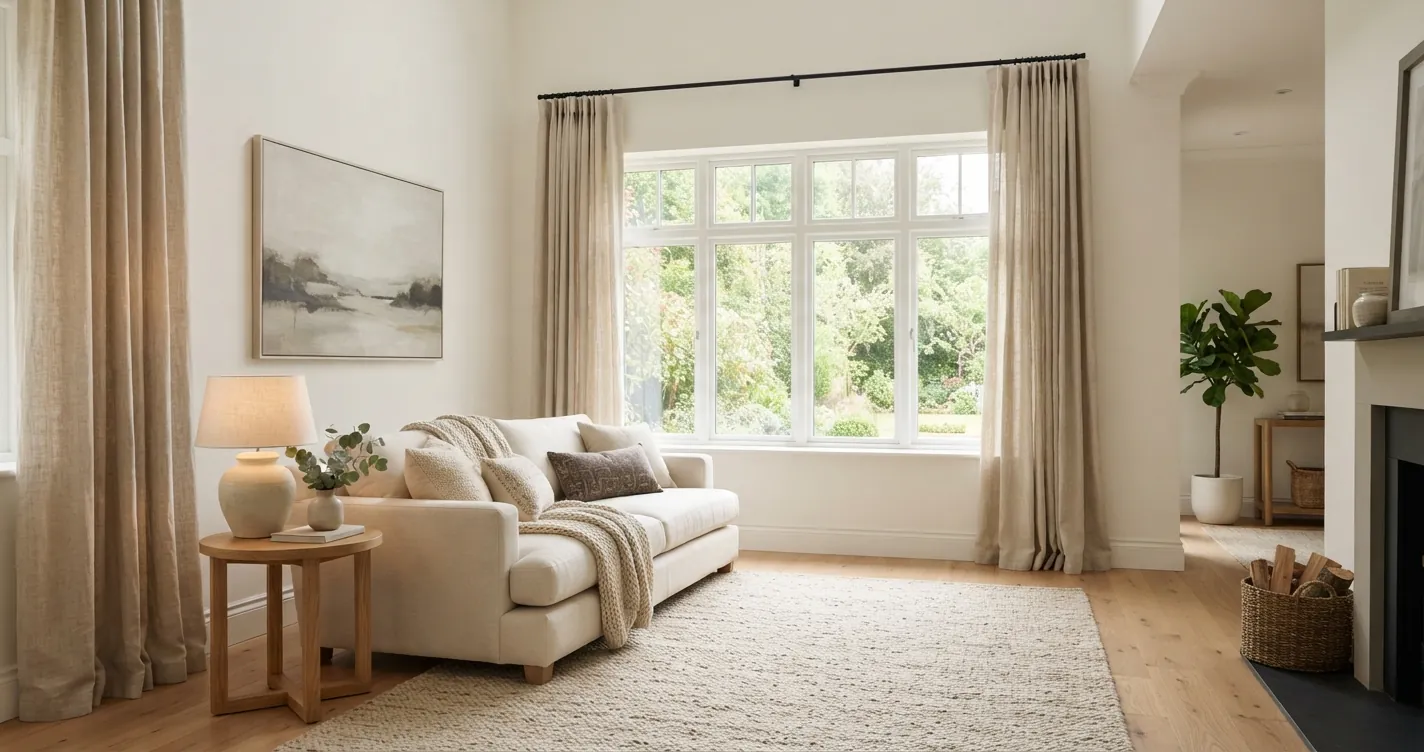
The mistake in most living rooms is relying on ambient light alone, from a single ceiling fixture. It lights the floor and the top of your head and leaves walls and corners dull. Rooms feel cozy when light comes from several lower sources and lands on the walls.
How many lumens does a living room need?
For general ambient light in a living room, aim for roughly 10-20 lumens per square foot. Use the lower end if you mostly relax there in the evening, and the higher end if it doubles as a homework or work space.
| Room size | Area | Ambient lumens (10-20 per sq ft) | Roughly equal to |
|---|---|---|---|
| 10 x 12 ft | 120 sq ft | 1,200-2,400 | 2-3 standard 800-lumen bulbs |
| 12 x 15 ft | 180 sq ft | 1,800-3,600 | 3-5 bulbs |
| 14 x 18 ft | 252 sq ft | 2,500-5,000 | 4-6 bulbs |
| 16 x 20 ft | 320 sq ft | 3,200-6,400 | 5-8 bulbs |
A standard "60W equivalent" LED gives about 800 lumens. Task lighting is on top of this: a reading lamp should put around 400-800 lumens close to the page. Our lighting calculator adds it up for your room, and the task lighting calculator handles reading and desk spots.
How many lamps should a living room have?
At least three light sources, not counting the ceiling light. Most comfortable living rooms have four to six.
A simple starting plan:
- A floor lamp beside the sofa or reading chair (task plus ambient)
- A table lamp on a side table or console on the opposite side of the room
- A third source in another corner: a second table lamp, an uplight behind a plant, or a lamp on a bookshelf
- Optional accent light on art or shelves
- The ceiling fixture or recessed lights on a dimmer for cleaning and big gatherings
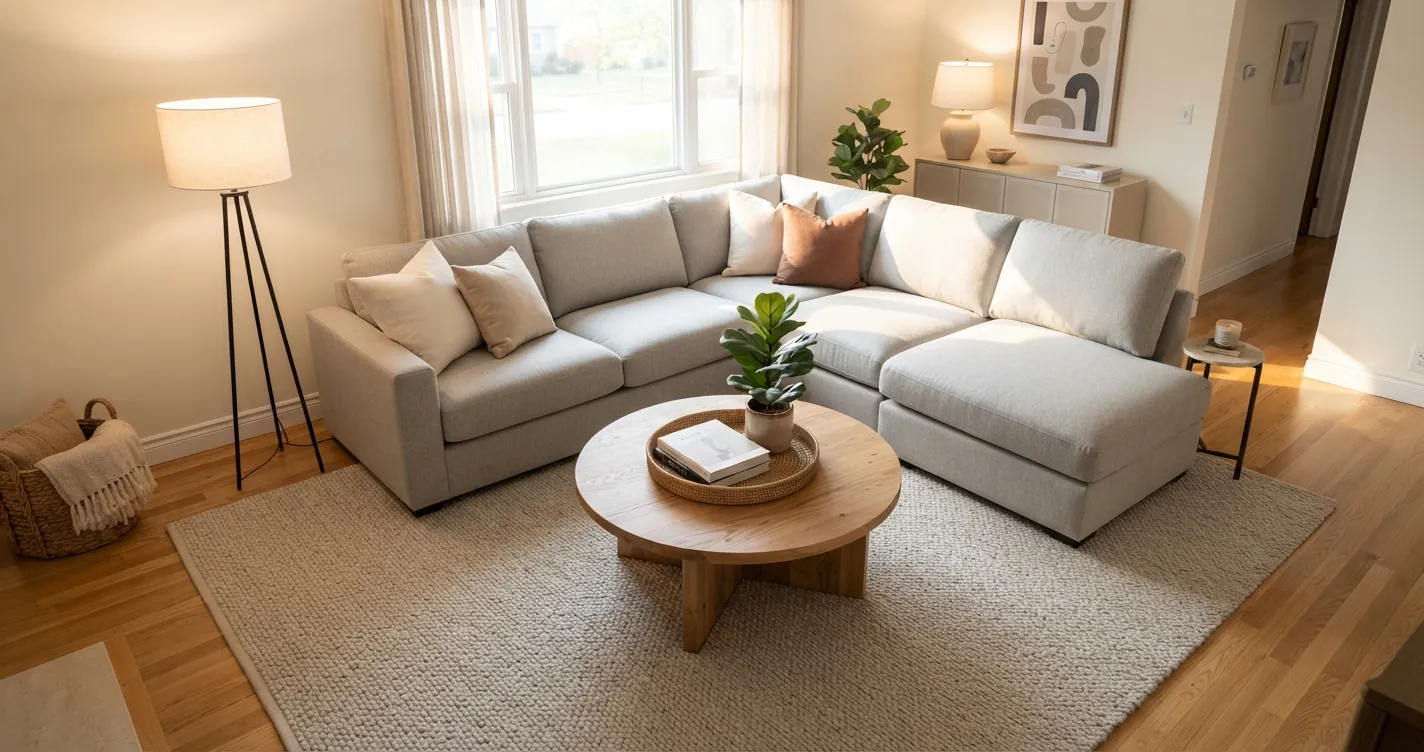
Place the three main lamps so they form a loose triangle across the room. That spreads light evenly and draws the eye around the space.
Where should I put lamps in a living room?
- Next to every seat where someone reads. The light should come from beside or slightly behind the shoulder, on the opposite side from the hand you write with if you also jot notes.
- In dark corners. A corner with no light makes the room feel smaller. An uplight or tall plant with a small spotlight behind it fixes this.
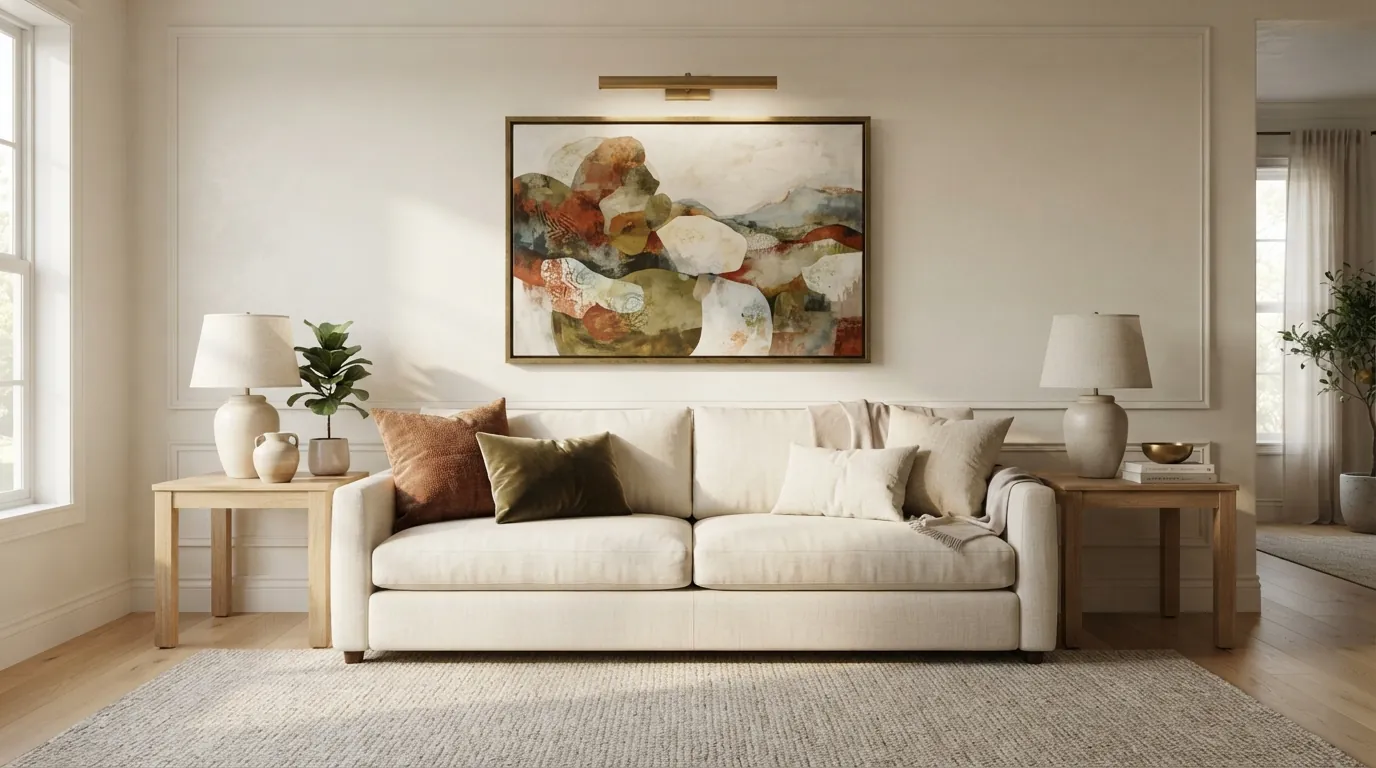
- On both sides of a long sofa if there's no other light nearby, or a pair of lamps on a console behind it.
- Near the entry, so you're not walking into a dark room.
- Away from the TV's screen line. A lamp reflected in the screen is annoying. Put light behind or beside the TV, not opposite it.
How tall should a floor lamp or table lamp be?
| Lamp | Height rule |
|---|---|
| Floor lamp (reading) | 58-64 in total, so the shade bottom is near eye level when seated |
| Arc floor lamp | Shade 60-72 in from the floor and reaching over the seat |
| Table lamp on a side table | Lamp plus table about 58-64 in, shade bottom near seated eye level |
| Table lamp on a console | 28-34 in tall, depending on the console |
| Shade width | About twice the lamp base width, and roughly two-thirds of the base height |
The goal for reading lamps is to see light, not the bulb. When you're seated, you shouldn't be looking up into the bulb or down onto it. Our post is my lamp shade too small? and the lamp shade size calculator cover shade proportions.
What color temperature and CRI should living room bulbs be?
Two numbers matter most on the bulb box:
| Spec | Living room recommendation | Why |
|---|---|---|
| Color temperature | 2700K (2200-2400K for an extra warm evening look) | Warm white feels relaxing and flatters wood and skin |
| CRI | 90 or higher | Colors of paint, fabric and art look true |
| Dimmable | Yes, with a compatible dimmer | Lets the same lamps work for bright and calm |
| Consistency | Same Kelvin across the room | Mixed 2700K and 4000K bulbs look patchy |
Avoid 4000K and 5000K "daylight" bulbs in the living room unless you want a workspace feel. They often make warm paint colors look gray or green. The light color temperature calculator lets you check any room.
Do I need dimmers?
They're the easiest way to make one set of lights work for both a bright afternoon and a quiet evening. Options:
- Plug-in lamp dimmers or in-line cord dimmers for existing lamps
- Smart bulbs or smart plugs, which also let you switch several lamps on from one button or a schedule
- A wall dimmer for the ceiling fixture (check the bulbs are marked dimmable)
Smart plugs on a schedule solve the most common problem: nobody wants to walk around turning on four lamps every evening.
How do I add accent lighting without rewiring?
- Battery or plug-in picture lights above art
- Adhesive LED strips under or behind shelves (see the LED strip calculator)
- A small uplight on the floor behind a large plant, shining up the wall
- A lamp inside a bookshelf
- Wall sconces with a plug-in cord and a cord cover painted the wall color
What about recessed lights?
Recessed (can) lights are useful ambient light, but a grid of them on full brightness makes a living room feel like an office. Put them on a dimmer and keep them as one layer, not the only one. If you're planning a renovation, the recessed lighting calculator gives spacing.
See your room at night before buying lamps
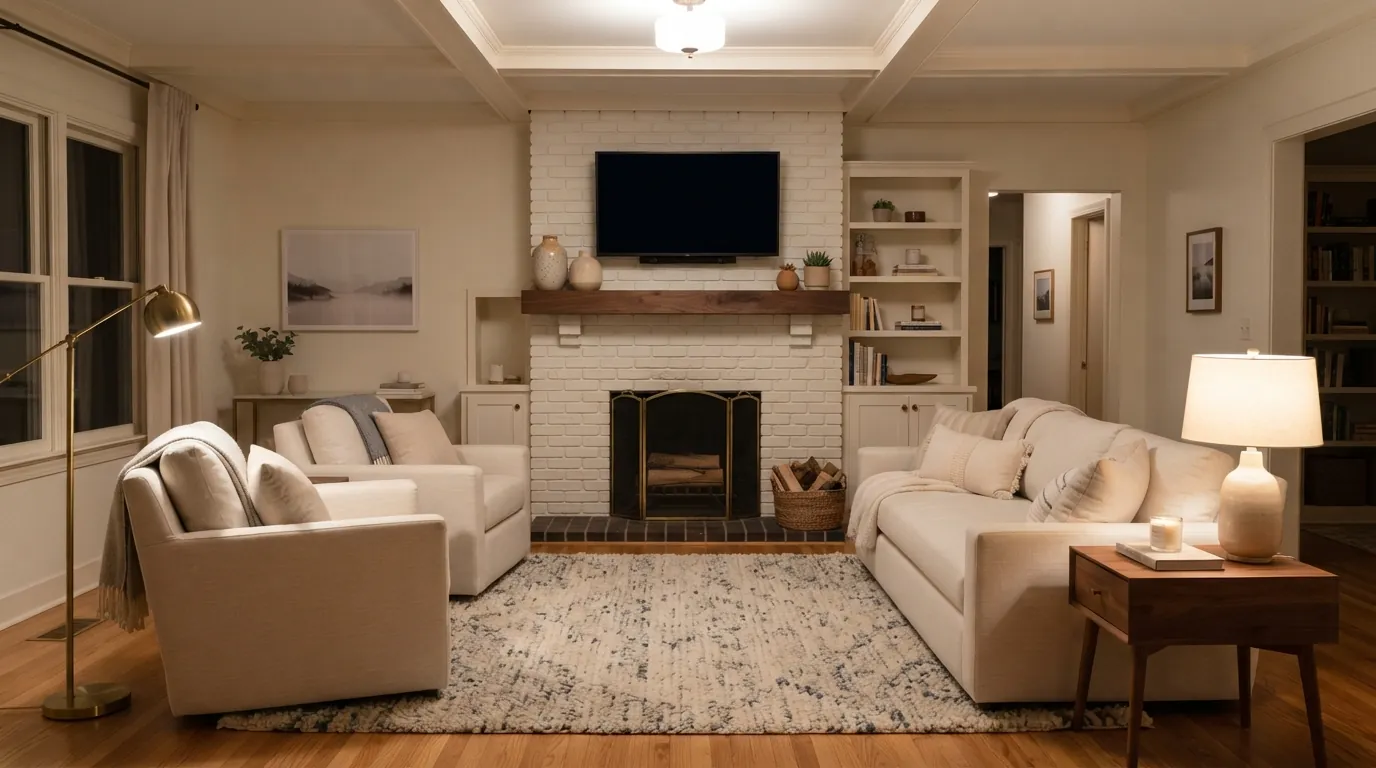
Daytime photos hide lighting problems. Take a photo of your living room in the evening with your current lights on, then upload it to the AI room designer. In the results you'll find a one-tap "Cozy evening" fix that relights the scene with lamps on and warm 2700K light, which helps you picture where the dark spots are and where new lamps would make the biggest difference. You can also prompt a redesign with "warm layered lighting, floor lamp by the sofa, table lamp on the console, picture light over the art." Free credits on signup cover a test.
For more on making a room feel warm, see cozy living room ideas.
Frequently asked questions
How many lamps should a living room have?
At least three light sources besides the ceiling light, placed in a loose triangle. Most living rooms feel best with four to six.
How many lumens do I need for a living room?
About 10-20 lumens per square foot for general light. A 12 x 15 ft room needs roughly 1,800-3,600 lumens, plus task lighting for reading.
What color light bulb is best for a living room?
2700K warm white with a CRI of 90 or higher. Use the same color temperature in every lamp in the room.
What height should a reading floor lamp be?
About 58-64 inches tall, so the bottom of the shade is around eye level when you're seated.
What is the difference between ambient, task and accent lighting?
Ambient is overall light, task is focused light for activities like reading, and accent highlights features like art or plants. Using all three gives a room depth.