How to Choose a Floor Color for the Whole House (LVP, Hardwood, Tile)
Picking flooring for the whole downstairs from a few small samples? Here's how to choose a floor color that hides dirt, works with your cabinets and stairs, and makes the space feel bigger.
Hoceine
7 min read15 views
In this article
- Light, mid-tone or dark: which is easiest to live with?
- How do you match a floor to cabinets, stairs and trim?
- Should the same floor run through the whole house?
- Which plank width and direction look best?
- How much flooring should you order?
- LVP, hardwood or tile: does the material change the color choice?
- How do you judge flooring samples properly?
- See the new floor in your own room
- Frequently asked questions
"What floor should we go with? It will go across all of downstairs" got almost 300 upvotes on r/DesignMyRoom, with a photo of five sample planks lined up on an old carpet. On r/HomeImprovement, someone else struggled to color-match new LVP to existing hardwood. These threads all share the same worry: flooring is expensive, it's semi-permanent, and you're choosing it from a few small samples.
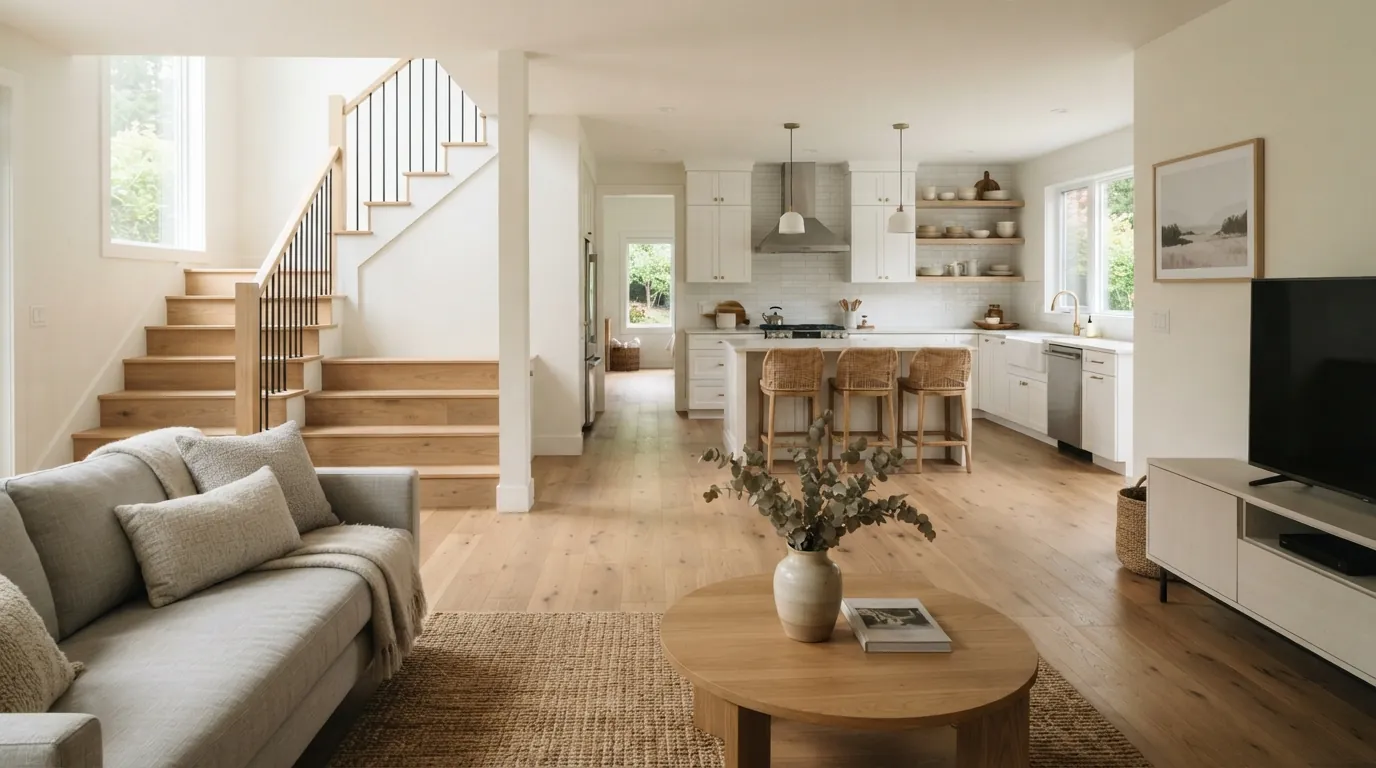
Short answer: mid-tone floors are the most forgiving. They hide dust, crumbs and pet hair far better than very dark or very light floors. Match the floor's undertone to your fixed elements (cabinets, stairs, trim) or contrast clearly, but don't almost-match existing wood. Run one floor continuously through connected spaces so the house feels bigger, and judge samples from a full box laid out in your own light.
Light, mid-tone or dark: which is easiest to live with?
| Floor tone | Shows the most | Hides well | Feel |
|---|---|---|---|
| Very light (bleached, white oak, light gray) | Dirt, mud, spills, darker stains | Dust, light pet hair | Airy, modern, Scandinavian |
| Mid-tone (natural oak, warm brown, light walnut) | Very little of either | Dust, crumbs, most pet hair | Warm, versatile, timeless |
| Dark (espresso, ebony, deep walnut) | Dust, light pet hair, scratches, footprints | Dark stains | Dramatic, formal |
Dark floors look great in photos but show every speck of dust and every scratch, especially in sunny rooms. Very light floors show tracked-in dirt near doors. If you have kids, pets or an entry that opens straight into the living area, a mid-tone with some grain variation is the easiest to keep looking clean.
Pet owners should also match the floor roughly to the pet's fur. A light floor hides a golden dog; a darker floor hides a black cat.
How do you match a floor to cabinets, stairs and trim?
Floors have undertones just like paint. Wood and wood-look floors usually lean one of three ways: warm (yellow, orange, red), cool (gray, ash) or neutral (beige, natural).
Look at the things you're not changing:
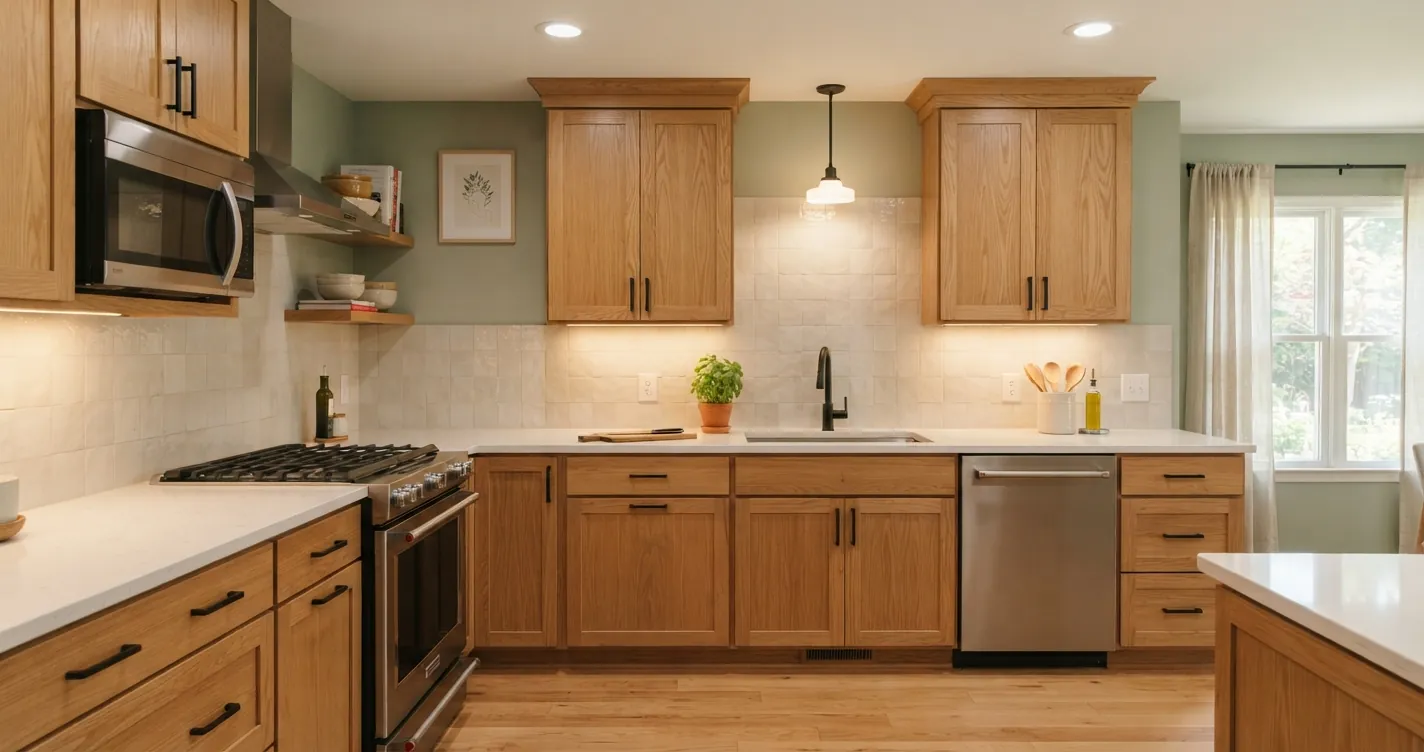
- Kitchen cabinets. If they're wood, the floor should either share their undertone or contrast clearly in lightness. White and painted cabinets give you more freedom.
- Stairs and handrails. Stair treads are often wood that's hard to replace. If the new floor meets them, they need to work together.
- Trim and doors. Stained trim narrows the range. Painted trim works with nearly anything.
- Existing floors in other rooms. If one room keeps its hardwood, decide whether you're matching it or contrasting it.
The rule that saves the most regret: don't almost-match. A new LVP that's close to your existing hardwood but slightly off looks like a mistake. Either match it as closely as possible (bring a loose board or a stair tread to the store) or pick something clearly different, lighter or darker by a clear step, so it looks intentional. Our guide on how to mix wood tones explains the same idea for furniture.
Should the same floor run through the whole house?
In most homes, yes. One continuous floor through the living areas, kitchen, hallways and often bedrooms makes the house look bigger and calmer. Each transition strip is a visual break that makes rooms feel smaller.
Common exceptions:
- Bathrooms and laundry rooms, where tile is often a better choice.
- Entries and mudrooms, where a durable tile can handle wet boots.
- Bedrooms, if you prefer carpet there.
When you do switch materials, make transitions at doorways, not in the middle of an open space.
Which plank width and direction look best?
- Plank width. Wider planks, around 7 to 9 inches, read as more modern and make large rooms feel calmer. Narrower planks (3 to 5 inches) suit traditional and older homes.
- Direction. Run planks parallel to the longest wall, or toward the main light source, which usually makes the room look longer. In hallways, run them lengthwise.
- Pattern and variation. Some variation in color helps hide dirt and makes LVP look more like real wood. Watch for repeating patterns in cheaper LVP; open a box and see how often the same print repeats.
How much flooring should you order?
Order more than the measured area to cover cuts, waste and future repairs:
| Installation type | Typical overage |
|---|---|
| Straight lay | About 10% |
| Diagonal or herringbone | About 15% or more |
| Rooms with many corners or closets | Lean toward the higher end |
Keep a box or two after installation. Matching a discontinued floor years later is often impossible. The flooring calculator works out square footage and overage, and the flooring cost calculator estimates material and installation costs.
LVP, hardwood or tile: does the material change the color choice?
Each material behaves a little differently.
- Hardwood changes color over time. Many oaks and cherries darken or amber with sunlight, and some woods such as walnut lighten. Choose a tone you'll still like after it shifts, and remember that refinishing can change it later.
- LVP and laminate hold their color well and resist water, which makes them popular for whole-house runs. Look closely at the print and texture. Matte finishes with embossed grain look more like real wood than glossy ones.
- Porcelain tile can mimic wood or stone and is very durable. Grout color matters as much as tile color: a grout close to the tile color looks calmer and hides dirt better than bright white grout.
If you're mixing materials, such as tile in the kitchen and LVP in the living room, keep the undertones related so the transition looks planned.
How do you judge flooring samples properly?
Small samples are the main reason people regret their floor choice.
- Get full planks or, ideally, open a whole box and lay a few square feet out.
- Put them in the room, not next to the window at the store.
- Look at them in daylight and at night with your lamps on.
- Look from standing height, not up close. That's how you'll see the floor every day.
- Set them next to your cabinets, stairs and a piece of furniture.
- Compare them with your wall color, or the one you plan to use. If you're also moving away from gray walls, see is gray paint out.
See the new floor in your own room
A few planks on the carpet can't show you what a whole downstairs will look like. Take a photo of the room and upload it to the AI room designer. Use Magic Edit to brush over the floor and describe what you're considering, for example "wide-plank natural white oak LVP" or "warm mid-tone hickory." You'll get up to four versions to compare against your cabinets, walls and furniture. New accounts get free credits to try it on your own space.
Frequently asked questions
What floor color hides dirt best?
Mid-tone floors with some grain variation, such as natural oak or warm medium brown. Very dark floors show dust and scratches, and very light floors show tracked-in dirt.
Should floors be lighter or darker than cabinets?
Either works, as long as there's clear contrast. Floors that almost match wood cabinets tend to look like a mistake. White or painted cabinets go with most floor tones.
Should all floors in a house be the same?
In connected living spaces, one continuous floor usually looks best and makes the home feel bigger. Bathrooms, laundry rooms and entries are common exceptions.
How much extra flooring should I buy?
About 10 percent for a standard straight installation and 15 percent or more for diagonal or herringbone patterns. Keep a spare box for future repairs.