Bedroom Office Layout: Where to Put the Desk (Window, Wall or Side?)
Working from a small bedroom? Here's where to put the desk for the least glare and the best video calls, the clearances you need around the bed and chair, and three layouts for 10x10 to 11x13 rooms.
Hoceine
6 min read15 views
In this article
- Where should a desk go relative to the window?
- How much space do you need around a bed and desk?
- What size desk fits a small bedroom?
- Should you sit with your back to the door?
- Three bedroom office layouts
- How do you hide the office at night?
- Plan the layout before you move the bed
- Frequently asked questions
"Which layout for my box-room office?" got over 800 upvotes on r/DesignMyRoom. On r/malelivingspace, "Home office / my bedroom, how would you arrange it better?" got almost as many. And on r/macsetups, people argued for days about one question: desk facing the window or against the wall?
If you work from a small bedroom, the desk position affects your screen glare, how you look on video calls, and whether the room still feels restful at night.
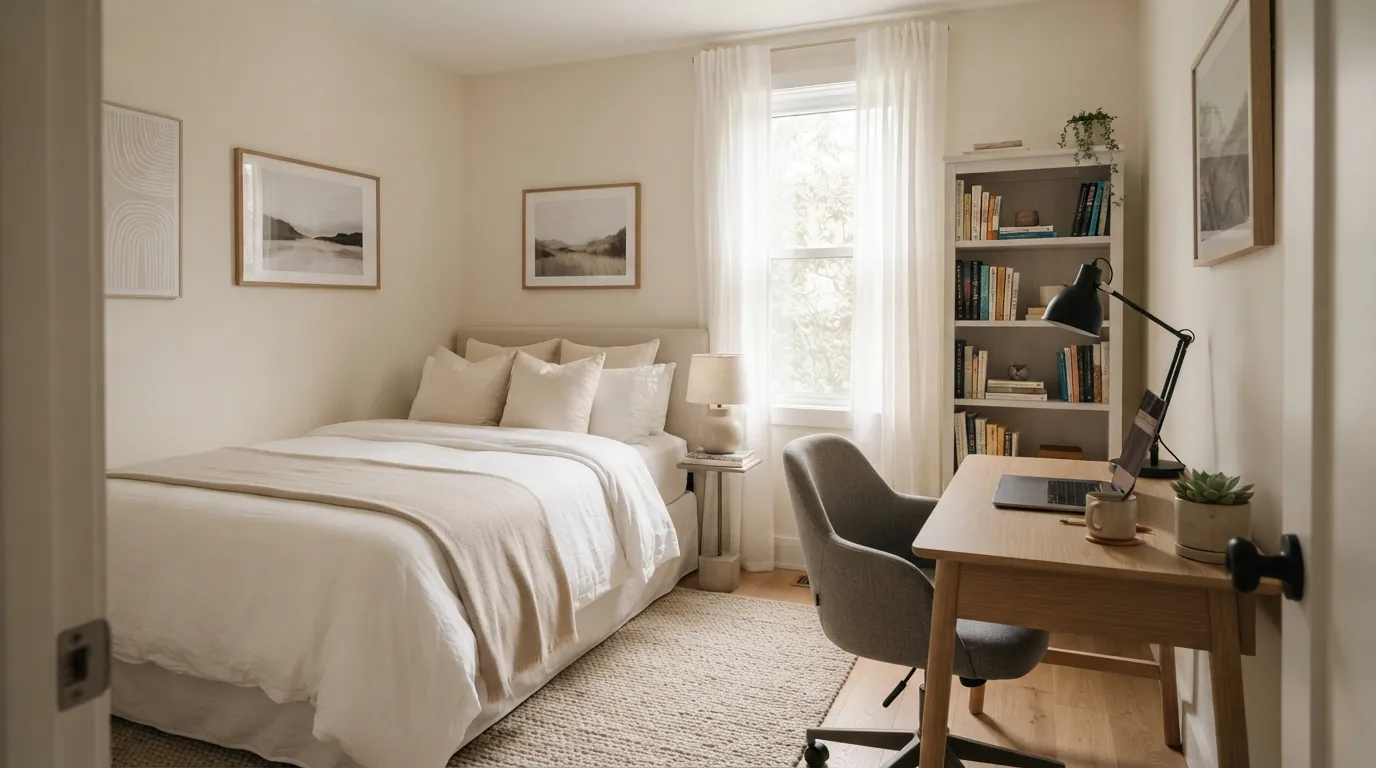
Short answer: place the desk perpendicular to the window, so daylight comes from the side. Facing the window makes you a silhouette on video calls, and sitting with your back to the window puts glare on your screen. Keep about 24 inches beside the bed, 30 to 36 inches behind the desk chair and a clear door swing. Use a desk at least 24 inches deep for a laptop and 30 inches for a monitor.
Where should a desk go relative to the window?
There are three options, and each has a clear tradeoff.
| Desk position | Screen glare | Video calls | View and light |
|---|---|---|---|
| Facing the window | Low on screen, but bright light behind the monitor can cause eye strain | Good: daylight lights your face from the front, unless the sun shines straight in | Great view, can be distracting |
| Back to the window | High: window reflects on the screen | Backlit: you appear as a silhouette | No view while working |
| Perpendicular (side-on) | Lowest | Even side light, natural look | Some view, good balance |
The video call question causes most of the confusion. If you face the window, daylight hits your face and you look well lit on camera. The problem is eye strain from looking at a bright window behind your monitor all day. If your back is to the window, the camera sees a bright window behind you, so you turn into a dark silhouette, and the window reflects on your screen.
That's why side-on wins for most people: even light on your face, no reflection on the screen and less eye strain. If your only option is facing the window, add sheer curtains or a light-filtering shade to soften the brightness.
How much space do you need around a bed and desk?
Small bedrooms run out of room fast. These clearances keep the room usable:
| Area | Recommended clearance |
|---|---|
| Beside the bed (the side you get in) | 24 in minimum, 30 in is more comfortable |
| Behind the desk chair | 30-36 in, so you can push back and stand up |
| Door swing | Fully clear |
| Main walkway to the closet or door | 30-36 in |
| Between desk chair and bed corner | 24 in or more |
If a desk chair pushed back would hit the bed, the layout doesn't work, even if the desk technically fits on paper.
What size desk fits a small bedroom?
Desk depth matters more than width in small rooms.
- Laptop only: 20 to 24 inches deep, 36 to 40 inches wide is enough.
- One external monitor: about 24 to 30 inches deep, so the monitor can sit an arm's length away.
- Two monitors: 30 inches deep and at least 55 inches wide.
Our desk size calculator sizes the desk around your setup, and the ergonomics calculator works out chair height, desk height and monitor distance.
Should you sit with your back to the door?
Many people feel uneasy with their back to the door, because you can't see who's coming in. It's a comfort issue more than anything else. If you can, position the desk so the door is visible from the side or in your peripheral vision. If you can't, a small mirror on the desk or wall lets you see the door. Our feng shui home office desk guide covers this layout idea in more detail, and the layout analyzer checks comfort and flow in your floor plan.
Three bedroom office layouts
Here are layouts for three common small bedroom sizes, assuming a queen bed (60 x 80 inches) or a full bed (54 x 75 inches).
10 x 10 feet
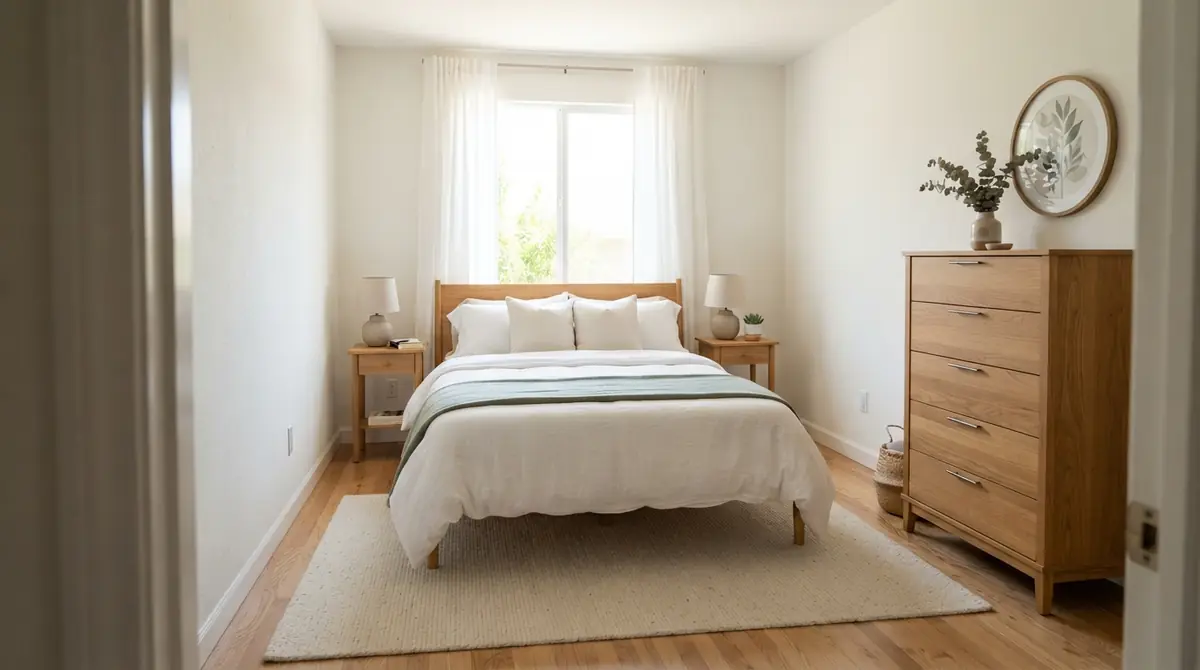
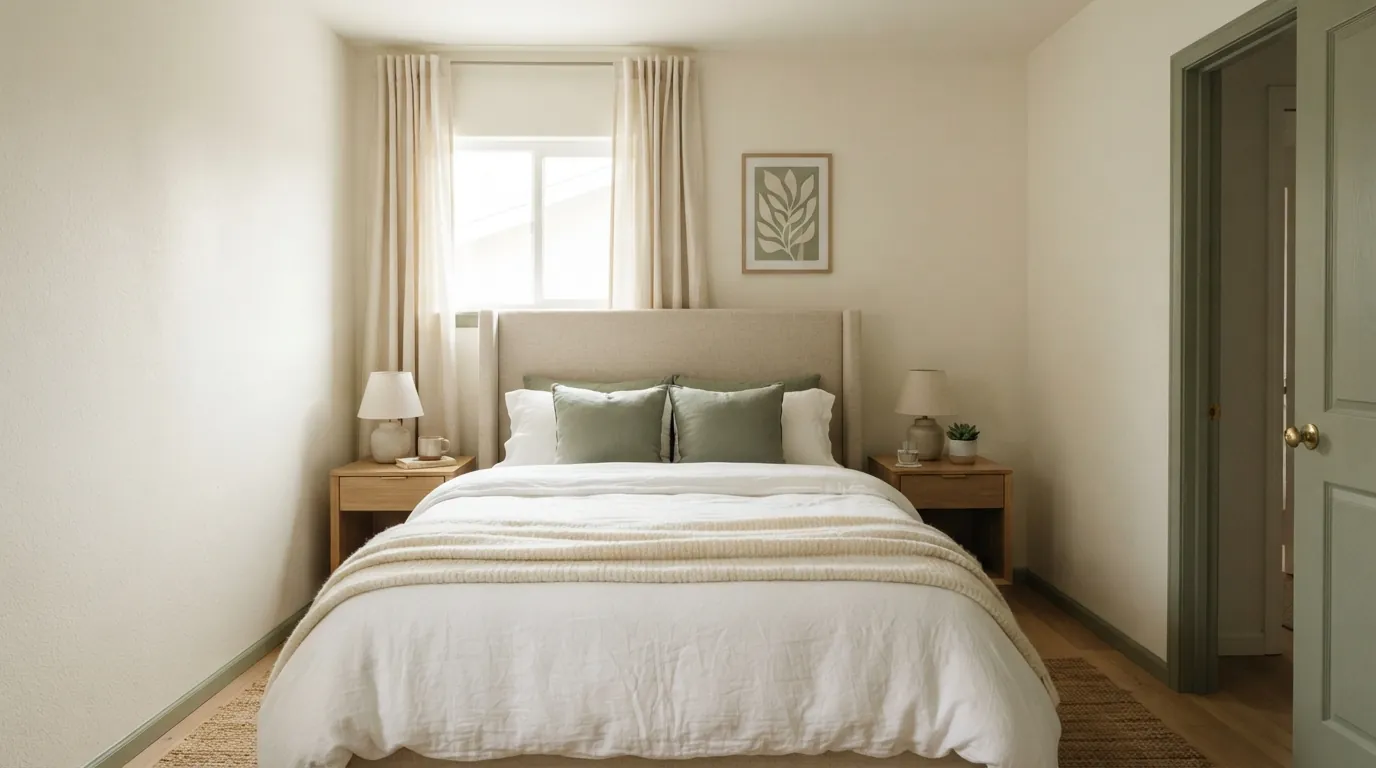
This is tight. Use a full bed against one wall, ideally pushed into a corner if you sleep alone. Put a 40-inch-wide, 24-inch-deep desk on the wall beside the window, perpendicular to it. The desk chair backs toward the open middle of the room. You'll have about 3 feet of open floor, which is enough to push back. See our 10x10 bedroom guide for more ideas.
10 x 12 feet
A queen bed centered on the 10-foot wall leaves about 2 feet on each side. Put a desk on the long wall opposite the bed's side, perpendicular to the window if the window is on the end wall. A 48-inch desk fits with room for a slim bookcase.
11 x 13 feet
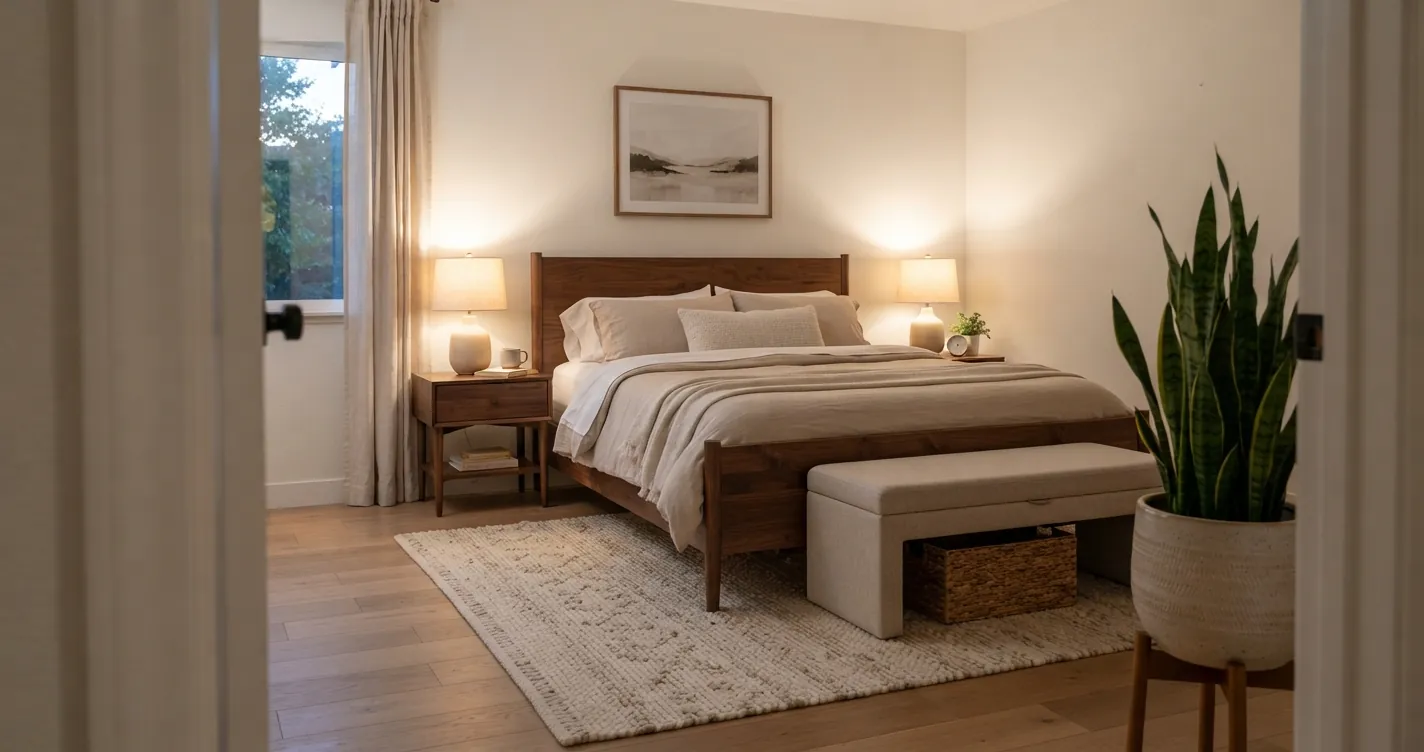
Room for a queen with nightstands on both sides and a full 55-inch desk on the side wall. You may also fit a small reading chair. Consider a room divider or a tall bookcase to separate the desk area visually from the bed.
How do you hide the office at night?
Seeing your work while you're trying to sleep makes it harder to switch off. A few ways to close the office:
- A secretary desk or a desk inside a cabinet with doors.
- A folding screen or curtain in front of the desk.
- A closet office: remove the closet doors, add a desk surface and curtains.
- At minimum, put the laptop in a drawer and the papers in a box at the end of the day.
Plan the layout before you move the bed
Moving a bed three times to test layouts is no fun. Draw the room in the floor planner, add the bed, desk and doors, and check clearances on screen. Then upload a photo of the bedroom to the AI room designer to see how it looks with the desk in place and styled for your taste. New accounts get free credits to try it.
For more work-from-home ideas, see home office design tools.
Frequently asked questions
Should my desk face the window or the wall?
Perpendicular to the window is usually best. It gives even light on your face for video calls and avoids screen glare. Facing the window can cause eye strain, and having your back to it causes glare and a backlit look on camera.
How much space do you need behind a desk chair?
30 to 36 inches, so you can push the chair back and stand up comfortably.
Can you fit a desk in a 10x10 bedroom?
Yes, with a full bed against a wall and a 36 to 40 inch wide, 24 inch deep desk. Check that the chair can push back without hitting the bed.
How do I separate work and sleep in one room?
Use a desk with doors, a folding screen or a curtain, and clear the desk at night. Placing the desk out of sight of the bed also helps.